CM Mohan Yadav: MP leads wheat procurement at MSP
Synopsis
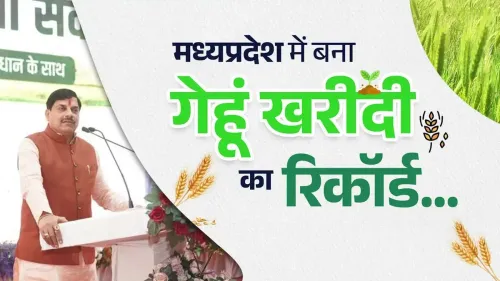
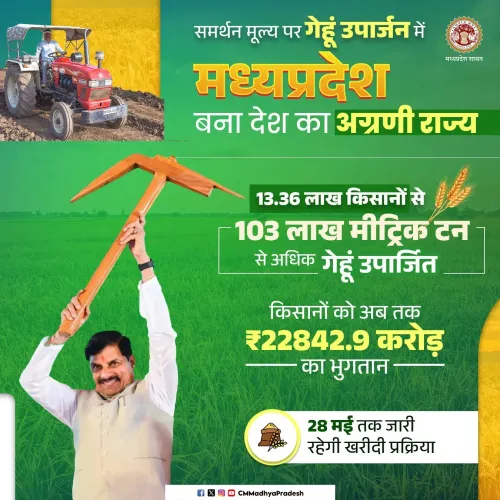
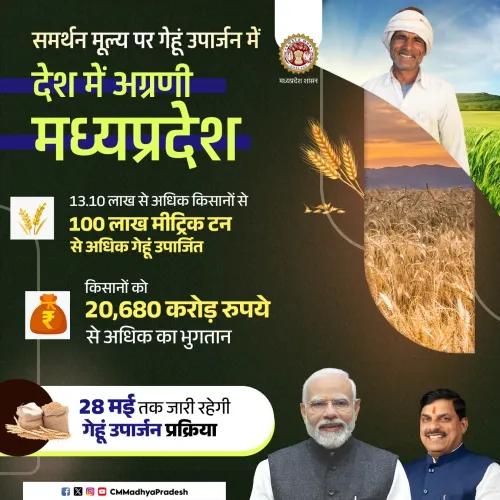
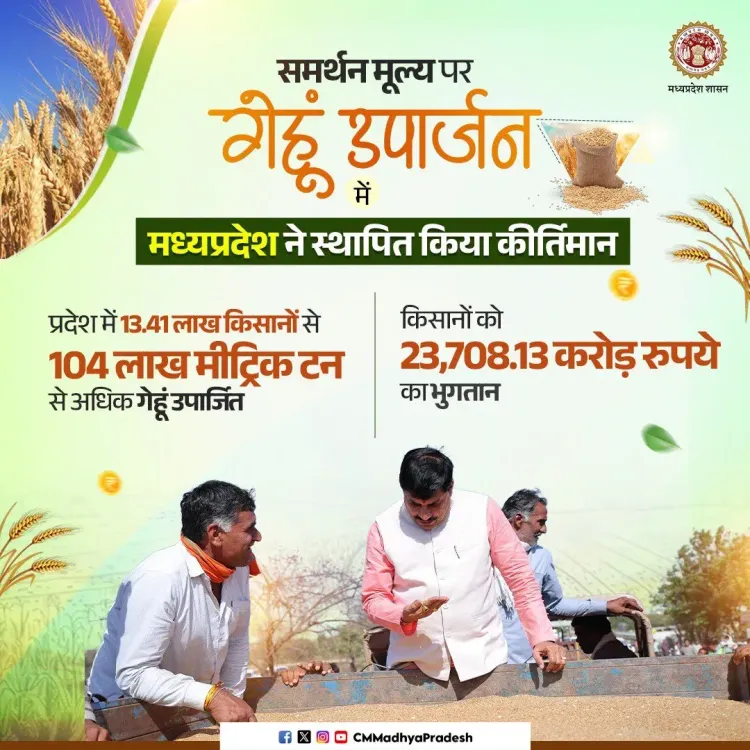
Madhya Pradesh has procured over 104 lakh metric tonnes of wheat at MSP from 13.41 lakh farmers this rabi season, the Chief Minister's Office announced on 30 May 2026, reaffirming the state's national lead in wheat procurement.
Key Takeaways
Madhya Pradesh procured over 104 lakh metric tonnes of wheat at MSP in the 2025-26 rabi season.
13.41 lakh farmers across the state directly benefited from guaranteed MSP payments.
The announcement was made by the Chief Minister's Office on 30 May 2026 , with CM Dr.
Madhya Pradesh has led national wheat procurement at MSP for multiple consecutive seasons since the mid-2010s.
The procured grain contributes to FCI 's central pool, supporting India's buffer stocks and the Public Distribution System .
State procurement was conducted through Madhya Pradesh 's network of mandis and procurement centres coordinated with central agencies.
The Chief Minister's Office of Madhya Pradesh announced on Saturday, 30 May 2026 that the state has procured over 104 lakh metric tonnes of wheat at Minimum Support Price (MSP) from 13.41 lakh farmers this rabi season, reaffirming Madhya Pradesh's position as the country's leading wheat-procuring state.
Context
The CMO's post, shared in Hindi, declared: 'Samarthan mulya par gehun uparjan mein agrani Madhya Pradesh' ('Madhya Pradesh leads in wheat procurement at support price'). The figures — more than 104 lakh metric tonnes procured from 13.41 lakh farmers — represent a significant contribution to India's central foodgrain pool for the 2025-26 rabi marketing season. Chief Minister Dr. Mohan Yadav was tagged in the post, signalling his office's direct ownership of the achievement.
Madhya Pradesh has consistently ranked among the top wheat-procuring states since the mid-2010s, often contributing the single largest share to the central pool managed by the Food Corporation of India (FCI). This season's numbers continue that pattern of state-level agricultural outperformance.
Policy Backdrop
The Minimum Support Price mechanism for wheat dates to the 1960s and operates through an annual cycle in which the central government sets a floor price and state agencies, alongside the FCI, run procurement centres across mandis and villages. For wheat — a rabi crop harvested between March and May — procurement typically peaks in April and May before the monsoon.
The MSP system is designed to shield farmers from price volatility, ensuring they receive a guaranteed return regardless of open-market conditions. Madhya Pradesh's state machinery — including the Madhya Pradesh State Civil Supplies Corporation — has built an extensive network of procurement centres that has allowed the state to absorb large volumes quickly. The central government's MSP for wheat for the 2025-26 rabi season was set as part of the Union Cabinet's annual agricultural pricing exercise.
Stakeholders and Impact
The most direct beneficiaries are the 13.41 lakh wheat farmers across Madhya Pradesh who have received assured payments at MSP, protecting their incomes from any market downturn. For smallholder and marginal farmers — who make up a significant share of the state's agrarian population — timely MSP procurement often determines whether they can service input loans and plan for the next sowing season.
At the national level, the 104-lakh-metric-tonne contribution bolsters India's buffer stocks and the Public Distribution System (PDS), which relies on FCI-managed reserves to supply subsidised foodgrain to hundreds of millions of beneficiaries under schemes such as the Pradhan Mantri Garib Kalyan Anna Yojana. A strong procurement season from Madhya Pradesh therefore has downstream implications for food security well beyond the state's borders.
What's Next
Attention will now shift to the central government's MSP announcement for the 2026-27 rabi season, which typically follows the monsoon kharif procurement cycle and sets the tone for wheat sowing decisions in states like Madhya Pradesh, Punjab, and Haryana. State procurement agencies will also begin reviewing logistics, storage capacity, and mandi infrastructure ahead of the next season.
For Chief Minister Dr. Mohan Yadav, who took office in December 2023, sustaining the state's top ranking in MSP procurement is both an agricultural priority and a political signal to the farming community ahead of future electoral cycles. Whether Madhya Pradesh can hold or improve on this season's figures will depend on central MSP revisions, rainfall patterns, and the pace of rural credit availability for the next rabi crop.
Point of View
Who inherited the BJP's agrarian political compact in a state where farming households form a decisive vote bloc, high procurement numbers translate directly into rural goodwill. The scale — over 104 lakh metric tonnes from 13.41 lakh farmers — also underscores how state-level administrative capacity can amplify a central policy instrument like MSP into a tangible income-support mechanism. Nationally, this reinforces the argument that procurement-led food security remains the backbone of India's agrarian welfare architecture, even as debates over direct income transfers and market liberalisation continue.
NationPress
14 Oct 2026
Frequently Asked Questions
How much wheat did Madhya Pradesh procure at MSP in 2026?
The Chief Minister's Office of Madhya Pradesh announced that the state procured over 104 lakh metric tonnes of wheat at Minimum Support Price in the 2025-26 rabi season from 13.41 lakh farmers .
Is Madhya Pradesh the top wheat-procuring state in India?
Yes. Madhya Pradesh has led national wheat procurement at MSP for multiple seasons since the mid-2010s, often contributing the largest single share to India's central foodgrain pool managed by the Food Corporation of India .
What is MSP and how does it help wheat farmers?
Minimum Support Price (MSP) is a government-guaranteed floor price for wheat and other crops. It protects farmers from market price volatility by ensuring they receive a fixed payment per quintal regardless of open-market rates, with state agencies and the FCI running procurement centres to purchase the grain.
Who is the Chief Minister of Madhya Pradesh in 2026?
Dr. Mohan Yadav is the Chief Minister of Madhya Pradesh , having assumed office in December 2023 . His office posted the wheat procurement announcement on 30 May 2026.
How does Madhya Pradesh wheat procurement affect national food security?
Wheat procured from Madhya Pradesh farmers enters the FCI 's central buffer stock, which supplies subsidised foodgrain to hundreds of millions of beneficiaries under schemes like the Pradhan Mantri Garib Kalyan Anna Yojana , directly supporting India's Public Distribution System.