CM Mohan Yadav: MP Surpasses Wheat Procurement Target
Synopsis
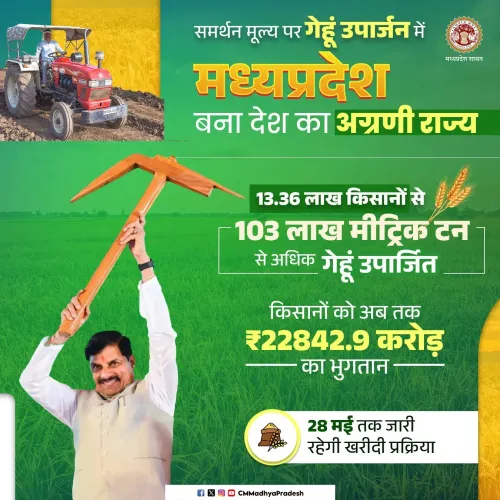
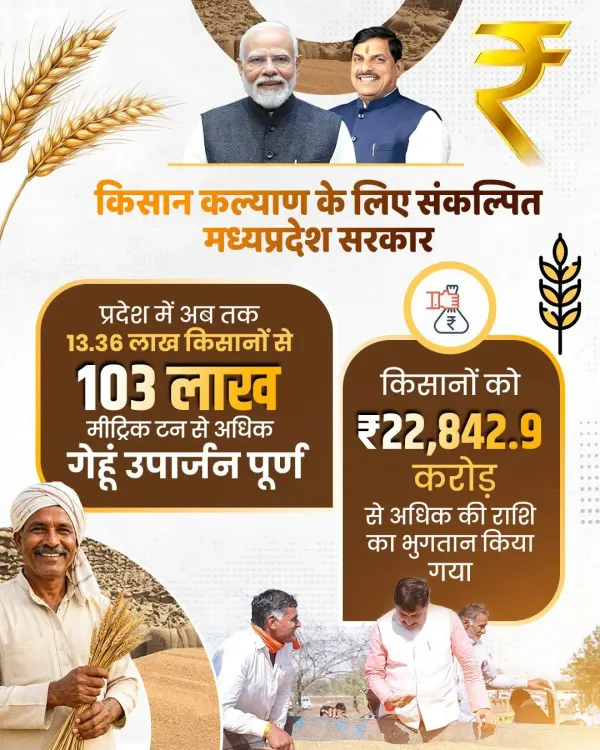
Madhya Pradesh Chief Minister Dr. Mohan Yadav declared on 28 May 2026 that the state has surpassed its wheat procurement target, buying over 103 lakh metric tonnes from more than 13.36 lakh farmers under the MSP regime — marking a significant milestone for the state's agricultural administration.
Key Takeaways
Madhya Pradesh has surpassed its official wheat procurement target for the 2025–26 rabi marketing season .
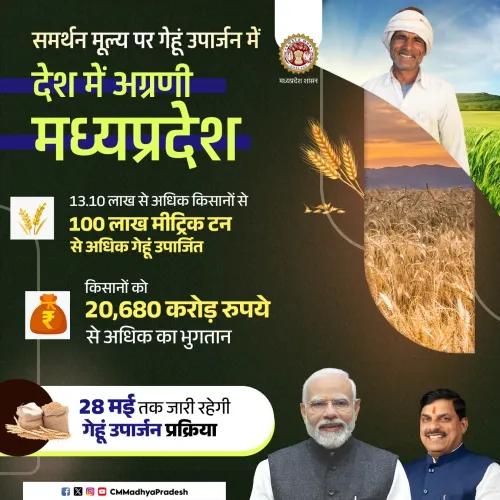
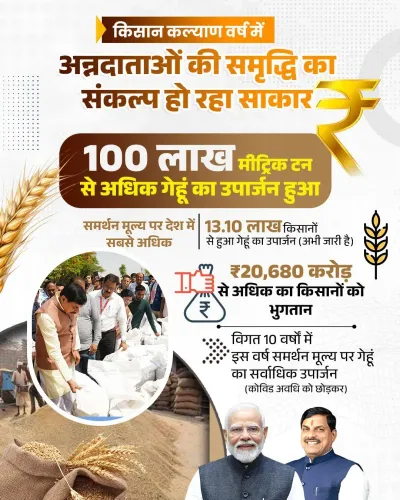
More than 103 lakh metric tonnes of wheat have been purchased under the Minimum Support Price (MSP) framework.
Over 13.36 lakh farmers across the state have directly benefited from MSP-guaranteed payments.
Mohan Yadav announced the achievement on 28 May 2026 , framing it as a fulfilment of a stated government commitment.
The procured grain feeds into India's central food-grain pool, managed in coordination with the Food Corporation of India (FCI) .
Final audited figures are awaited at season close, which will formally confirm the extent to which the target was exceeded.
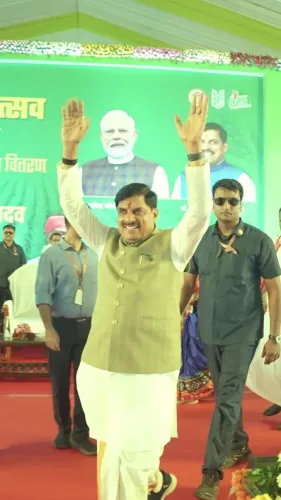
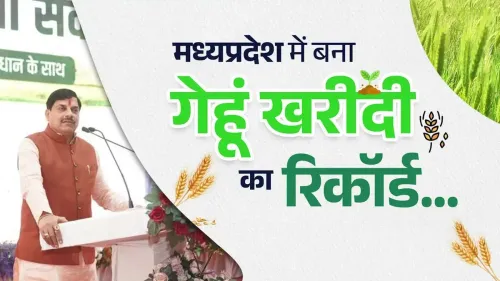
Madhya Pradesh Chief Minister Dr. Mohan Yadav announced on Thursday, 28 May 2026 that the state has surpassed its wheat procurement target for the current rabi season, with more than 103 lakh metric tonnes of wheat purchased from over 13.36 lakh farmers across the state.
Posting on X, Dr. Yadav wrote: 'इरादे मजबूत हों तो बड़े लक्ष्य भी छोटे पड़ जाते हैं' ['When resolve is strong, even big targets fall short'] — adding a pointed 'जो कहा, सो किया' ['Said it, did it'] to underline the administration's delivery on its stated commitment.
Context
Madhya Pradesh is one of India's largest wheat-producing states and a critical contributor to the national food-grain pool. The state government had set a procurement target for the 2025–26 rabi marketing season, and the Chief Minister's post signals that figure has now been formally exceeded. Procurement under the Minimum Support Price (MSP) regime is the primary mechanism through which the government assures income protection to cultivators at harvest time.
The MSP framework, administered jointly by state agencies and the Food Corporation of India (FCI), requires states to establish purchase centres, mobilise manpower, and coordinate logistics across mandis — making target achievement a test of administrative capacity as much as agricultural output.
Policy Backdrop
Madhya Pradesh governments have publicised annual wheat procurement targets under the MSP regime since the early 2000s, treating surpassing them as a visible marker of agricultural governance. The practice feeds directly into India's decentralised food-grain procurement system, which maintains buffer stocks for the National Food Security Act entitlements and price stabilisation operations.
The FCI consolidates state-wise arrivals into the central pool, and a strong performance from MP directly supports national food security arithmetic. Dr. Yadav, who assumed office in December 2023, has consistently framed agricultural welfare and farmer income as central planks of his administration's agenda.
Stakeholders and Impact
The most direct beneficiaries are the 13.36 lakh wheat farmers who have received MSP-guaranteed payments, insulating their income from open-market price volatility during the harvest season. Procurement agencies — both state and central — now face the logistical task of storing, grading, and moving the procured stock efficiently to prevent post-harvest losses.
For the broader rural economy of Madhya Pradesh, a high-volume MSP purchase season injects liquidity into agricultural households, with downstream effects on rural consumption and credit repayment cycles. The announcement is also politically significant: it allows the ruling BJP government to demonstrate administrative follow-through ahead of future electoral cycles.
What's Next
The state and the FCI are expected to release final, audited procurement figures once the season closes, which will establish the definitive record against the original target. Attention will also turn to the next rabi MSP announcement from the Union government, where Madhya Pradesh's performance data typically informs discussions on procurement logistics and price revisions.
If the figures are formally confirmed at the season's close, the achievement could set a benchmark that shapes target-setting for subsequent years — and adds weight to the state's standing in national agricultural policy conversations.
Point of View
Did it' — is a deliberate signal of administrative accountability, designed to contrast with perceptions of policy drift. How the final audited numbers stack up against the original target will determine whether the achievement sustains as a durable political asset or fades as routine seasonal performance.
NationPress
11 Oct 2026
Frequently Asked Questions
Has Madhya Pradesh exceeded its wheat procurement target in 2026?
Yes, according to Chief Minister Dr. Mohan Yadav's announcement on 28 May 2026, Madhya Pradesh has surpassed its set wheat procurement target for the rabi season, with over 103 lakh metric tonnes purchased.
How many farmers benefited from wheat procurement in MP in 2026?
More than 13.36 lakh farmers in Madhya Pradesh have sold wheat to the government under the MSP framework during the current rabi marketing season, as stated by CM Dr. Mohan Yadav.
What is the MSP for wheat and how does procurement work in Madhya Pradesh?
The Minimum Support Price (MSP) is a government-fixed floor price for crops including wheat. In Madhya Pradesh, state procurement agencies buy wheat from registered farmers at this price, with the grain then entering the national food-grain pool managed by the Food Corporation of India.
What role does the Food Corporation of India play in MP wheat procurement?
The Food Corporation of India coordinates with state agencies to consolidate wheat procured at MSP into the central pool, which is used for national food security programmes and buffer stock maintenance.
What does exceeding the wheat procurement target mean for Madhya Pradesh farmers?
Surpassing the target means more farmers received guaranteed MSP payments, protecting their income from open-market price fluctuations and injecting liquidity into rural households across the state.