MP CM Mohan Yadav Simplifies Zero-Interest Crop Loan Scheme

Synopsis
Madhya Pradesh CM Dr. Mohan Yadav's office announced the simplification of the Short-Term Crop Loan Scheme on 25 June 2026, making zero-percent interest crop loans more accessible to lakhs of farmers across the state.
Key Takeaways
The Chief Minister's Office of Madhya Pradesh announced simplification of the Alpaavadhi Fasal Rin Yojana on 25 June 2026 .
The scheme provides short-term crop loans at zero percent interest to farmers in Madhya Pradesh.
The move is aimed at making loan access easier for lakhs of farmers , particularly small and marginal cultivators.
India's interest subvention framework for crop loans has been in place since 2006-07 , with Madhya Pradesh adding state-level top-ups to achieve zero effective rates.
The Department of Farmer Welfare and Agriculture Development, Madhya Pradesh oversees implementation of the scheme.
Disbursement volumes during the Kharif and Rabi seasons will be a key measure of the reform's real-world impact.
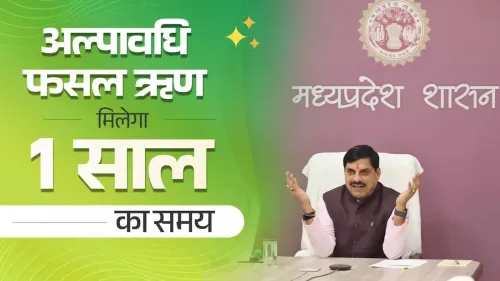
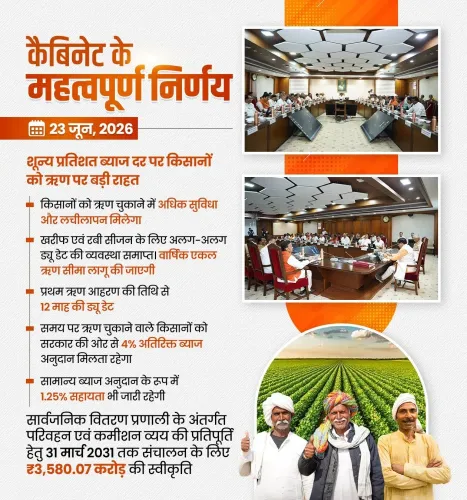
The Chief Minister's Office of Madhya Pradesh announced on Thursday, 25 June 2026, that the state government has simplified the Alpaavadhi Fasal Rin Yojana (Short-Term Crop Loan Scheme) under the leadership of Chief Minister Dr. Mohan Yadav, enabling lakhs of farmers across the state to access crop loans at zero percent interest more easily.
The official post stated: 'Annadataon ke hit mein ek aur mahatvapurn kadam' ('Another important step in the interest of farmers') — signalling that the move is part of a continuing series of farmer-welfare measures under the current state administration.
Context
The Alpaavadhi Fasal Rin Yojana is a state-level scheme designed to provide short-duration crop loans to farmers at zero percent effective interest. The scheme targets small and marginal cultivators who depend on seasonal credit to finance inputs such as seeds, fertilisers, and labour ahead of the Kharif and Rabi sowing seasons. The latest announcement indicates that procedural or eligibility conditions within the scheme have been eased, though the precise changes had not been detailed in publicly available records at the time of publication.Policy Backdrop
India's interest subvention architecture for short-term crop loans dates to 2006-07, when the central government launched a scheme to reimburse banks so that farmers could borrow at reduced rates. Madhya Pradesh has consistently layered additional state-level subventions on top of central support to bring the effective interest rate for eligible farmers down to zero. This approach — using state budget allocations to bridge the gap between commercial lending rates and the subsidised rate — has been a recurring feature of successive Madhya Pradesh budgets. The Department of Farmer Welfare and Agriculture Development, Madhya Pradesh is the nodal agency responsible for implementing such credit-linked schemes.Stakeholders and Impact
Madhya Pradesh is one of India's largest agrarian states, with a significant proportion of its farming community comprising small and marginal cultivators who operate largely under rainfed conditions. Access to affordable institutional credit is critical for this segment, as it reduces dependence on informal moneylenders who charge far higher rates. Agricultural cooperatives also play a role in channelling such loans to the last mile. By simplifying the scheme, the state government aims to improve uptake among farmers who may have previously found the application process cumbersome or eligibility criteria restrictive. The beneficiary base is described in the announcement as running into lakhs of farmers.What's Next
Attention will now turn to the state's budget allocations for interest subvention in the coming fiscal cycle and to the actual disbursement volumes reported during the Kharif 2026 season. The degree to which the simplification translates into measurable increases in loan uptake — particularly among first-time or previously excluded borrowers — will be a key indicator of the reform's effectiveness. Observers will also watch whether the CM Dr. Mohan Yadav administration announces complementary measures, such as expanded coverage under the Kisan Credit Card framework, to reinforce the impact of this step.Point of View
The CM's office is signalling a deliberate sequencing of farmer-welfare announcements — a politically salient strategy in a state with a large agrarian voter base. The real test, however, lies in implementation: past iterations of similar simplifications have not always translated into proportionate increases in actual disbursements to small and marginal farmers. Monitoring beneficiary numbers over the Kharif 2026 cycle will determine whether this is a substantive administrative improvement or primarily a communication exercise.
NationPress
23 Sept 2026
Frequently Asked Questions
What is the Alpaavadhi Fasal Rin Yojana in Madhya Pradesh?
The Alpaavadhi Fasal Rin Yojana is a Madhya Pradesh state government scheme that provides short-term crop loans to farmers at zero percent effective interest, combining central and state-level interest subventions to eliminate the interest burden on eligible borrowers.
Who announced the simplification of the MP crop loan scheme?
The Chief Minister's Office of Madhya Pradesh announced the simplification on 25 June 2026, attributing the decision to the leadership of Chief Minister Dr. Mohan Yadav.
How does zero percent interest on crop loans work in Madhya Pradesh?
The Government of India reimburses banks for a portion of interest on short-term crop loans under its Interest Subvention Scheme, and the Madhya Pradesh government provides an additional state-level subsidy to bring the effective rate for eligible farmers down to zero percent.
Who benefits from the Short-Term Crop Loan Scheme in Madhya Pradesh?
The scheme primarily benefits small and marginal farmers in Madhya Pradesh who need seasonal credit for inputs like seeds and fertilisers. Agricultural cooperatives also help channel these loans to rural borrowers.
What will be watched after the MP crop loan scheme simplification?
Analysts will track state budget allocations for interest subvention and actual loan disbursement volumes during the Kharif 2026 and subsequent Rabi seasons to assess whether the simplification meaningfully increases farmer participation.