Why Do Some MPs Prefer Drama Over Delivering Results?
Synopsis
In a concerning display, Opposition MPs chose disruption over constructive participation on the first day of Parliament’s Winter Session. As the costly session unfolded, the focus shifted from critical governance to chaos, raising questions about accountability and effectiveness in democratic processes.
Key Takeaways
Parliament's operational cost is approximately Rs.
2.5 lakh per minute.
The Winter Session began on December 1 and ends on December 19.
Opposition's disruptive behavior hinders important legislative processes.
MPs enjoy substantial perks and allowances funded by taxpayers.
Constructive engagement is essential for effective governance .
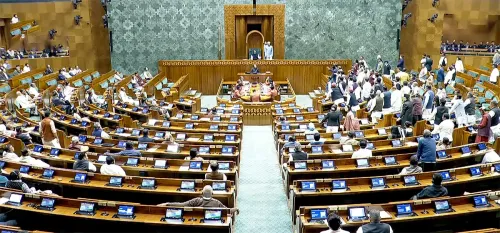
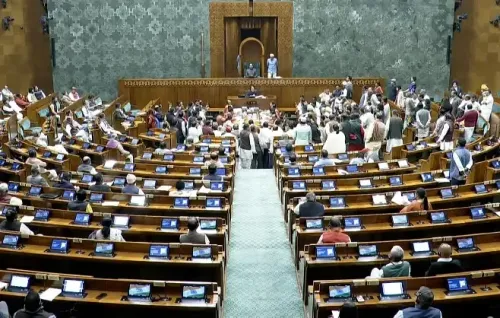
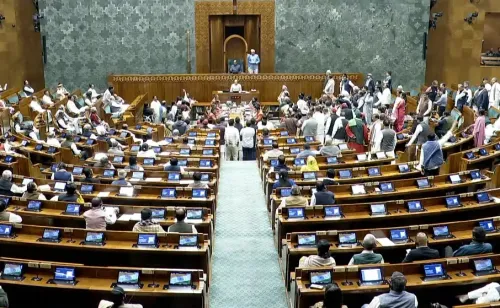
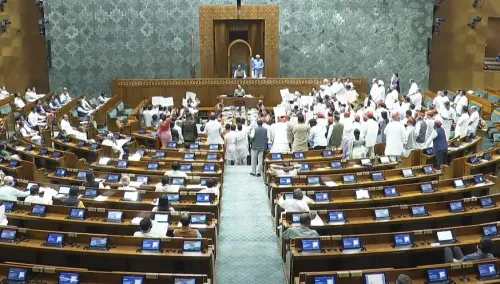
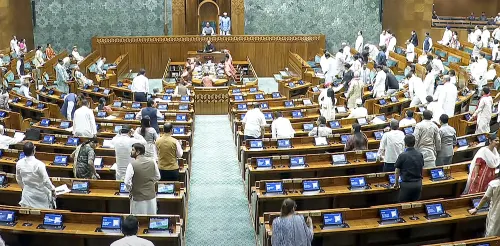
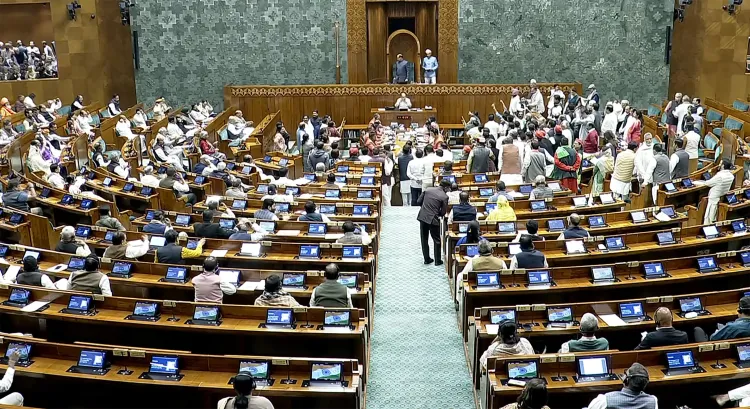
New Delhi, Dec 1 (NationPress) Instead of engaging in legislative activities, the Opposition Benches in the Lok Sabha opted to disrupt proceedings by raising slogans and obstructing the agenda, which curtailed the debate on the first day of Parliament’s Winter Session that started on Monday.
This behavior has significant fiscal implications, as the operation of Parliament costs approximately Rs. 2.5 lakh per minute. This results in about Rs. 1.5 crore per hour for both the Lok Sabha and Rajya Sabha, or around Rs. 75 lakh per hour for each house.
The Winter Session kicked off on December 1 and is set to conclude on December 19, featuring a total of 15 sittings. Although the Opposition labeled this as a “short session,” their lack of constructive participation rendered it ineffective.
Instead of fostering dialogue, the focus was on reducing the allotted time for discussions. This disruption jeopardizes effective governance, delaying crucial laws and public policies that require dedicated attention.
On the inaugural day of the current Winter Session, Opposition members were seen escalating their voices over a matter already under consideration by the country’s highest court.
Interestingly, prior to the session, a Trinamool Congress delegation met with the Election Commissioners at the end of November to express their concerns, which were reportedly acknowledged by the electoral body.
Previously, the Election Commission had been open to meeting any political group to clarify issues regarding the Special Intensive Revision (SIR) of electoral rolls, a process that hasn't occurred in over two decades (the last was conducted from 2002 to 2004).
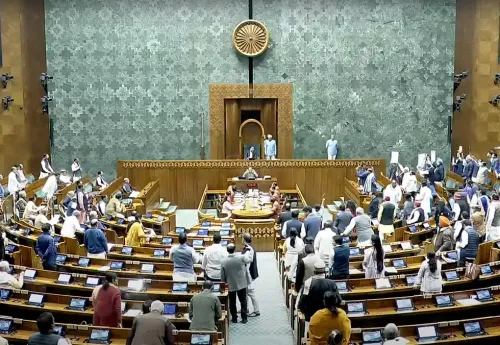
The first adjournment on Monday occurred shortly after the session's commencement—immediately following tributes to five former Parliamentarians who recently passed away—and another adjournment was called when the House reconvened at noon.
Ultimately, the House had to be adjourned for the day due to ongoing disruptions from the Opposition.
Nonetheless, the government successfully introduced the Manipur Goods and Services Tax (Second Amendment) Bill, 2025, which was passed via a voice vote.
Despite the initial disruptions, as the Prime Minister mentioned before the session began, “India has proven that Democracy can deliver.”
In his customary pre-session media briefing, the Prime Minister framed the Winter Session as a measure of democratic responsibility, urging the Opposition to engage constructively while signaling the government’s legislative priorities and attempting to establish the political narrative.
However, the chaos deprived citizens of the opportunity to witness what could have been an engaging and informative debate, for which a three-hour discussion period had already been allocated.
This turmoil occurs despite the fact that an MP earns Rs. 1,24,000 monthly, reflecting a 24 percent raise two years ago due to inflation and rising living costs since the last revision in 2018. In addition, MPs receive numerous perks and allowances, including a Rs. 2,500 daily allowance during sessions, a monthly constituency allowance of Rs. 87,000, and office expenses of Rs. 70,000 each month to cover staff and stationery.
They are also entitled to rent-free accommodation in central Delhi based on their tenure or official designation. Moreover, they can avail themselves of 24 free domestic air journeys each year and unlimited first-class train travel across India.
Additionally, they benefit from complimentary medical care for themselves and their families, as well as allowances for phone and Internet use, travel reimbursements, and free utilities like electricity and water up to a certain level annually.
In spite of their privileged status and generous compensation funded by taxpayers, some MPs continue to favor drama over genuine delivery concerning their official duties and effective service in their constituencies.
Point of View
It is essential to highlight that while the conduct of some MPs disrupts parliamentary proceedings, it is crucial for all political entities to engage in constructive dialogue. The focus should be on effective governance and fulfilling their duties to the public rather than indulging in theatrics.
NationPress
2 Oct 2026
Frequently Asked Questions
What is the cost of running Parliament?
The estimated cost of running Parliament is approximately Rs. 2.5 lakh per minute, translating to Rs. 1.5 crore per hour.
What are the perks MPs receive?
MPs receive a salary of Rs. 1,24,000 per month, daily session allowances, constituency allowances, office expenses, rent-free housing, and free travel benefits.
What is the duration of the Winter Session?
The Winter Session began on December 1 and is scheduled to conclude on December 19, comprising a total of 15 sittings.
What was the Opposition's reaction during the session?
The Opposition opted for disruption by raising slogans and delaying the agenda instead of engaging in legislative discussions.
How does this disruption impact governance?
Such disruptions delay important laws and public policies that require uninterrupted time and attention for effective governance.