Will Punjab CM Mann's Visit to Japan and South Korea Attract Investments?
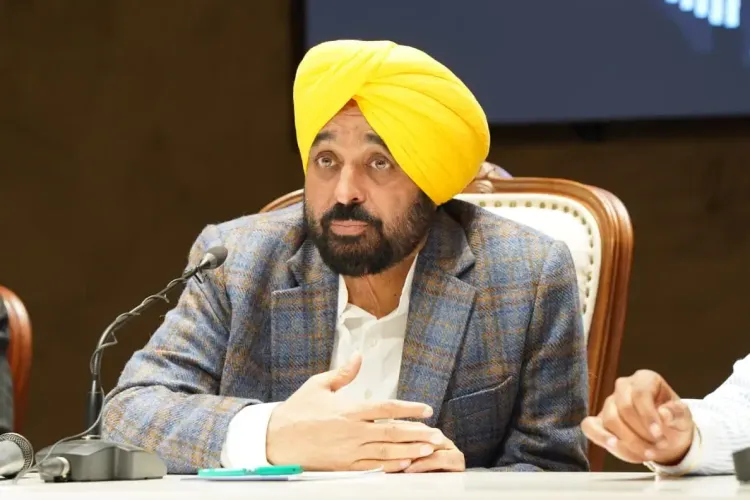
Synopsis
Punjab CM Bhagwant Mann leads a high-level delegation to Japan and South Korea to attract investments ahead of the Sixth Progressive Punjab Investors’ Summit. This mission aims to enhance economic partnerships and promote Punjab as a leading investment destination.
Key Takeaways
Punjab's strategic location offers seamless connectivity to major regions.
Robust industrial infrastructure supports various sectors.
Government initiatives focus on investment facilitation and regulatory reforms.
Partnership with industry is crucial for economic growth .
Upcoming summit aims to attract global investors .
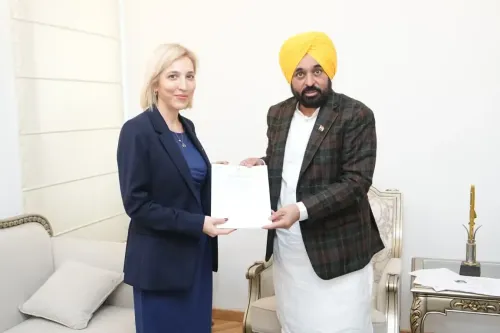
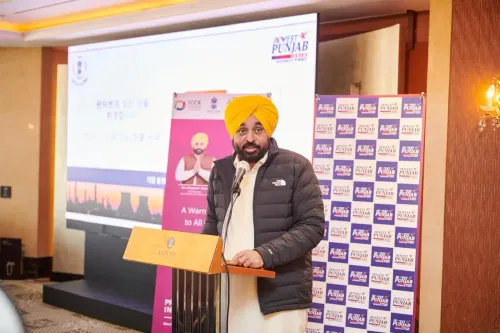
Chandigarh, Dec 1 (NationPress) A prominent delegation from the Punjab government, spearheaded by Chief Minister Bhagwant Mann, is set to embark on a journey to Japan and South Korea as part of its global outreach efforts in anticipation of the Sixth Progressive Punjab Investors’ Summit scheduled for March 13-15 at the ISB campus in Mohali.
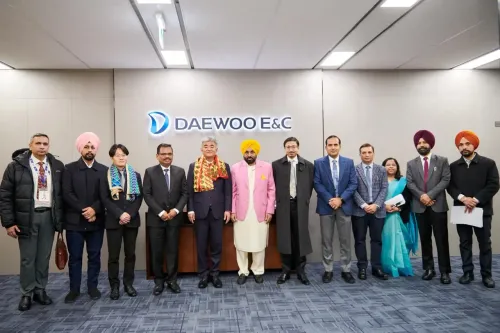
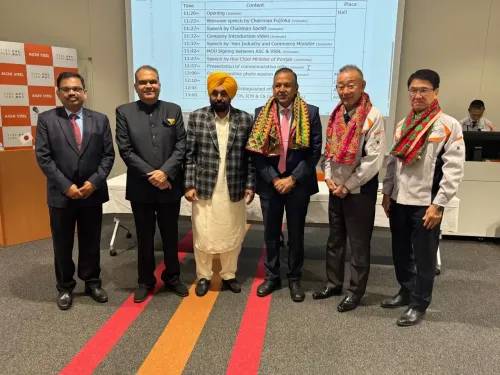
The delegation, which includes Minister for Industries and Commerce Sanjeev Arora along with officials and the Invest Punjab team, will visit Tokyo on December 2-3, Osaka on December 4-5, and Seoul on December 8-9. The aim is to bolster economic relationships, engage with international companies, and extend personal invitations for the upcoming summit, according to an official statement.
This visit, along with meetings and roadshow initiatives, is being organized in close collaboration with the Indian Embassy in Japan, the Indian Embassy in South Korea, the Ministry of External Affairs, and DPIIT’s Invest India, with the support of the embassies of Japan and South Korea in New Delhi. Their guidance and partnership have been crucial in shaping the outreach agenda, as noted by the state government.
During the visit, Punjab will showcase its status as North India’s prime investment hub, emphasizing its strategic location, seamless connectivity to the NCR and major ports, robust industrial clusters, reliable power supply, skilled workforce, and a progressive policy framework.
The delegation will also highlight governance and regulatory reforms in the state, including the FastTrack Punjab single-window system, which offers over 173 G2B services, auto-deemed approvals, PAN-based business identifiers, and amendments to the Punjab Right to Business Act that enable timely in-principle approvals.
Furthermore, this outreach will underline Punjab's industrial infrastructure, including plug-and-play parks and the upcoming Integrated Manufacturing Cluster (IMC) in Rajpura, while noting that over Rs 1.4 lakh crore of investments have been facilitated through Invest Punjab.
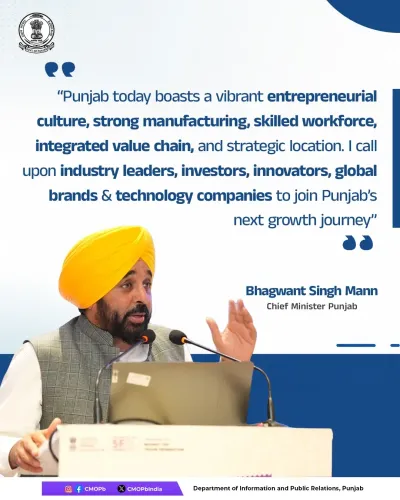
Chief Minister Mann articulated a clear vision to position Punjab as a preferred destination for global industries by providing policy stability, swift decision-making, and a governance structure that honors the time and trust of investors.
He emphasized that Punjab's strategy hinges on partnership with the industry, focusing on their needs and ensuring that the government acts as a growth enabler.
Mann stated that Punjab is enhancing its infrastructure, increasing its industrial capacity, and opening new investment avenues.
The Chief Minister asserted that collaboration between the government and industry is paramount for success, and the state firmly believes that industrial growth is only achievable through equal partnerships.
This principle informs the New Industrial Policy introduced in 2022, which was developed in consultation with industry leaders and stakeholders to meet their requirements and aspirations.
Now, the government has established 24 sectoral committees chaired by industry leaders to devise sector-specific policies. Through a series of roadshows, individual business meetings, and engagements with major global corporations and institutions, the delegation aims to position Punjab as an appealing destination for companies from Japan and South Korea, particularly in the fields of mobility, electronics, ESDM, auto components, food processing, chemicals, green energy, IT, semiconductors, textiles, and advanced manufacturing.
These interactions, supported by both Indian missions and partner institutions in Japan and South Korea, will pave the way for deeper economic ties, joint ventures, technology exchanges, and supply-chain integration.
Additionally, the delegation will conduct diaspora interactions in Tokyo, Osaka, and Seoul to strengthen cultural and community connections with the Indian-origin populace.
Point of View
This initiative by Punjab's Chief Minister Bhagwant Mann showcases a proactive approach to attract foreign investments. The collaboration with international partners reflects a forward-thinking strategy that aligns with national interests in enhancing economic growth and global partnerships.
NationPress
25 Sept 2026
Frequently Asked Questions
What is the purpose of CM Mann's visit to Japan and South Korea?
The purpose is to attract investments and strengthen economic partnerships ahead of the Sixth Progressive Punjab Investors’ Summit.
When is the Sixth Progressive Punjab Investors’ Summit scheduled?
The summit is scheduled from March 13 to 15 at the ISB campus in Mohali.
Which cities will the delegation visit during this trip?
The delegation will visit Tokyo, Osaka, and Seoul on specific dates in December.
What key features of Punjab will be highlighted during the visit?
Punjab's strategic location, industrial clusters, skilled workforce, and governance reforms will be highlighted.
How does the Punjab government plan to enhance its industrial sector?
The government aims to enhance industrial capacity, strengthen infrastructure, and foster partnerships with industry leaders.