Will Mumbai Climate Week Propel Climate Change Action Forward?
Synopsis
Mumbai Climate Week is set to be a pivotal event in addressing climate change challenges. CM Fadnavis emphasizes the urgency for action and outlines Maharashtra's role in leading the way towards sustainable solutions. Discover how this initiative could reshape the economic landscape and promote environmental responsibility across the region.
Key Takeaways
Maharashtra aims for over 50% green energy by 2030.
Climate action is seen as an opportunity for innovation and job creation.
Public-private partnerships are essential for funding climate initiatives.
Sustainability is being integrated into major infrastructure projects.
Climate resilience is crucial for both urban and rural areas.
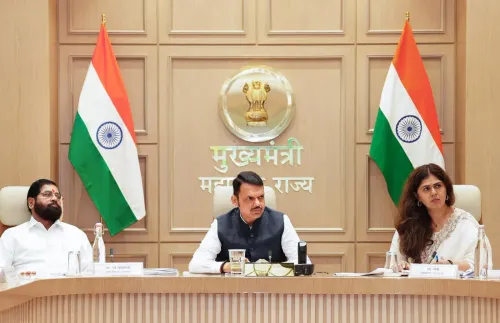
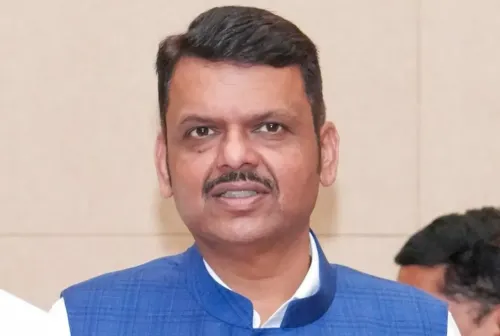
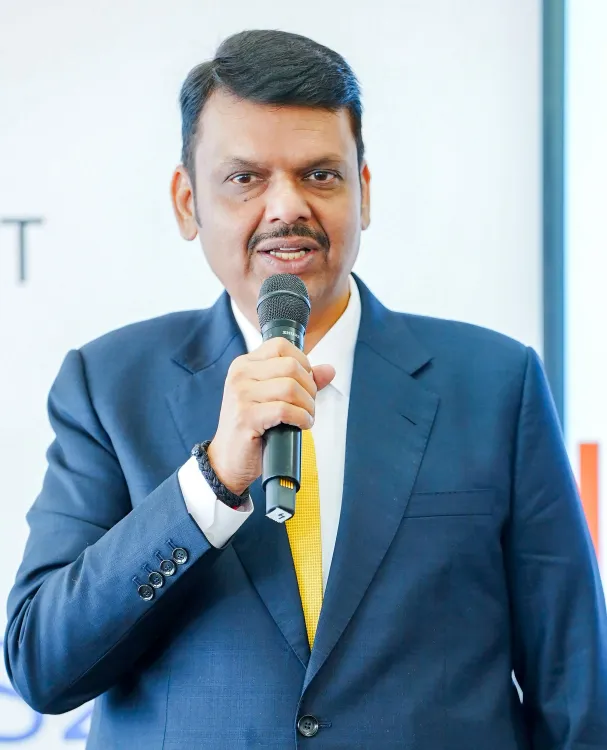
Mumbai, Feb 17 (NationPress) Chief Minister Devendra Fadnavis emphasized the urgent need for extensive measures to tackle the escalating issues of climate change, stating that Mumbai Climate Week will serve as a significant milestone in this endeavor.
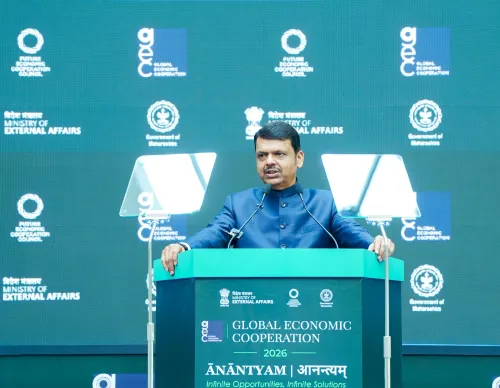
He articulated that Maharashtra is poised to spearhead the climate action initiative. Furthermore, he made it clear that addressing climate change is not merely an environmental duty but is also crucial for future economic viability. His remarks were made during the commencement of the Mumbai Climate Week summit.
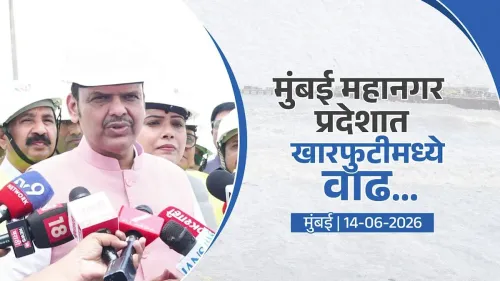
“The coastal city of Mumbai is increasingly affected by climate change. Frequent heavy rains disrupt transportation, flood homes, shut down businesses, and impair livelihoods. Heat waves pose threats to construction workers, hawkers, and farmers. In rural areas, unpredictable rains ruin harvested crops, leading to significant economic and social consequences. Thus, climate change has emerged as a pressing concern for the administration,” articulated the chief minister.
He highlighted that under the guidance of Prime Minister Narendra Modi, India is committed to harmonizing economic advancement with environmental stewardship. The nation has made significant strides in renewable energy and is at the forefront of clean energy growth globally.
“Maharashtra is also pivotal in this transition. The state has developed substantial energy capacity and aims to elevate the contribution of green energy to over 50% by 2030. This involves focusing on clean hydrogen, electric transportation, biofuels, and sustainable infrastructure,” he stated.
CM Fadnavis noted that Maharashtra perceives climate action not merely as regulatory compliance but as a vast opportunity for investment, innovation, and job creation.
Global investments are gravitating towards sustainable markets, making low-carbon technologies more affordable and accessible.
States that rapidly adapt to change will attract both capital and talent. Maharashtra is set to lead this transformation, he remarked.
“The state is concentrating on enhancing the use of renewable energy in industries, fostering electric mobility in urban areas, and making public transport and logistics systems more environmentally friendly. Efforts are underway to construct flood control mechanisms, implement climate-smart urban planning, and develop data-driven forecasting systems. Sustainability and resilience to disasters are being integrated from the outset in major infrastructure projects across the Mumbai Metropolitan Area,” the chief minister elaborated.
He asserted that climate action is equally vital in rural regions, stressing the need for climate-resilient agriculture, efficient water management, and technology-driven value chains in response to shifting rainfall patterns, water scarcity, and coastal challenges.
This transformation is expected to create economic prospects for future generations. He noted that the extensive investments necessary to tackle climate change cannot solely rely on public funds and urged collaboration from international financial bodies and the private sector.
Highlighting the importance of blended finance, risk-sharing, and capital for innovation, he suggested that Mumbai could emerge as a key hub for global climate financing. “The principle of climate justice is crucial, and developing nations should not have to choose between progress and environmental sustainability. Both goals can be achieved through effective partnerships,” he remarked.
Union Minister for New and Renewable Energy, Pralhad Joshi, commended Maharashtra’s achievements in renewable energy and the PM Kusum Yojana.
He announced the approval of one lakh additional pumps for Maharashtra, acknowledging the state's performance in the PM Kusum Yojana.
“Mumbai Climate Week symbolizes the transition of climate change discussions into actionable steps. India, as a rapidly growing economy, is making tangible efforts to reduce emissions and exemplifies how to merge economic growth with environmental responsibility,” he noted.
“Maharashtra has made significant advancements in renewable energy through public engagement and has installed solar power systems in millions of homes. The state has set ambitious solar power generation goals and is focused on technology-based solutions for energy stability and sustainability. When climate action becomes a movement driven by the populace, transformation accelerates,” Minister Joshi stated.
Maharashtra’s Minister for Environment and Climate Change, Pankaja Munde, mentioned that the state is embracing climate-sensitive development while leading in industrialization, urbanization, and growth.
An action-driven policy is being enacted across all sectors, including energy, urban development, water, and infrastructure, with sustainability as the core focus. She highlighted the emphasis on expanding renewable energy and enhancing energy efficiency in public infrastructure, integrating climate risks into city planning, and implementing sustainable strategies department-wise.
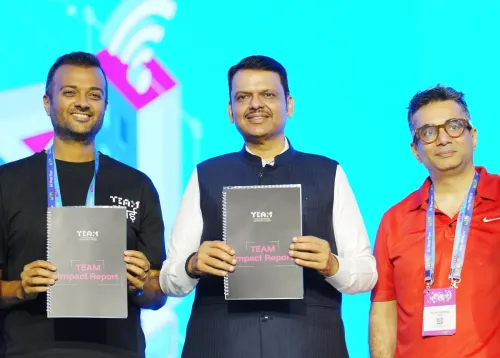
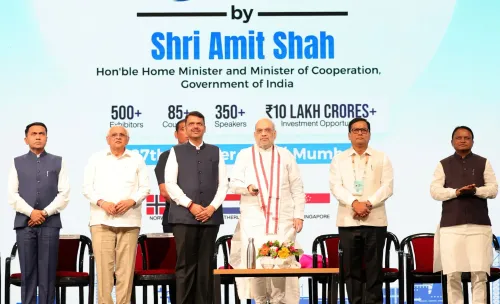
In a related event, a special postage stamp and a report on climate change were unveiled by the CM and Union Minister. The Mumbai Metropolitan Region Development Authority (MMRDA) and the United Nations Environment Programme signed an MoU to develop climate-resilient plans for Mumbai. Another MoU was executed between MMRDA and C40Cities (a network of mayors from leading global cities) to strengthen urban solutions and climate change strategies.
Point of View
The urgency of climate action cannot be overstated. The steps being taken by Maharashtra demonstrate a commitment to not only environmental sustainability but also economic opportunity. These initiatives could serve as a model for other states, fostering a collective response to climate change that is both innovative and inclusive.
NationPress
1 Oct 2026
Frequently Asked Questions
What is the significance of Mumbai Climate Week?
Mumbai Climate Week is a crucial initiative aimed at addressing the pressing challenges posed by climate change, highlighting the need for immediate and coordinated action at multiple levels.
How is Maharashtra contributing to climate action?
Maharashtra is set to lead by increasing its renewable energy share to over 50% by 2030, promoting sustainable practices across various sectors, and integrating climate resilience into urban planning.
What are the expected economic benefits of climate action?
Implementing climate action is expected to create numerous economic opportunities, attract investments, and foster job creation, while ensuring sustainable growth.
What role does the private sector play in climate initiatives?
The private sector is vital for financing climate initiatives. Collaboration with international financial institutions and innovative financing models is essential for achieving the necessary investment levels.
How can individuals contribute to climate action?
Individuals can contribute by adopting sustainable practices, supporting renewable energy initiatives, and advocating for policies that promote environmental responsibility.