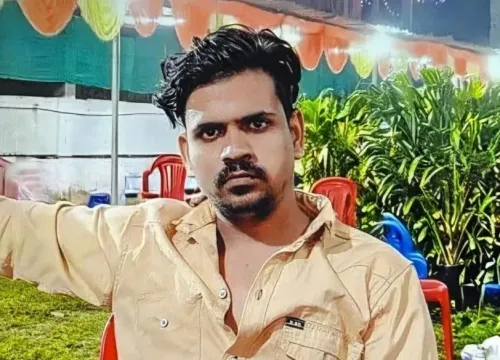
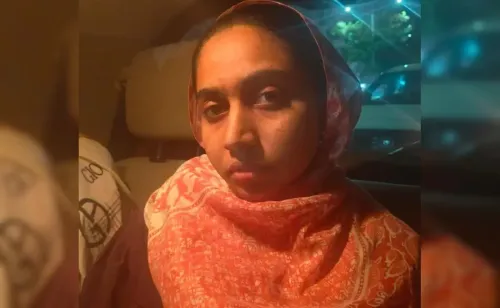
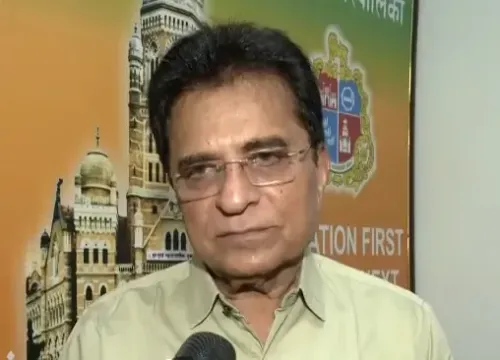
Mumbai Teen Files Harassment FIR; Colleague Ashraf Siddiqui Arrested
Synopsis
A 19-year-old Mumbai telecaller filed an FIR after colleague Ashraf Siddiqui allegedly obtained her number from a company WhatsApp group and sent her vulgar content. His arrest has sparked community outrage, with locals drawing parallels to recent harassment cases in Nashik and Amravati — raising urgent questions about workplace safety for women across Maharashtra.
Key Takeaways
A 19-year-old telecaller from Agripada, Mumbai filed an FIR on April 24, 2025 alleging harassment by a colleague at her Mahalakshmi-based company .
The accused, Ashraf Siddiqui , was traced via location data, detained, and formally arrested after the complaint was registered.
Siddiqui allegedly obtained the victim's number from a company WhatsApp group and sent her vulgar videos and photographs .
His mobile phone has been seized and authorities are examining digital evidence including messages and call logs.
Local residents linked the case to similar recent incidents in Nashik (TCS office) and Amravati , raising concerns about a pattern of workplace harassment in Maharashtra.
Police have assured the victim's family of the strictest possible action , with a charge sheet expected after forensic analysis is completed.
A 19-year-old woman from Agripada, Mumbai has lodged a formal complaint alleging workplace harassment by a colleague, identified as Ashraf Siddiqui, who was subsequently arrested by local police. The incident, reported on April 24, has sparked significant tension in the area, with residents gathering outside the police station and authorities intensifying both the investigation and local security measures. The case has drawn comparisons to a recent similar incident at a TCS office in Nashik, raising broader concerns about workplace safety for women in Maharashtra.
How the Harassment Unfolded
The victim was employed as a telecaller at a company in the Mahalakshmi area of Mumbai when she first came into contact with the accused through professional interactions. According to her statement, the two never had a personal conversation at work, but the accused managed to obtain her phone number through a company WhatsApp group.
Once he had her contact, the accused allegedly began sending her vulgar videos and photographs without her consent. The victim further stated that the accused made remarks about her personal religious identity, telling her that if he were to marry her, he would never ask her to abandon Hinduism, remove her Kalava, or stop visiting temples — statements she found deeply unsettling and coercive in nature.
Arrest and Investigation Details
Following the registration of the FIR, police traced Ashraf Siddiqui using his location data and initially detained him for questioning. His mobile phone was seized as a key piece of evidence in the ongoing investigation. He was subsequently placed under formal arrest after the complaint was officially registered.
Authorities confirmed that the accused is expected to undergo a medical examination before being produced before a court. Police officials stated they are treating the matter with full seriousness and are actively examining digital evidence, including message records and call logs, to reconstruct the complete sequence of events.
The victim's family has fully backed her decision to file the complaint, and senior police officials have assured them that the strictest possible action will be taken based on the evidence collected.
Community Reaction and Parallel Incidents
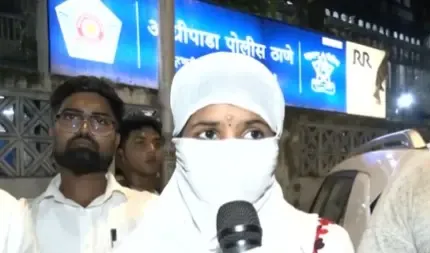
The incident has triggered a strong response from local residents, several of whom assembled outside the Agripada police station. Local resident Ravindra Dabolkar drew a direct parallel with the Nashik TCS harassment case from days earlier, describing both incidents as part of what he termed a pattern of targeted harassment, labelling it 'corporate jihad'.
Another resident, Nitin Bankar, referenced a separate incident from Amravati the previous week, in which a young man allegedly misled, sexually harassed, and blackmailed women from a different community. Bankar confirmed he had spoken to senior police officials, who assured him that stringent action would follow.
This comes amid a broader pattern of harassment complaints emerging from Maharashtra's urban workplaces in April 2025, with cases reported in Nashik, Amravati, and now Mumbai within a short span — prompting calls for stricter workplace safety protocols and faster legal redressal mechanisms.
Broader Implications for Workplace Safety
The Mumbai harassment case highlights a growing vulnerability for young working women in India's corporate and semi-corporate environments, where shared digital communication tools like WhatsApp groups can be exploited to access personal contact information without consent. Legal experts note that such actions can attract charges under the Information Technology Act as well as provisions of the Indian Penal Code related to stalking and sexual harassment.
The POSH Act (Prevention of Sexual Harassment at Workplace Act, 2013) mandates that every organisation with more than 10 employees constitute an Internal Complaints Committee (ICC). However, enforcement remains inconsistent, particularly in smaller call centres and telecalling firms — the very environment at the centre of this case.
Notably, Maharashtra has seen a rise in reported workplace harassment cases in recent years, with Mumbai consistently accounting for a significant share of such FIRs filed in the state. Advocates argue that the clustering of such incidents within days of each other underscores the urgent need for both corporate accountability and faster police response systems.
What Happens Next
Police are expected to submit a charge sheet after completing forensic analysis of the seized mobile phone and digital records. The accused will be produced before a magistrate's court in Mumbai following his medical examination. Depending on the findings, additional sections may be added to the FIR.
Authorities have also indicated they may examine whether the company's internal systems adequately protected employee data, which could potentially draw the employer into the investigation. The case is being closely watched by women's rights groups and political organisations across Maharashtra, and further developments are expected in the coming days.
Point of View
Amravati, and now Mumbai — within days of each other in Maharashtra is not a coincidence to be dismissed; it is a pattern that demands systemic scrutiny. The fact that a shared workplace WhatsApp group became the entry point for alleged harassment exposes a dangerous loophole in how companies manage employee data and digital communication. India's POSH Act exists on paper, but enforcement in small call centres and telecalling firms remains largely symbolic. If Maharashtra's authorities are serious about workplace safety, the investigation must not stop at the accused — it must reach the employer's door as well.
NationPress
26 Sept 2026
Frequently Asked Questions
What happened in the Mumbai Agripada harassment case?
A 19-year-old telecaller from Agripada, Mumbai filed an FIR alleging that her colleague Ashraf Siddiqui obtained her phone number from a company WhatsApp group and sent her vulgar videos and photos. The accused has been arrested and his mobile phone seized as evidence.
Who is Ashraf Siddiqui and why was he arrested?
Ashraf Siddiqui is a colleague of the 19-year-old victim who worked at the same telecalling company in Mumbai's Mahalakshmi area. He was arrested after the victim filed an FIR alleging he sent her inappropriate content after obtaining her number without her consent.
How is the Mumbai case connected to the Nashik TCS harassment incident?
Local residents drew parallels between the Mumbai case and a recent harassment incident at a TCS office in Nashik, with both allegedly involving workplace contact being misused. Community members described both incidents as part of a disturbing pattern of targeted harassment in corporate environments.
What legal action is being taken in the Mumbai harassment case?
Police have registered an FIR, arrested the accused, and seized his mobile phone for forensic examination. Ashraf Siddiqui will undergo a medical examination before being produced in court, and authorities are also reviewing digital evidence including messages and call records.
What law protects women from workplace harassment in India?
The Prevention of Sexual Harassment at Workplace (POSH) Act, 2013 mandates that organisations with more than 10 employees must have an Internal Complaints Committee to address such cases. However, enforcement in smaller firms like call centres remains inconsistent across India.