Amit Shah targets 20% green cover in Gandhinagar by 2029 elections
Synopsis
Amit Shah has staked his personal credibility on a measurable environmental target — 20% green cover in Gandhinagar by the 2029 elections, up from 11.23% today. Paired with a push for universal rooftop solar in a constituency already ranked first nationally for installations, it is an unusually specific political commitment on climate that will be easy to verify come election time.
Key Takeaways
Amit Shah pledged to raise Gandhinagar Lok Sabha green cover from 11.23% to 20% by the 2029 parliamentary elections .
More than 1.25 crore trees were targeted for planting across the constituency on 12 July alone.
101 Oxygen Parks were inaugurated in Ahmedabad alongside several civic development projects.
Gandhinagar holds the highest number of rooftop solar installations among all parliamentary constituencies, according to a Central government assessment.
Shah called for every home, apartment, and rooftop in the constituency to be equipped with solar panels to cut bills and reduce urban heat.
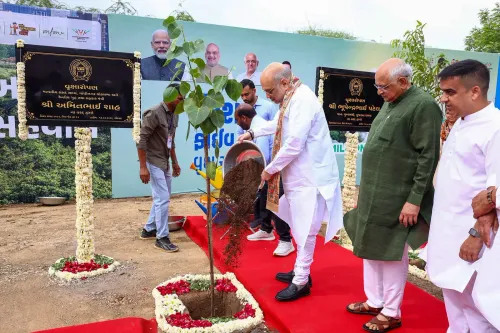
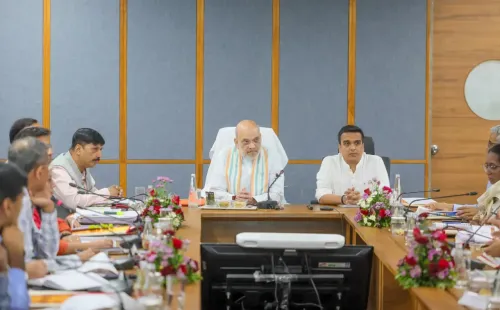
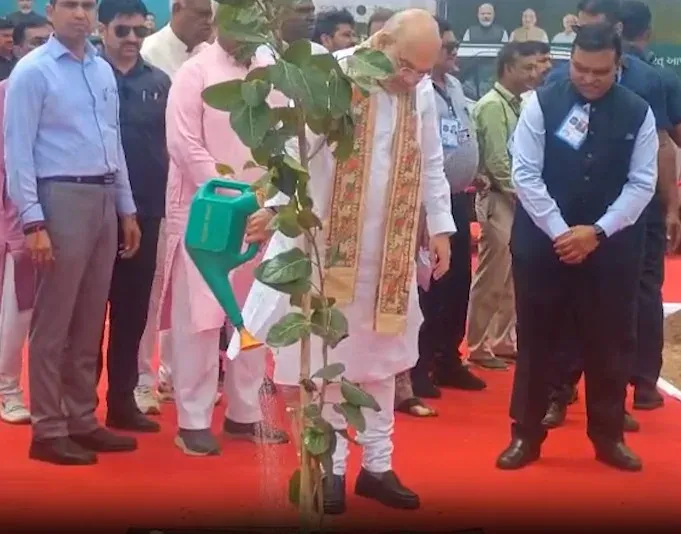
Union Home and Cooperation Minister Amit Shah on Sunday, 12 July set a personal target of raising green cover in the Gandhinagar Lok Sabha constituency to 20 per cent by the 2029 parliamentary elections, while simultaneously calling for universal rooftop solar adoption across every home in the constituency. The twin pledges were made during a mass plantation programme held in Ahmedabad.
Green Cover Push: Where Gandhinagar Stands
Shah noted that the constituency has already expanded its green cover to approximately 11.23 per cent — a figure he wants nearly doubled within three years. 'My personal resolve is to increase it to 20 per cent by the 2029 elections. Together, we must achieve 20 per cent greenery across the constituency,' he said at the event.
He urged housing societies to put vacant land to use for tree plantation, stressing that broad-based public participation would be the decisive factor. 'Do not leave even a single corner of your society without a tree,' Shah said, adding that he would personally join plantation drives in Thaltej, Sarkhej, and Stadium wards later in the day.
Solar Rooftop Drive: Gandhinagar Leads the Country
Alongside the greening campaign, Shah called for an equally ambitious rooftop solar movement. He cited a recent Central government assessment indicating that the Gandhinagar Lok Sabha constituency already has the highest number of rooftop solar installations among all parliamentary constituencies in India.
'Not a single house, apartment or rooftop should remain without solar panels,' Shah said, urging apartment associations and homeowners to install systems that could power common facilities such as lifts and street lighting while cutting household electricity bills.
According to Shah, wider rooftop solar adoption would reduce dependence on conventional power, lower carbon dioxide emissions linked to electricity generation, and help bring down urban heat by absorbing sunlight before it hits building surfaces.
1.25 Crore Trees and 101 Oxygen Parks
The plantation drive carried significant scale: Shah announced that more than 1.25 crore trees were expected to be planted across the Gandhinagar constituency by Sunday afternoon alone. The campaign coincided with the inauguration of 101 Oxygen Parks and several civic development projects in Ahmedabad, forming part of a broader urban infrastructure and environmental sustainability programme.
What This Signals for Urban Climate Policy
This comes amid growing pressure on Indian cities to meet climate commitments under national and international frameworks. Gandhinagar, which serves as Gujarat's state capital and is among India's planned urban centres, is being positioned as a model for green urban governance. Notably, linking a parliamentary constituency's environmental metrics to an election cycle is an unusual framing — it converts a long-term sustainability goal into a political accountability marker. Whether that accountability mechanism holds beyond the campaign season remains to be seen.
Shah's dual focus on tree cover and solar energy reflects a broader Centre-level push to align urban local bodies with India's net-zero and renewable energy targets ahead of 2030 milestones.
Point of View
But the arithmetic is steep: nearly doubling tree cover in three years in an urbanising constituency demands sustained land availability, civic compliance, and municipal follow-through well beyond a single plantation day. Gandhinagar's solar leadership is real and verifiable, which gives Shah's rooftop push credibility. The green cover pledge, however, will require a transparent, independently audited measurement framework — otherwise, the 20% figure risks becoming another headline number with no hard reckoning attached.
NationPress
12 Jul 2026
Frequently Asked Questions
What is Amit Shah's green cover target for Gandhinagar?
Shah has set a personal target of increasing green cover in the Gandhinagar Lok Sabha constituency to 20 per cent by the 2029 parliamentary elections, up from the current level of approximately 11.23 per cent.
How many trees were planted during the Ahmedabad drive on 12 July?
More than 1.25 crore trees were expected to be planted across the Gandhinagar Lok Sabha constituency by Sunday afternoon, 12 July, as part of the mass plantation programme.
Why is Gandhinagar significant for rooftop solar in India?
According to a Central government assessment cited by Shah, the Gandhinagar Lok Sabha constituency has the highest number of rooftop solar installations among all parliamentary constituencies in India, making it a national benchmark for distributed solar adoption.
What are the 101 Oxygen Parks inaugurated in Ahmedabad?
The 101 Oxygen Parks are civic green spaces inaugurated in Ahmedabad on 12 July as part of a broader urban infrastructure and environmental sustainability programme that also included several civic development projects across the city.
How does rooftop solar help reduce urban heat, according to Shah?
Shah stated that rooftop solar panels absorb sunlight that would otherwise heat building surfaces, thereby helping to reduce urban heat. He also noted that solar generation cuts dependence on conventional electricity and lowers associated carbon dioxide emissions.