Modi's foreign visits yield strategic, defence gains: BJP lays out 10-point case
Synopsis
BJP's Sambit Patra used a ten-point framework — '10 Kadam, 10 Ka Dum' — to argue that Modi's recent visits to Seychelles, Indonesia, Australia, and New Zealand have repositioned India as a net security provider in the Indo-Pacific, with the BrahMos missile deal and Sabang Port cooperation as the sharpest strategic signals yet of India's shift from defence buyer to defence exporter.
Key Takeaways
BJP spokesperson Sambit Patra presented a ten-point assessment titled '10 Kadam, 10 Ka Dum' on 12 July in New Delhi .
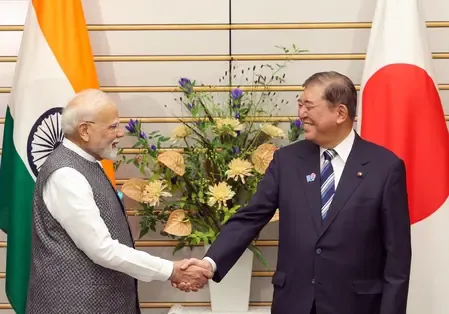
PM Modi recently visited Seychelles , Indonesia , Australia , and New Zealand ; Japan's top leadership also visited India.
India's cooperation on Indonesia's Sabang Port is seen as strategically significant due to its proximity to the Strait of Malacca .
The BrahMos supersonic cruise missile deal with Indonesia was cited as proof of India's shift from defence importer to exporter.
An MoU on maritime cooperation was signed between India and New Zealand , covering security, training, and mutual cooperation.
Partnerships in critical minerals , energy security , and new technologies were identified as key goals of the visits.
Bharatiya Janata Party (BJP) national spokesperson Sambit Patra on Sunday, 12 July said that Prime Minister Narendra Modi's recent foreign visits have delivered tangible strategic, defence, and economic dividends for India. Speaking at a press conference at the BJP headquarters in New Delhi, Patra presented what he titled '10 Kadam, 10 Ka Dum' — a ten-point assessment of the outcomes from Modi's visits to Seychelles, Indonesia, Australia, and New Zealand, as well as the reciprocal visit by Japan's top leadership to India.
India's Expanding Role in the Indian Ocean and Indo-Pacific
Patra argued that through these engagements, India has deepened its footprint across the Indian Ocean and Indo-Pacific regions, describing the country as an emerging 'force for stability' in both theatres. He attributed this standing to what he called India's political stability, policy continuity, and economic resilience — maintained, he said, even through the COVID-19 pandemic, global conflicts, and economic headwinds.
'While governments and policies in many countries have changed over the past few years, India has established global trust through political stability, policy continuity, and economic strength,' Patra said.
Sabang Port and the Strait of Malacca
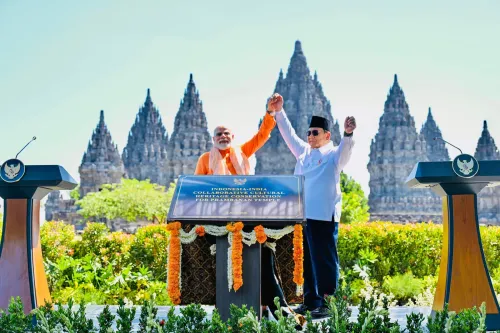
A centrepiece of Patra's presentation was Indonesia's Sabang Port, which he described as carrying 'immense strategic importance' owing to its proximity to the Strait of Malacca — one of the world's busiest maritime corridors and a chokepoint for a significant share of international trade. He said India's interest in the port's development would strengthen its strategic reach across the Indian Ocean region, extending maritime cooperation from Seychelles to Indonesia.
BrahMos Deal and the Shift to Defence Exports
Patra highlighted the BrahMos supersonic cruise missile cooperation with Indonesia as evidence of India's evolution from a defence importer to a defence exporter and partner. 'India is evolving from a mere purchaser of weapons into a partner and exporter of defence equipment,' he said. He noted that while India previously relied heavily on imports to meet its defence requirements, it is now advancing in both defence production and exports — a shift he framed as central to the Modi government's strategic doctrine.
India-New Zealand Defence MoU
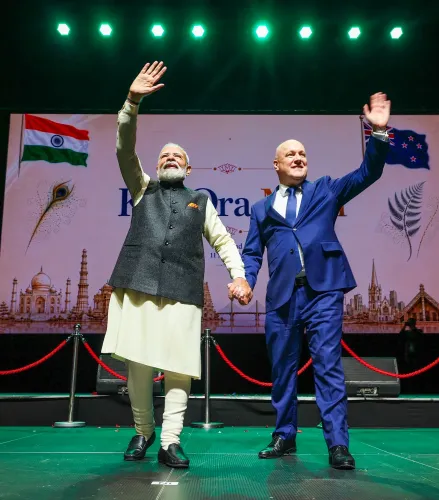
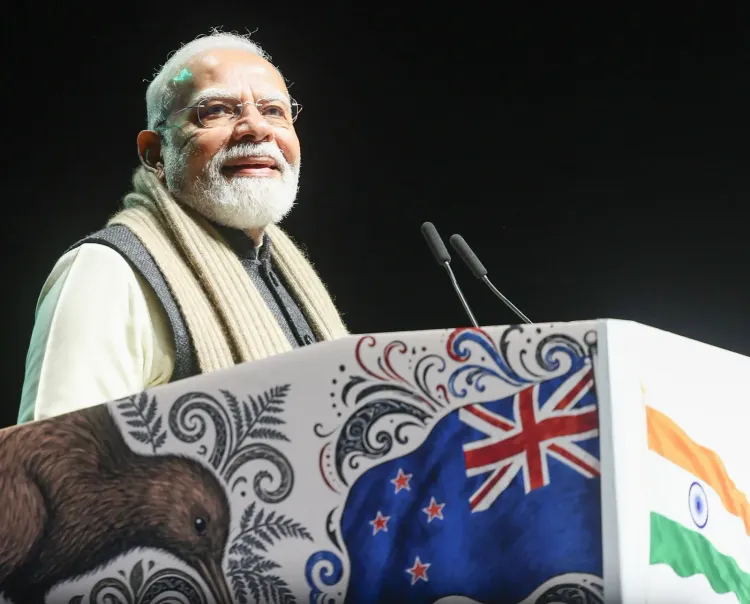
On the New Zealand leg of the visits, Patra cited the signing of a Memorandum of Understanding (MoU) on maritime cooperation between the two nations. He said the agreement would deepen ties between the Indian Navy and the New Zealand Defence Force, covering maritime security, joint training, and mutual cooperation frameworks.
Critical Minerals, Energy Security, and What Comes Next
Beyond defence, Patra said a key objective of the visits was to build partnerships in critical minerals, energy security, and emerging technologies — sectors he described as central to India's long-term economic interests amid a shifting global order. 'The Modi government's foreign policy aims to safeguard India's national interests and establish long-term relationships with major global powers,' he said. As these diplomatic frameworks move toward implementation, the focus will shift to whether the announced agreements translate into on-ground outcomes in trade flows, defence deliveries, and technology transfers.
Point of View
Many of which have stalled at the implementation stage. The BrahMos deal with Indonesia is a genuine marker of India's defence-export ambitions, but Sabang Port cooperation has been discussed for years without a concrete development timeline. The shift from buyer to exporter in defence is real but incremental — and the test will be whether critical-mineral and energy-security partnerships yield supply-chain depth rather than headline diplomacy.
NationPress
11 Oct 2026
Frequently Asked Questions
What were the key outcomes of PM Modi's recent foreign visits according to the BJP?
The BJP cited strategic maritime cooperation via Indonesia's Sabang Port, the BrahMos supersonic cruise missile deal with Indonesia, a maritime MoU with New Zealand, and partnerships in critical minerals and energy security as the primary outcomes. Spokesperson Sambit Patra presented these under a ten-point framework titled '10 Kadam, 10 Ka Dum' on 12 July.
Why is Indonesia's Sabang Port significant for India?
Sabang Port is located near the Strait of Malacca, one of the world's busiest maritime trade corridors. The BJP argues that India's involvement in its development would extend India's strategic reach across the Indian Ocean region and bolster maritime security.
What is the India-New Zealand maritime MoU about?
An MoU on maritime cooperation was signed between India and New Zealand during PM Modi's visit, establishing a framework for collaboration between the Indian Navy and the New Zealand Defence Force in areas including maritime security, training, and mutual cooperation.
How does the BrahMos deal reflect India's defence policy shift?
The BrahMos supersonic cruise missile deal with Indonesia is cited by the BJP as evidence that India is transitioning from being primarily a defence importer to becoming a defence exporter and strategic partner. It is part of a broader push in defence production under the current government.
Which countries did PM Modi visit in this recent diplomatic tour?
PM Modi visited Seychelles, Indonesia, Australia, and New Zealand. Separately, Japan's top leadership also travelled to India during the same period, as highlighted by BJP spokesperson Sambit Patra in his 12 July press conference.