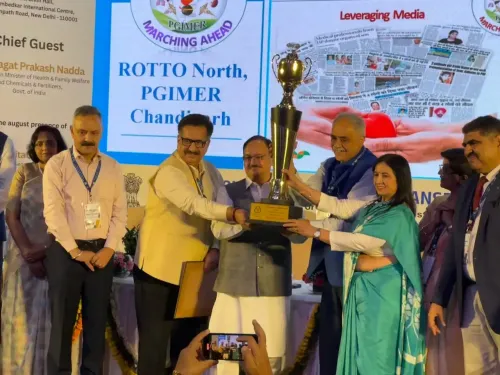
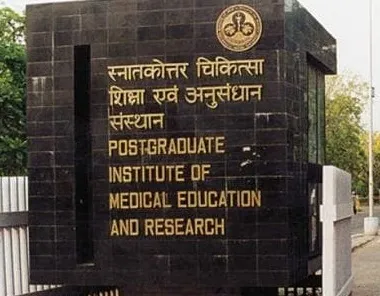
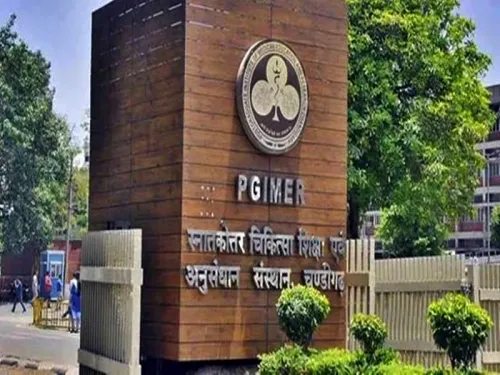
Nadda attends PM Modi's PGIMER Chandigarh health project launch
Synopsis
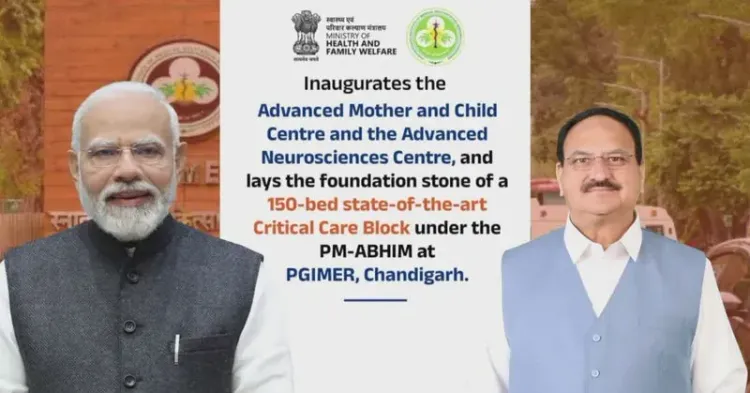
Prime Minister Narendra Modi inaugurated and laid foundation stones for healthcare projects at PGIMER, Chandigarh on 17 July 2026, with Union Health Minister J. P. Nadda in attendance. The event reinforces the central government's push to expand tertiary public health infrastructure at one of India's oldest institutes of national importance.
Key Takeaways
PM Narendra Modi led the inauguration and foundation stone laying of healthcare projects at PGIMER, Chandigarh on 17 July 2026 .
Union Health Minister J.
Nadda was present at the ceremony, highlighting the event's national policy significance.
PGIMER , established in 1962 , is an autonomous institute of national importance and a key tertiary referral centre for northern India.
The event is part of a continuing central government pattern of augmenting infrastructure at existing institutes of national importance alongside new AIIMS campuses.
Patients across Punjab, Haryana, Himachal Pradesh , and neighbouring states are the primary intended beneficiaries of expanded PGIMER capacity.
The Ayushman Bharat PM-JAY scheme, launched in 2018 , forms the policy backbone linking central funding to tertiary care access at institutions such as PGIMER.
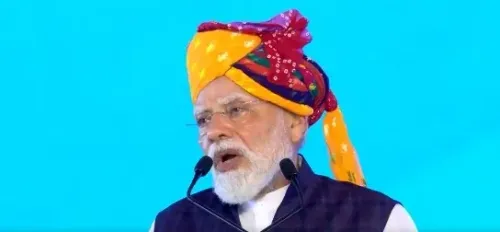
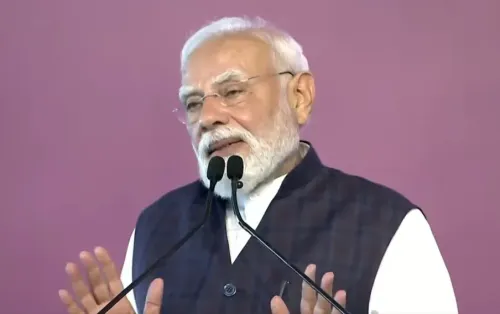
Union Health Minister J. P. Nadda attended the inauguration and foundation stone laying ceremony of healthcare projects led by Prime Minister Narendra Modi at the Postgraduate Institute of Medical Education and Research (PGIMER) in Chandigarh on Friday, 17 July 2026. The event marked a significant push by the central government to augment health infrastructure at one of India's premier public medical institutions.
Context
The ceremony at PGIMER, Chandigarh involved both inauguration of completed healthcare facilities and laying of foundation stones for upcoming projects, underscoring the government's dual focus on delivery and pipeline expansion. Nadda, who shared updates from the event on social media, described it as part of the ongoing national effort to strengthen tertiary healthcare in the public sector. PGIMER is an autonomous institute of national importance established in 1962, serving as a critical referral centre for patients across northern India.
Policy Backdrop
The event fits within a broader pattern of central government investment in upgrading existing institutes of national importance alongside the creation of new All India Institute of Medical Sciences (AIIMS) campuses across the country. Successive governments have prioritised physical infrastructure augmentation — expanding bed capacity, diagnostic facilities, and super-speciality services — at institutions such as PGIMER. The flagship Ayushman Bharat Pradhan Mantri Jan Arogya Yojana, launched in 2018, has further aligned central funding with tertiary care access at government institutes including PGIMER, aiming to reduce the financial burden on patients from lower-income groups.
Nadda, in his dual role as Union Minister of Health and Family Welfare and BJP national president, has been at the forefront of communicating the government's health infrastructure agenda. His presence alongside the Prime Minister at such ceremonies signals the political and administrative priority accorded to public health investment.
Stakeholders and Impact
The primary beneficiaries of expanded infrastructure at PGIMER are patients from Punjab, Haryana, Himachal Pradesh, Jammu and Kashmir, and neighbouring states who rely on the institute for advanced tertiary and super-speciality care. Medical faculty, researchers, and postgraduate students stand to benefit from upgraded facilities that support both clinical training and research output. Increased capacity at PGIMER also reduces the patient load burden that has historically strained the institute's existing infrastructure.
For the central government, visible investment in a landmark northern Indian institution carries both policy and political significance, particularly ahead of ongoing deliberations around health budget allocations in Parliament.
What's Next
Parliamentary scrutiny of health budget allocations is expected to follow high-profile infrastructure announcements of this nature, with opposition benches likely to seek specifics on project timelines, costs, and completion guarantees. State governments in the region may also announce complementary initiatives to align with the central push at PGIMER. The trajectory of similar institute upgrades at other central health institutions will be closely watched as a signal of the government's long-term public health infrastructure strategy.
Point of View
Not merely a departmental agenda item. Anchoring such events at legacy institutions like PGIMER, rather than only at newly built AIIMS campuses, reflects a strategic pivot toward demonstrating results within existing frameworks. For Nadda, who straddles the roles of health minister and BJP president, these ceremonies serve the dual purpose of policy communication and political optics in an electorally significant region. The pattern of foundation stone and inauguration events at central health institutes is likely to intensify as the government seeks to consolidate its public health narrative ahead of budget and legislative cycles.
NationPress
17 Jul 2026
Frequently Asked Questions
What happened at PGIMER Chandigarh on 17 July 2026?
Prime Minister Narendra Modi inaugurated completed healthcare projects and laid foundation stones for new ones at PGIMER, Chandigarh on 17 July 2026, with Union Health Minister J. P. Nadda present at the ceremony.
What is PGIMER Chandigarh?
PGIMER, or the Postgraduate Institute of Medical Education and Research, is an autonomous institute of national importance established in 1962 in Chandigarh. It is one of India's premier public hospitals for tertiary care, postgraduate medical education, and research, serving patients primarily from northern India.
Why did J. P. Nadda attend the PGIMER event?
J. P. Nadda attended in his capacity as Union Minister of Health and Family Welfare, as the event involved central government healthcare infrastructure projects falling under his ministry's mandate.
How does Ayushman Bharat relate to PGIMER?
Ayushman Bharat Pradhan Mantri Jan Arogya Yojana, launched in 2018, links central government funding to tertiary care access at public institutions including PGIMER, helping lower-income patients access advanced treatment without financial burden.
What is the significance of PM Modi inaugurating health projects at PGIMER?
It signals the central government's continued prioritisation of upgrading existing institutes of national importance, complementing the creation of new AIIMS campuses, and underscores the political salience of public health infrastructure investment in northern India.