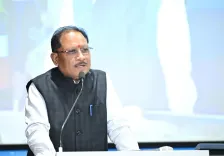
Nadda: Cabinet Clears GEC-III to Evacuate 135 GW of Renewable Power
Synopsis
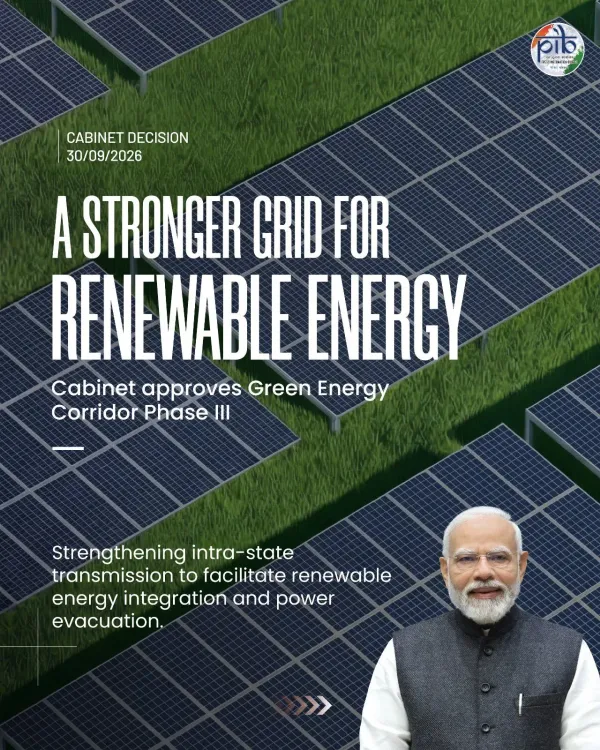
The Union Cabinet has approved Green Energy Corridor Phase-III, a ₹1.86 lakh crore scheme to strengthen intra-state transmission, evacuate up to 135 GW of renewable power, and deploy 50 GWh of battery storage — advancing India toward 900 GW of non-fossil capacity by 2035.
Key Takeaways
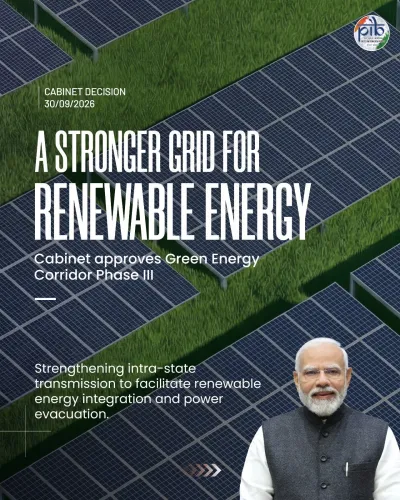
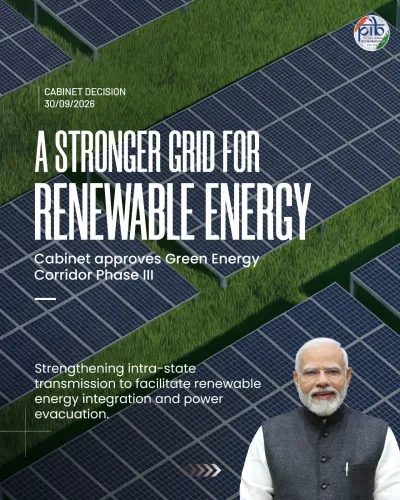
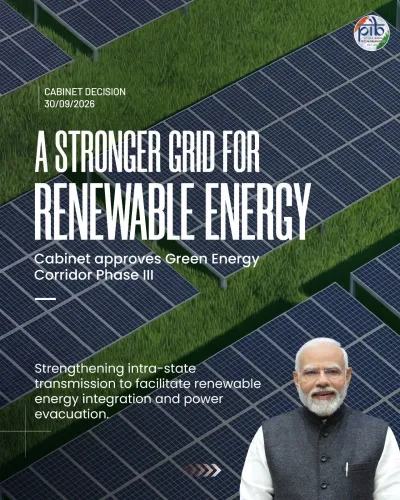
The Union Cabinet , chaired by PM Narendra Modi , approved GEC-III on 30 September 2026 .
The scheme strengthens intra-state transmission to enable evacuation of up to 135 GW of renewable energy.
50 GWh of Battery Energy Storage Systems will improve grid flexibility and address peak-hour demand.
Total outlay is ₹1.86 lakh crore , with ₹54,082 crore in Central Financial Support.
GEC-III advances India's target of 900 GW of installed non-fossil capacity by 2035 .
Execution will depend on state-level sanctions, disbursement timelines, and the financial health of state power utilities.
India just threw a ₹1.86 lakh crore switch on the future of its power grid. Union Health Minister and BJP National President J. P. Nadda announced on Wednesday, 30 September 2026 that the Union Cabinet, chaired by Prime Minister Narendra Modi, has approved the Green Energy Corridor Phase-III (GEC-III) scheme — a sweeping upgrade to the country's intra-state transmission network designed to carry renewable energy from where it is generated to where it is needed, at a scale India has never attempted before.
What GEC-III Actually Does — and Why the Grid Needed It
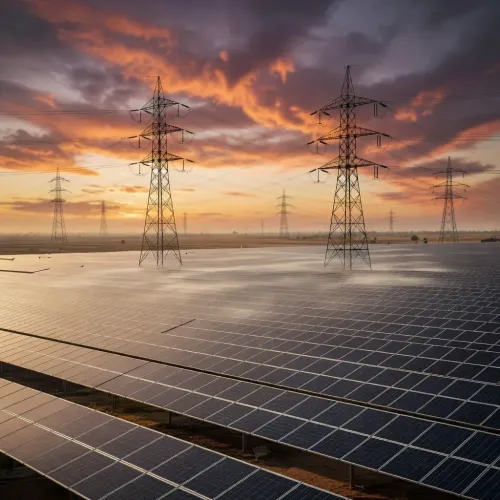
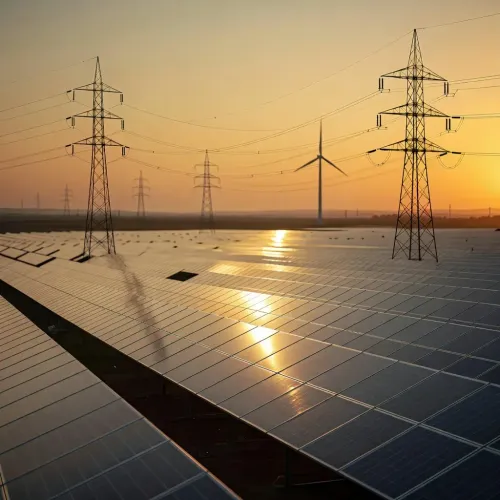
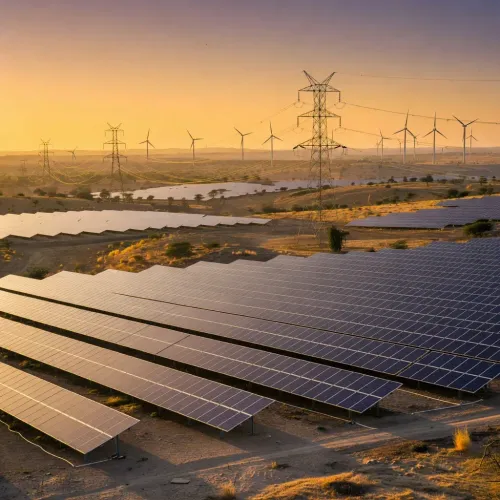
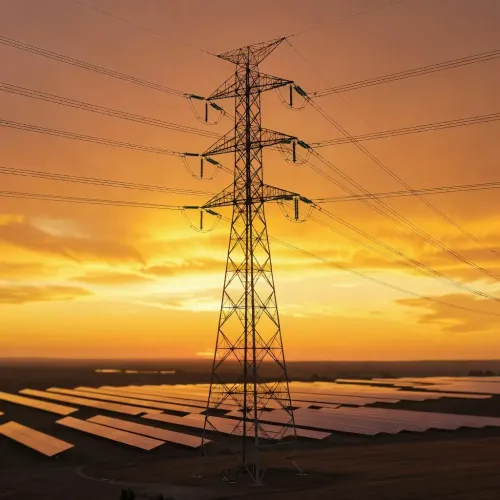
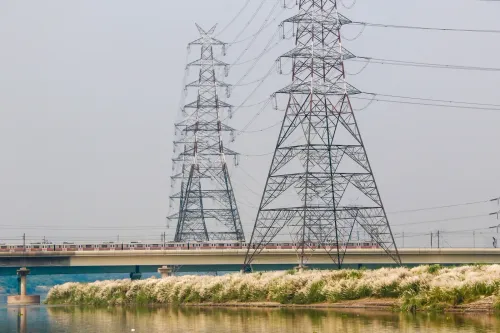
The core challenge for any electricity grid adding solar and wind at pace is not generation — it is getting that power out. GEC-III directly attacks that bottleneck by strengthening intra-state transmission systems across the country, unlocking the ability to evacuate up to 135 GW of renewable energy. That number matters: India's entire installed capacity today sits in the low hundreds of gigawatts, so this single scheme is sized for a generational leap.
Alongside the transmission build-out, the scheme embeds 50 GWh of Battery Energy Storage Systems (BESS). Storage is the piece that turns intermittent sunshine and wind into reliable, round-the-clock electricity. The batteries allow surplus renewable power generated at noon to be dispatched during peak evening demand — solving the grid-flexibility problem that has long been the achilles heel of large-scale clean energy integration.
The ₹1.86 Lakh Crore Outlay — and Who Pays What
The total project outlay is ₹1.86 lakh crore. Of that, the Central government will provide ₹54,082 crore as financial support, with the remainder expected to be mobilised through state utilities, developers, and project financing. That central grant — roughly 29 percent of the total — is structured to de-risk state-level investment and keep the cost of power transmission from being passed on to consumers.
Nadda noted that GEC-III will 'help keep power costs down, create employment and advance India towards 900 GW of installed non-fossil capacity by 2035.' The employment and affordability angle is deliberate: large transmission projects generate significant construction and operations work across project states, and cheaper grid evacuation ultimately shows up on household electricity bills.
From GEC-I and II to a 900 GW Horizon
GEC-III is the third chapter of a story that began in the 2010s, when Green Energy Corridor Phases I and II built out inter-state transmission lines to connect renewable-rich states — Rajasthan, Gujarat, Tamil Nadu, Karnataka — to demand centres elsewhere in the country. Those earlier phases proved the model; this phase scales it dramatically, shifting focus to intra-state networks where congestion increasingly bites.
India's climate architecture underpins the ambition. At COP26 in 2021, India committed to 500 GW of non-fossil capacity by 2030. The 900 GW by 2035 target referenced in Wednesday's Cabinet decision extends that arc into the next decade — and GEC-III is explicitly the infrastructure spine that makes it credible. Without transmission and storage at this scale, additional generation capacity simply sits stranded.
What to Watch as the Scheme Rolls Out
Approval is the easy part. The real test arrives at the state level, where project sanctions, land acquisition, and actual disbursement of central grants will determine whether the 135 GW evacuation target is met on schedule. State power utilities — the entities that will build and own much of this infrastructure — vary enormously in financial health and execution capacity. Renewable developers will be watching disbursement timelines closely; their own investment decisions hinge on knowing the grid will be ready when their projects are.
A scheme of this size, if executed, does not just change India's energy mix — it repositions India in global climate diplomacy and in the emerging geopolitics of clean-energy supply chains. The grid comes first. Everything else follows.
Point of View
The scheme addresses the grid-integration gap that has quietly threatened India's renewable roll-out for years. The ₹54,082 crore central grant is calibrated to crowd in private and state investment without blowing up power tariffs — a politically sensitive balancing act ahead of multiple state elections. Whether the scheme becomes a genuine inflection point or another ambitious target on paper will hinge almost entirely on state utility execution, an arena where India's track record is uneven.
NationPress
30 Sept 2026
Frequently Asked Questions
What is the Green Energy Corridor Phase-III scheme?
GEC-III is a central government scheme approved by the Union Cabinet in September 2026 to upgrade intra-state transmission networks so India can evacuate up to 135 GW of renewable energy. It also includes 50 GWh of battery storage to improve grid flexibility and manage peak-hour demand.
What is the total cost of GEC-III?
The total outlay for GEC-III is ₹1.86 lakh crore. The central government will provide ₹54,082 crore as financial support, with the balance expected from state utilities, developers, and project financing.
How is GEC-III different from earlier Green Energy Corridor phases?
Phases I and II, approved in the 2010s, focused on building inter-state transmission lines to connect renewable-rich states with demand centres. GEC-III shifts focus to intra-state networks, where congestion has become the bigger bottleneck as solar and wind capacity has grown.
What is India's 900 GW non-fossil capacity target?
The 900 GW target refers to India's goal of having 900 gigawatts of installed renewable and non-fossil power capacity by 2035. This extends India's earlier commitment of 500 GW non-fossil capacity by 2030, made at COP26 in 2021.
How will GEC-III benefit electricity consumers?
By reducing transmission congestion and deploying battery storage to balance supply and demand, the scheme is designed to lower the cost of delivering renewable power to consumers. Cheaper evacuation infrastructure should, over time, help moderate electricity tariffs.