Nadda Chairs Multi-Ministry Meet to Boost TB Mukt Bharat Drive
Synopsis
Union Health Minister J. P. Nadda chaired a high-level meeting with three ministries on July 7, 2026, to strengthen TB Mukt Bharat Abhiyaan. Over 28 crore individuals have been screened and 39 lakh TB patients notified since December 2024, as India pursues a whole-of-government approach to tuberculosis elimination.
Key Takeaways
Nadda chaired a high-level meeting on July 7, 2026 with the Ministries of Youth Affairs and Sports, Labour and Employment, and Defence to coordinate TB elimination efforts.
Since the TB Mukt Bharat Abhiyaan launched in December 2024 , over 28 crore vulnerable individuals have been screened.
39 lakh TB patients have been notified, including 12.93 lakh asymptomatic patients found through active screening.
Ministries were directed to intensify NCC and MY Bharat volunteer engagement and integrate TB screening into workplace programmes.
India committed in 2018 to eliminating TB by 2025 , five years ahead of the SDG 2030 deadline, under the National TB Elimination Programme.
The campaign aims to become a 'nationwide people's movement' through coordinated government and community participation.
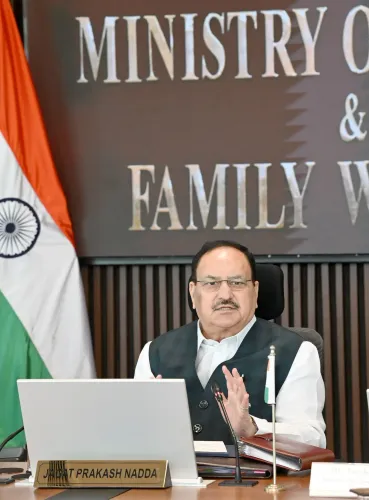
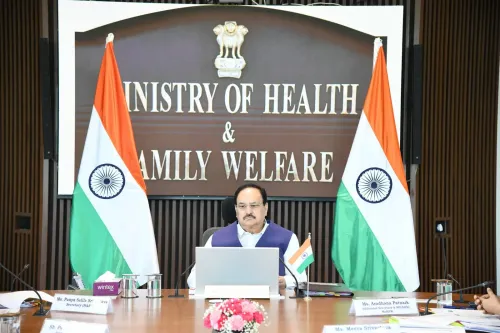
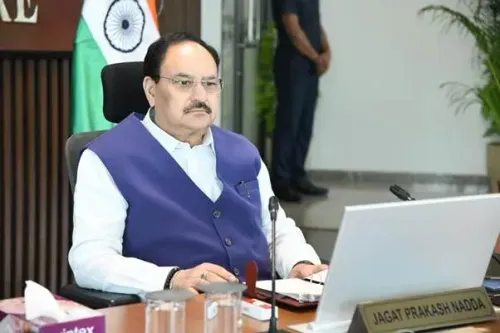
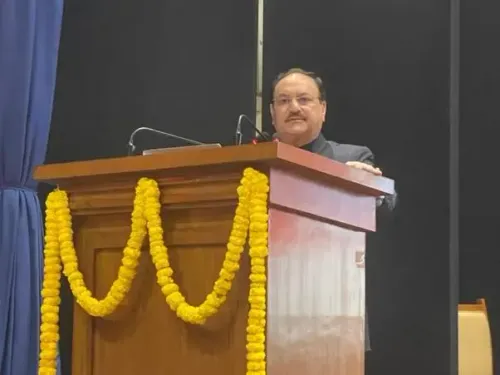
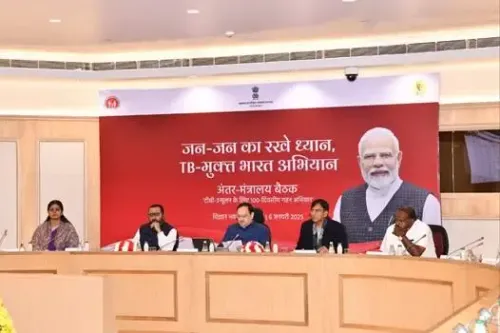
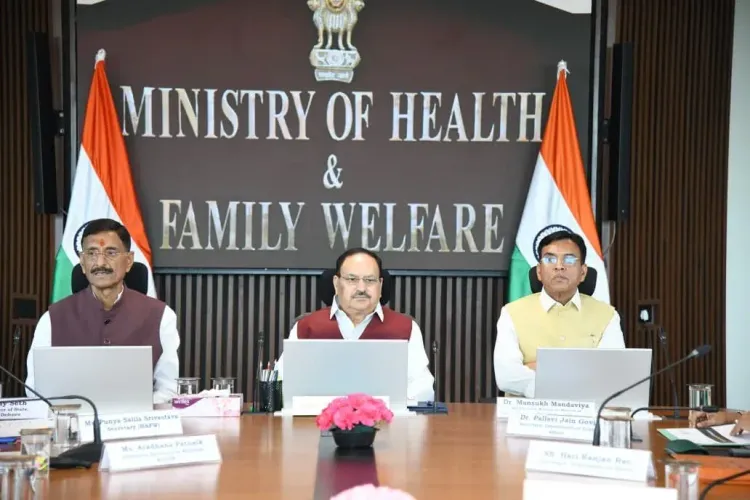
Union Health Minister J. P. Nadda on Tuesday, July 7, 2026, chaired a high-level inter-ministerial meeting with the Ministries of Youth Affairs and Sports, Labour and Employment, and Defence to intensify coordination under the TB Mukt Bharat Abhiyaan. The meeting focused on expanding volunteer engagement, workplace TB screening, and community outreach to accelerate India's tuberculosis elimination mission.
Context
Nadda urged the participating ministries to scale up engagement through the National Cadet Corps (NCC) and the MY Bharat volunteer platform, while also directing that TB screening be systematically integrated into workplace health programmes. The minister stated that the goal is to transform the Abhiyaan into 'a nationwide people's movement by harnessing the power of India's youth.' He attributed the campaign's direction to the vision of Prime Minister Narendra Modi.
Since the launch of the TB Mukt Bharat Abhiyaan in December 2024, the government reports that over 28 crore vulnerable individuals have been screened and 39 lakh TB patients have been notified. Of those notified, 12.93 lakh were asymptomatic patients identified through active — rather than symptom-driven — screening, a figure the minister described as an 'encouraging outcome.'
Policy Backdrop
India's tuberculosis elimination effort has a long institutional history. The Revised National TB Control Programme, launched in 1997, was later redesignated as the National TB Elimination Programme. In 2018, at the UN High-Level Meeting on TB, India committed to eliminating the disease by 2025 — five years ahead of the Sustainable Development Goal deadline of 2030. The Nikshay digital portal, also introduced in 2018, was designed to improve patient tracking and notification across both public and private healthcare providers.
The TB Mukt Bharat Abhiyaan represents a continuation and intensification of this agenda, with a sharper emphasis on active case-finding among asymptomatic populations and on mobilising non-health government machinery to reach communities that routine health services may miss.
Stakeholders and Impact
The inclusion of the Ministry of Labour and Employment signals a push to reach India's large organised and unorganised workforce, where TB burden can be significant and screening coverage has historically been uneven. Workplace-based screening programmes, if implemented at scale, could surface cases among working-age adults who may not otherwise present at health facilities.
The involvement of the Ministry of Defence — particularly through the NCC, which has a presence in schools and colleges across the country — extends the campaign's reach to young volunteers who can serve as community mobilisers. The MY Bharat platform, overseen by the Ministry of Youth Affairs and Sports, similarly provides a structured volunteer network that the Health Ministry is seeking to deploy for awareness and outreach activities.
What's Next
Nadda's emphasis on a 'whole-of-government and whole-of-society approach' suggests that further inter-ministerial review meetings are likely before the next parliamentary session on health. The Central TB Division releases quarterly notification data, and the figures from the current campaign cycle will be a key indicator of whether the multi-ministry coordination model is translating into measurable gains in case detection. Sustained political attention and follow-through on workplace and youth-channel screening will determine whether the Abhiyaan's early numbers can be maintained and expanded.
Point of View
Moving beyond health-sector silos into labour, defence, and youth policy domains. By anchoring the Abhiyaan to volunteer networks like the NCC and MY Bharat, the government is replicating a mobilisation model it has used in other flagship campaigns to generate visible grassroots momentum. The asymptomatic case-detection figure — 12.93 lakh patients identified without symptoms — is politically significant because it allows the ministry to argue that active screening is finding disease that the conventional system would have missed. Whether the coordination agreed upon in this meeting translates into sustained field-level action across three separate ministries will be the real test of the 'whole-of-government' framing.
NationPress
7 Jul 2026
Frequently Asked Questions
What is the TB Mukt Bharat Abhiyaan?
The TB Mukt Bharat Abhiyaan is India's national mission to eliminate tuberculosis, launched in December 2024, involving active screening of vulnerable populations, patient notification, and community outreach across government ministries and civil society.
How many people have been screened under TB Mukt Bharat Abhiyaan?
Over 28 crore vulnerable individuals have been screened since the Abhiyaan's launch in December 2024, according to figures shared by Union Health Minister J. P. Nadda on July 7, 2026.
What is India's target for TB elimination?
India committed in 2018 to eliminating tuberculosis by 2025, five years ahead of the global Sustainable Development Goal deadline of 2030, under the National TB Elimination Programme.
What role does NCC play in the TB Mukt Bharat campaign?
The National Cadet Corps, under the Ministry of Defence, is being mobilised as a volunteer force for community awareness and outreach under the TB Mukt Bharat Abhiyaan, leveraging its presence in schools and colleges across India.
What is the Nikshay portal used for in TB control?
Nikshay is a digital portal introduced in 2018 to track TB patients and improve case notification across public and private healthcare providers in India, forming a key data backbone of the National TB Elimination Programme.