Nadda challenges Rahul on paper leaks in Congress states, cites CJP talks and Wangchuk outreach
Synopsis
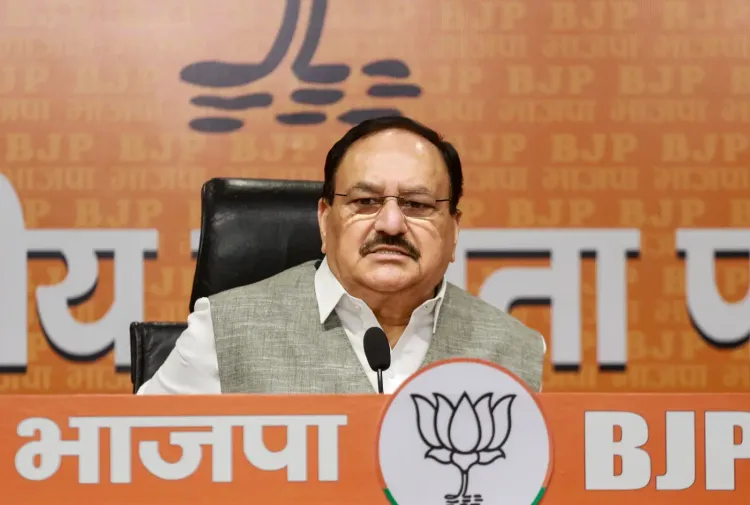
J.P. Nadda went on the offensive on two fronts Wednesday — challenging Rahul Gandhi to explain paper leaks in Congress-ruled states while simultaneously revealing government outreach to both CJP protesters and hunger-striking activist Sonam Wangchuk. The dual move signals a deliberate BJP strategy: de-escalate street pressure while reframing the exam crisis as a cross-party failure.
Key Takeaways
Nadda on 22 July said the Centre is open to dialogue with all stakeholders on the examination paper leak issue.
The government held talks with CJP representatives in a 'cordial atmosphere' and asked them to submit demands in writing.
Nadda visited Sonam Wangchuk at Medanta Hospital and urged him to end his hunger strike and join mainstream dialogue.
The government offered a parliamentary debate of up to 12 or 18 hours on exam paper leaks.
Nadda cited alleged paper leaks in 9 Opposition-ruled states — including Himachal Pradesh, Jharkhand, Tamil Nadu, and Kerala — to counter Rahul Gandhi's criticism.
The government said it will respond to Wangchuk's open letter before advancing dialogue.
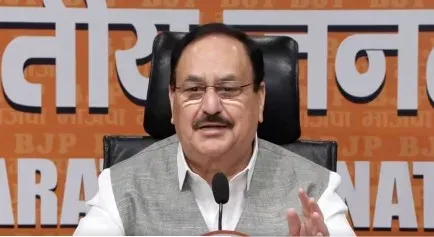
Union Health Minister J.P. Nadda on Wednesday, 22 July declared that the Centre was open to dialogue with all stakeholders on the examination paper leak crisis, revealing that the government had already held talks with representatives of the protesting CJP and had personally urged activist Sonam Wangchuk to end his hunger strike and re-enter the mainstream dialogue process.
Government's Outreach to CJP Representatives
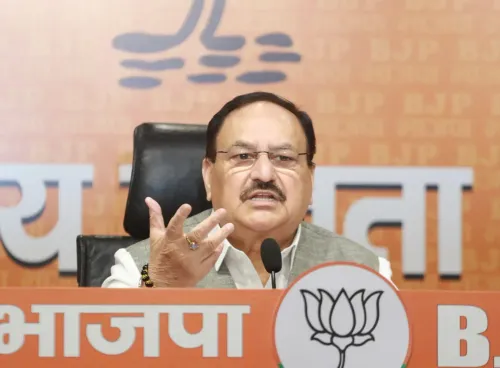
Addressing a press conference in New Delhi, Nadda said the meeting with CJP representatives was conducted in a 'cordial atmosphere,' during which the government listened to their concerns and requested written submissions of their demands.
'The discussion took place in a very cordial atmosphere. We listened to their views very calmly. I told them it would be better if they submitted their points in writing, and they have done so. We are ready for discussions whenever they ask,' Nadda said, clarifying that no fresh meeting had taken place on Wednesday itself.
Nadda Visits Wangchuk at Medanta Hospital
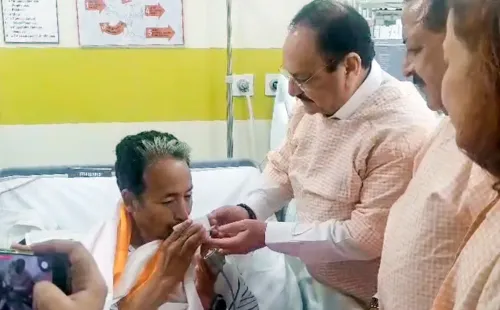
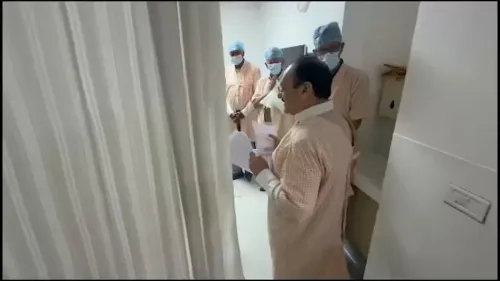
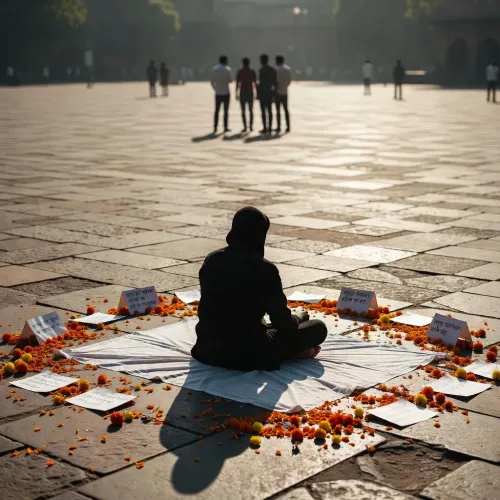
Nadda also disclosed that he had visited Sonam Wangchuk at Medanta Hospital, where the activist is receiving treatment after being shifted from Safdarjung Hospital. The minister said he inquired about Wangchuk's health and appealed to him to break his fast.
'We went to inquire about his well-being. Since he was in the ICU, the environment was very restricted. We requested him to break his fast, join the mainstream and guide the children in the right direction. Our government is ready to discuss all issues and address every concern,' Nadda said. He added that Wangchuk had written him an open letter and the government would respond to it before taking the dialogue forward.
Parliament Proposed as Forum for Exam Policy Debate
Reiterating the government's position, Nadda said Parliament was the most appropriate forum to evolve a long-term policy on examination paper leaks. He indicated the government was prepared for a short-duration discussion, a long-duration discussion, or even a debate lasting 12 or 18 hours if the Opposition so desired.
'Every aspect should be discussed and a concrete policy should emerge. Children are the future of the country, and it is the responsibility of both the government and the Opposition to safeguard that future,' he asserted.
Nadda Targets Rahul Gandhi Over Selective Outrage
Nadda went on the offensive against Leader of Opposition Rahul Gandhi, listing alleged examination irregularities in states governed by the Congress and allied parties — including Jammu and Kashmir under the Congress-National Conference government, Himachal Pradesh, Jharkhand, Telangana, Tamil Nadu, West Bengal, Punjab, Kerala, and Karnataka.
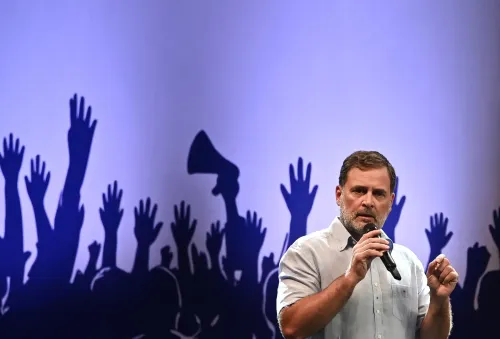
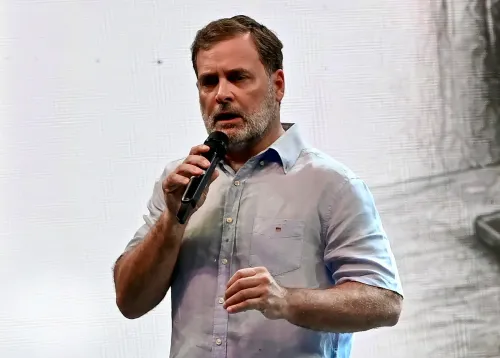
'There is a long list of paper leaks under Congress and Congress-supported governments. Why is Rahul Gandhi selective? Why has he not spoken about UPA and UPA-supported governments? This clearly shows that his objective is not students' welfare or improving education but gaining political mileage from students' issues,' Nadda alleged.
The minister accused Gandhi of politicising students' concerns rather than seeking justice for them, while asserting that the paper leak issue was 'genuine' and deserved in-depth, non-partisan debate. The Bharatiya Janata Party (BJP) has consistently sought to shift the narrative to Opposition-ruled states as scrutiny over the NEET-UG controversy has intensified in recent weeks.
What Comes Next
The government's twin moves — engaging the CJP and reaching out to Wangchuk — signal an attempt to de-escalate multiple simultaneous pressure points ahead of the parliamentary session. Whether the Opposition accepts the invitation for a structured Parliament debate, and whether Wangchuk responds to the government's appeal, will shape the political trajectory of both issues in the days ahead.
Point of View
The BJP is attempting to universalise the scandal — blunting the Opposition's most potent student-facing attack ahead of Parliament. The outreach to Wangchuk is notable: the government is visibly anxious about a hunger strike that has drawn national sympathy, and a written open letter exchange is a soft way to buy time without making concessions. The real test is whether Parliament actually gets the structured debate Nadda promised — or whether the offer quietly expires once media attention moves on.
NationPress
21 Oct 2026
Frequently Asked Questions
What did J.P. Nadda say about examination paper leaks on 22 July?
Nadda said the Centre was open to discussions with all stakeholders on the paper leak issue and proposed Parliament as the most appropriate forum for a long-term policy debate. He offered a debate of up to 12 or 18 hours if the Opposition wished.
What is the government's position on the CJP protests?
The government held talks with CJP representatives in what Nadda described as a 'cordial atmosphere,' listening to their concerns and requesting written submissions of their demands. No fresh meeting took place on Wednesday, Nadda clarified.
Why did Nadda visit Sonam Wangchuk at Medanta Hospital?
Nadda visited Wangchuk, who was shifted from Safdarjung Hospital to Medanta Hospital, to inquire about his health and urge him to end his hunger strike. The government said it would respond to Wangchuk's open letter before proceeding with formal dialogue.
Which states did Nadda cite for paper leaks under Congress and allied governments?
Nadda listed alleged examination irregularities in Jammu and Kashmir (under the Congress-National Conference government), Himachal Pradesh, Jharkhand, Telangana, Tamil Nadu, West Bengal, Punjab, Kerala, and Karnataka. He used this to question why Rahul Gandhi had not raised these cases.
Why is Nadda accusing Rahul Gandhi of selective silence on paper leaks?
Nadda alleged that Gandhi's focus on paper leaks in BJP-ruled states while ignoring similar instances in Congress and allied-party-governed states shows political motivation rather than genuine concern for students. He said Gandhi's objective was 'gaining political mileage from students' issues' rather than improving education.