Nadda, Fadnavis release chemicals growth paper in Mumbai
Synopsis
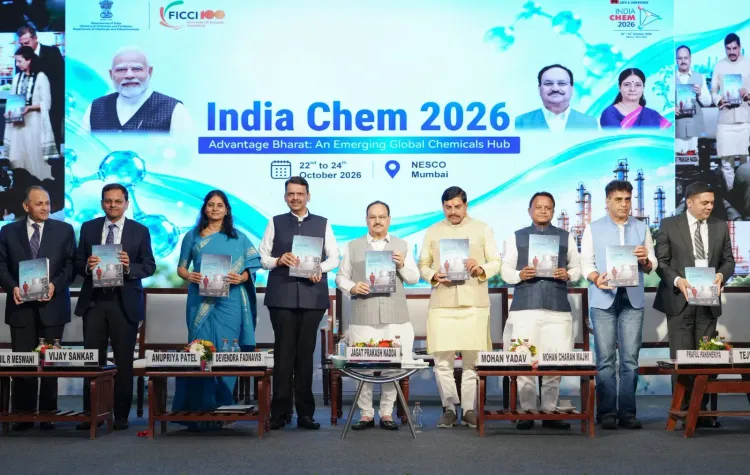
Union Minister J. P. Nadda and Maharashtra CM Devendra Fadnavis released a FICCI knowledge paper titled 'How India Can Lead the Next Global Chemicals Growth Wave' in Mumbai, joined by the chief ministers of Madhya Pradesh and Odisha, signalling a coordinated multi-state push to position India as a global chemicals sector leader.
Key Takeaways
Nadda and Maharashtra CM Devendra Fadnavis jointly released the FICCI knowledge paper in Mumbai on October 22, 2026 .
The paper is titled 'How India Can Lead the Next Global Chemicals Growth Wave' and is linked to the IndiaChem 2026 conclave.
Madhya Pradesh CM Dr.
Mohan Yadav and Odisha CM Mohan Charan Majhi were present, marking a rare multi-state political show of force for a sector event.
Union MoS Anupriya Patel and Gujarat MoS Praful Pansheriya also attended, adding central and state government breadth.
Industry body FICCI prepared the knowledge paper, positioning it as a strategic roadmap for India's chemicals sector ambitions.
The event signals coordinated intent to capitalise on global supply-chain shifts and position India as an alternative to China in chemicals manufacturing.
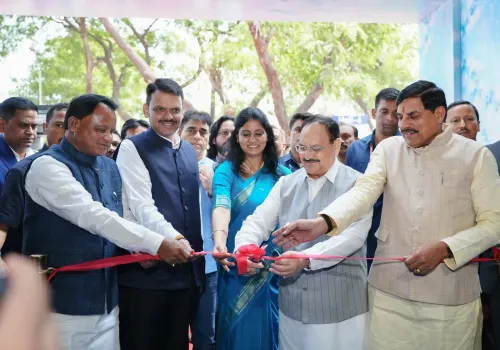
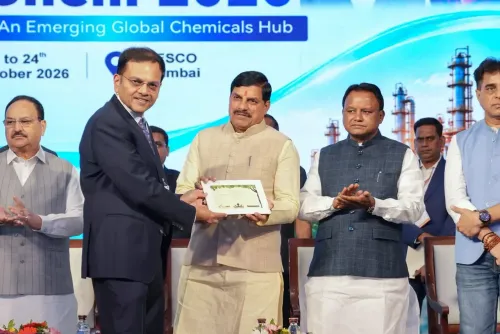
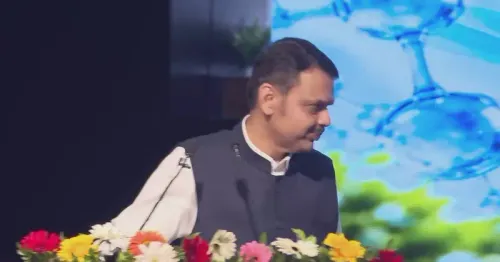
India's ambition to lead the next global chemicals boom got a formal blueprint on Thursday, October 22, when Union Minister J. P. Nadda and Maharashtra Chief Minister Devendra Fadnavis jointly released a knowledge paper titled 'How India Can Lead the Next Global Chemicals Growth Wave' at a high-level gathering in Mumbai.
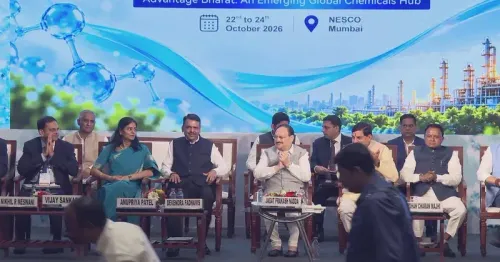
The release, flagged under the #IndiaChem2026 banner, brought together an unusually broad coalition of political leaders. Madhya Pradesh Chief Minister Dr. Mohan Yadav, Odisha Chief Minister Mohan Charan Majhi, Union Minister of State Anupriya Patel, and Gujarat Minister of State Praful Pansheriya were among the dignitaries present — a multi-state political signal that the chemicals sector push is being framed as a national, not just Maharashtra-specific, priority.FICCI's blueprint and the IndiaChem2026 moment
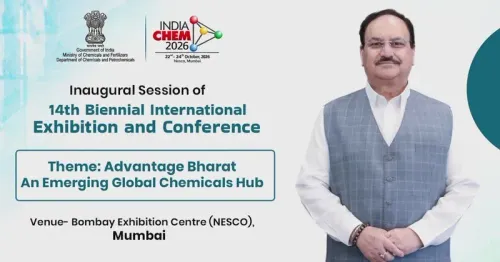
The knowledge paper was prepared by FICCI, India's apex industry federation, and is timed to coincide with IndiaChem 2026, one of the country's flagship chemicals and petrochemicals industry conclaves. The paper is designed to lay out a strategic roadmap — identifying where India sits in the global chemicals value chain and what structural moves could push it toward leadership.
India's chemicals sector is already a significant economic contributor, but global supply-chain realignments — accelerated by the post-China-plus-one shift in manufacturing — have opened a rare window. The gathering of CMs from Maharashtra, Madhya Pradesh, and Odisha alongside a Union Minister suggests that state governments with established or emerging chemicals clusters are lining up to compete for investment flows that could follow the paper's recommendations.
Why multiple chief ministers showed up
The cross-state presence is notable. Each of the three states represented — Maharashtra, Madhya Pradesh, and Odisha — has existing industrial infrastructure or designated investment zones that could absorb chemicals-sector investment. Their collective appearance at a single knowledge-paper launch signals coordinated intent rather than routine attendance. For investors and industry players watching the room, it was a visible demonstration that policy intent runs from New Delhi to state capitals.
The event also gave FICCI a rare platform where the paper's findings were received not by bureaucrats alone but by decision-makers who control land, water, and industrial clearance at the state level — the very chokepoints that have historically slowed chemicals-sector expansion in India.
The bigger manufacturing push behind the paper
The chemicals sector sits at the intersection of several government priorities: Atmanirbhar Bharat, export diversification, and import substitution in specialty chemicals and agrochemicals where India remains dependent on China. A focused knowledge paper — with political backing from multiple states — is meant to translate that broad intent into sector-specific, actionable strategy. Whether follow-up investment commitments and state-level implementation announcements emerge in the weeks ahead of and during IndiaChem 2026 will be the real test of Thursday's show of unity.
The chemicals sector's next growth wave is up for grabs globally. India has now, loudly and visibly, said it wants to lead it.
Point of View
Madhya Pradesh, and Odisha alongside Union leadership, the event projects policy continuity from the Centre down to the states that actually control industrial land and clearances. FICCI's authorship gives the paper industry credibility, while the political heft at the launch is meant to signal implementation seriousness. The real test will come in whether state-specific investment commitments follow before and during IndiaChem 2026.
NationPress
22 Oct 2026
Frequently Asked Questions
What is the knowledge paper released by JP Nadda and Devendra Fadnavis in Mumbai?
The knowledge paper is titled 'How India Can Lead the Next Global Chemicals Growth Wave' and was prepared by FICCI. It was released on October 22, 2026, in Mumbai as part of the lead-up to IndiaChem 2026, outlining a strategic roadmap for India's chemicals sector.
What is IndiaChem 2026?
IndiaChem 2026 is one of India's flagship chemicals and petrochemicals industry conclaves, used as a platform for policy announcements, investment discussions, and sector-wide strategy unveilings.
Who attended the knowledge paper release event in Mumbai?
The event was attended by Union Minister J. P. Nadda, Maharashtra CM Devendra Fadnavis, Madhya Pradesh CM Dr. Mohan Yadav, Odisha CM Mohan Charan Majhi, Union MoS Anupriya Patel, and Gujarat MoS Praful Pansheriya, along with other dignitaries.
Why are multiple chief ministers attending a chemicals sector event?
Maharashtra, Madhya Pradesh, and Odisha each have existing or emerging industrial clusters relevant to the chemicals sector. Their collective presence signals coordinated state-level commitment to attracting investment and implementing the knowledge paper's recommendations.
What is FICCI's role in India's chemicals sector push?
FICCI, India's apex industry federation, authored the knowledge paper released at the Mumbai event. The body brings together industry stakeholders and works with government to shape policy frameworks and investment strategies.