Nadda flags West Bengal voter roll surge, cites SIR data
Synopsis
BJP chief and Union Health Minister J. P. Nadda invokes West Bengal's voter-count surge from 4.58 crore to 7.66 crore since 2002 — with 70-100% rises in border districts — to justify the SIR electoral roll clean-up, contrasting it with Bihar's 202-seat NDA win after rolls shrank.
Key Takeaways
West Bengal's voter rolls grew from 4.58 crore (2002) to 7.66 crore , with border districts recording 70–100% increases , according to Nadda's post.
The Special Intensive Revision (SIR) mechanism was used to audit and remove suspected ineligible names from voter lists, Nadda argued.
In Bihar , the voter count fell from 7.89 crore to 7.42 crore after revision, yet turnout reached 66% and the NDA won 202 of 243 seats .
Nadda positioned Bihar's outcome as evidence that roll-cleaning strengthens, rather than suppresses, democratic participation.
The post uses the hashtag #SaveDemocracyRemoveAnarchy , signalling a coordinated BJP messaging push on electoral integrity.
The debate echoes the 2019 Assam NRC exercise and the long-running dispute over Bangladesh-origin migration and its impact on eastern India's voter lists.
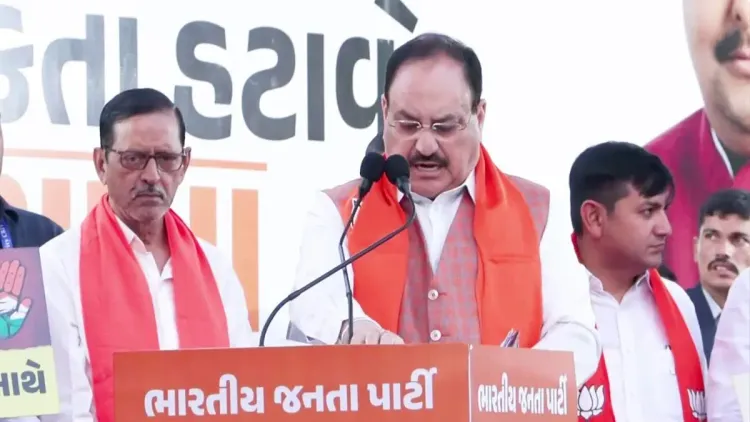
A voter count that nearly doubled in two decades in a border state — that is the number Union Health Minister and BJP National President J. P. Nadda put at the centre of a sharp political argument on Tuesday, October 27, 2026, when he took to X to defend the Special Intensive Revision (SIR) of electoral rolls and demand accountability for what he called demographic distortion driven by illegal infiltration.
The West Bengal voter-count arithmetic Nadda wants answered
Nadda's core charge is arithmetical and pointed. He argued that West Bengal's registered voter base swelled from 4.58 crore in 2002 to 7.66 crore — a near-67 percent rise over roughly two decades. That headline figure alone might be explained by natural population growth, but Nadda sharpened the argument by zeroing in on geography: in sīmāvarti jile (border districts), he said, the increase ran from 70 to 100 percent — figures he cited as raising serious questions about illegal infiltration and the insertion of ineligible names into voter rolls.
The Election Commission of India, as the constitutional body responsible for roll accuracy, has the power to order Special Intensive Revisions in specific geographies, and Nadda credited the SIR mechanism with doing precisely that job: systematically auditing the rolls and removing 'suspected names.' The post's subtext is an implicit rebuke of West Bengal's state government, which has been at loggerheads with the Centre over infiltration claims for several years.
Bihar as the counter-argument: fewer voters, higher turnout, sweeping NDA win
Nadda paired the West Bengal charge with what he presented as proof of the model's success: Bihar. There, he said, the voter count actually fell — from 7.89 crore to 7.42 crore — after the rolls were revised. Far from suppressing participation, he argued, the leaner list produced a 66 percent turnout and delivered the NDA a 202-seat sweep out of 243 assembly constituencies. The implicit logic: cleaning the rolls does not depress legitimate votes; it concentrates them.
The Bihar data point is politically loaded. It lets Nadda argue simultaneously that the SIR process is electorally neutral (turnout rose) and politically vindicated (the NDA won big). Critics will note that electoral outcomes are shaped by many variables beyond roll quality, but the juxtaposition is rhetorically effective — and the hashtag #SaveDemocracyRemoveAnarchy signals this is the opening volley of a coordinated messaging campaign, not a one-off remark.
The longer fight over citizenship and electoral integrity in eastern India
This is not the first time the central government has linked Bangladesh-origin migration with electoral roll distortions in eastern India. The National Register of Citizens, finalised in Assam in 2019, was explicitly designed to identify illegal immigrants and scrub their names from public records including voter lists. West Bengal has long resisted a similar exercise, and the state's ruling party has consistently challenged the Centre's framing of the infiltration issue.
Nadda's post lands at a moment when the Election Commission's mandate for further special revisions in border states is an open question. Any fresh ECI order — or legal challenge from West Bengal — will now be read against the political case Nadda is building here: that the SIR is not a partisan tool but a democratic necessity.
If the figures he cites hold up to scrutiny, the question won't just be about voter lists — it will be about who controls the narrative on electoral integrity heading into the next cycle.
Point of View
Not just a social media message — it uses official-sounding figures to reframe the SIR from a BJP electoral tactic into a constitutional imperative. By anchoring the argument in arithmetic (border-district roll surges) and then backing it with Bihar's outcome data, he is building a template the party can deploy whenever the Election Commission moves on other states. The West Bengal government's persistent resistance to central oversight on infiltration gives the BJP a durable adversarial backdrop. The larger arc is clear: as delimitation and roll-revision cycles approach, control over who counts as a voter — and who audits that list — will be among the sharpest contested terrains in Indian federal politics.
NationPress
27 Oct 2026
Frequently Asked Questions
What is SIR in the context of Indian elections?
SIR stands for Special Intensive Revision — a process ordered by the Election Commission of India to audit and clean up voter rolls, typically targeting specific geographies where anomalies or ineligible entries are suspected.
Why did JP Nadda raise the West Bengal voter roll issue?
Nadda argued that West Bengal's voter count nearly doubled from 4.58 crore in 2002 to 7.66 crore, with border districts showing 70–100% increases, which he said raises questions about illegal infiltration and ineligible entries on the rolls — justifying the SIR clean-up exercise.
What happened to Bihar's voter list after the SIR revision?
According to Nadda's post, Bihar's registered voter count fell from 7.89 crore to 7.42 crore after the revision, yet voter turnout reached 66% and the NDA won 202 of 243 assembly seats — which he cited as evidence the process strengthened rather than suppressed democratic participation.
Has India done a similar voter-roll clean-up in other states?
Yes. The Election Commission has periodically directed special summary revisions in border states. The 2019 National Register of Citizens exercise in Assam was a related effort to identify illegal immigrants and remove ineligible names from official records including voter lists.
What is the BJP's position on illegal immigration and West Bengal?
The BJP, led by Nadda as national president, has consistently argued that undocumented migration from Bangladesh has distorted demographics and voter rolls in eastern Indian states, particularly West Bengal, and has backed central and ECI-level mechanisms to verify and clean up those rolls.