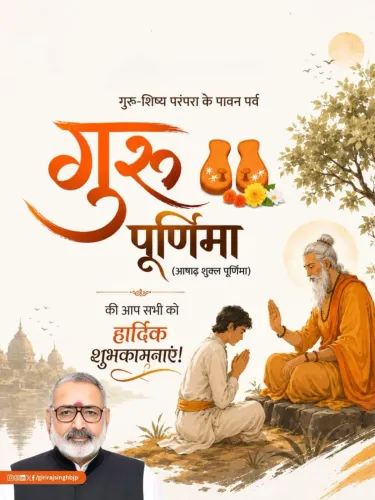
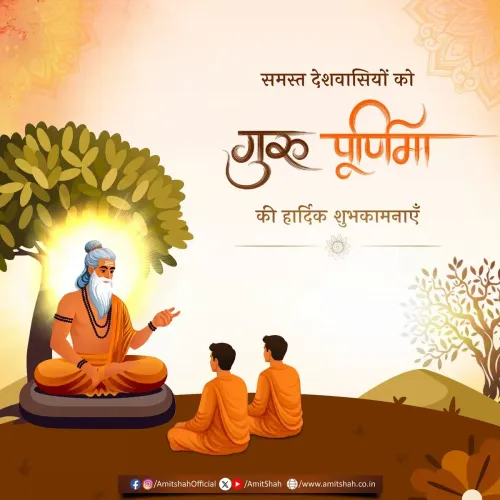
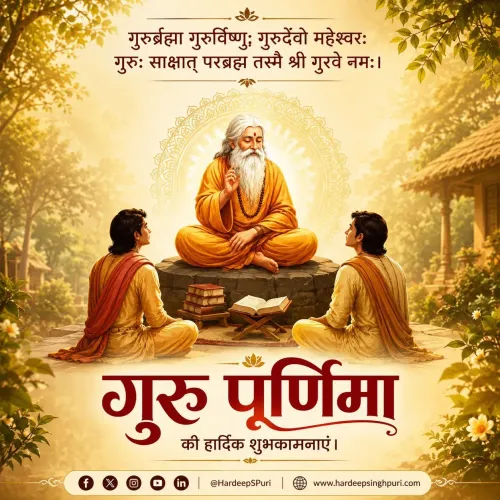
Nadda extends Guru Purnima greetings, honours guru-shishya tradition
Synopsis
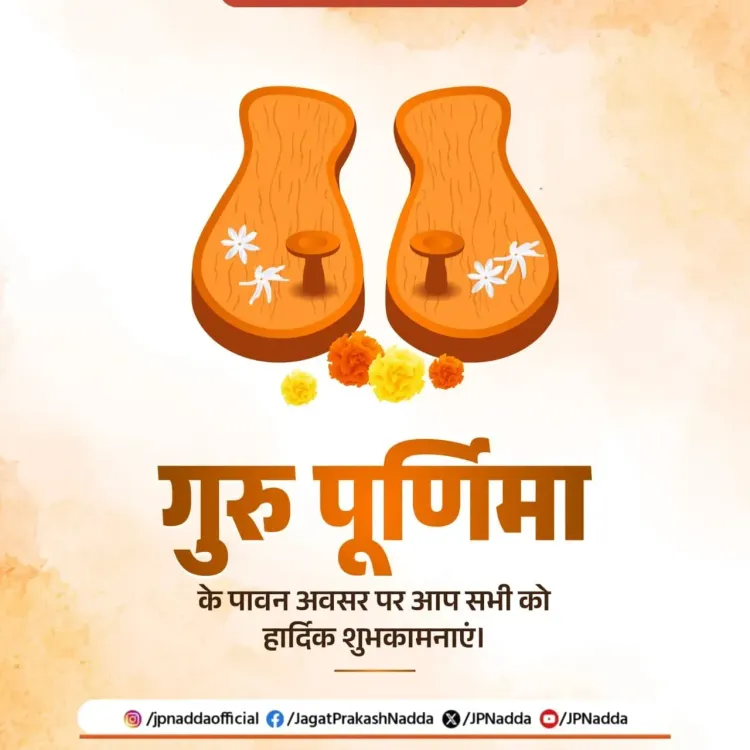
On Guru Purnima 2026, Union Health Minister J. P. Nadda celebrated the ancient guru-shishya tradition, calling the Guru a 'divine power' who leads people from ignorance to knowledge, and urged all to honour their teachers and uphold the values they have shared.
Key Takeaways
Nadda posted Guru Purnima greetings on 29 July 2026 , the full moon of the Hindu month of Ashadha.
He described the guru-shishya tradition as 'an invaluable inheritance of reverence, dedication, knowledge and life values.' Nadda called the Guru a 'divine power' who leads disciples from ignorance to knowledge and shapes their character.
He urged people to express gratitude to their teachers and resolve to follow the ideals they have taught.
Guru Purnima is observed across Hinduism, Buddhism and Jainism through discourses, rituals and gatherings at institutions and spiritual centres nationwide.
The ancient bond between teacher and student sits at the heart of Indian civilisation — and on Guru Purnima, Wednesday, 29 July 2026, Union Health Minister J. P. Nadda invoked that heritage in a warm message to the nation, calling the guru-shishya tradition an 'invaluable inheritance of reverence, dedication, knowledge and life values.'
In his post, Nadda wrote: 'Guru vah divya shakti hain, jo hamein agyaan ke andhakaar se nikaalkar gyaan ke prakaash ki or agrsar karte hain' — 'The Guru is that divine power who draws us from the darkness of ignorance towards the light of knowledge, shows us the right path in life, and shapes our character.' He urged everyone to express gratitude to their teachers and resolve to follow the ideals and values they have imparted.
What Guru Purnima marks
Guru Purnima falls on the full moon day of the Hindu month of Ashadha and is observed across Hinduism, Buddhism and Jainism as a day to honour the teacher in every form — spiritual, academic and personal. The festival draws students, disciples and devotees to institutions and ashrams across the country for discourses, rituals and pledges of continued learning. The guru-shishya tradition Nadda referenced is one of India's oldest pedagogical frameworks, tracing back to the Vedic gurukul system where students lived with and learned from a master. That lineage runs through every field — classical music, dance, philosophy, medicine — and remains a living practice in spiritual communities today.BJP leaders and the festival calendar
BJP leaders routinely mark major Hindu festivals with public messages that connect the party's cultural identity to India's religious and educational heritage. Nadda's Guru Purnima greeting fits squarely within that pattern — affirming traditional values while reaching a broad audience of students, teachers and families ahead of the day's observances. As temples, universities and spiritual centres across India hold their Guru Purnima programmes today, the minister's message lands as a reminder that the oldest classroom in India has no walls — only a teacher, a student, and the light passing between them.Point of View
But its framing — centring the guru-shishya tradition as civilisational heritage rather than mere custom — reflects the party's broader cultural-nationalist emphasis on India's pre-colonial knowledge systems. For a minister who also heads the BJP organisation, such messages serve a dual function: affirming Hindu festival culture and maintaining visibility with a wide, cross-generational audience. The gesture carries no direct policy weight but reinforces the symbolic alignment between governance and cultural continuity that the BJP has made a consistent theme. It is, above all, a reminder that in Indian politics, the festival calendar is itself a form of political communication.
NationPress
28 Oct 2026
Frequently Asked Questions
What is Guru Purnima and when is it celebrated?
Guru Purnima is an annual festival observed on the full moon day of the Hindu month of Ashadha, dedicated to honouring teachers and the guru-shishya tradition. It is celebrated across Hinduism, Buddhism and Jainism through discourses, rituals and gatherings at spiritual and educational institutions.
What did J. P. Nadda say on Guru Purnima 2026?
J. P. Nadda extended heartfelt greetings on Guru Purnima 2026, describing the Guru as a 'divine power' who leads people from the darkness of ignorance to the light of knowledge. He urged everyone to express gratitude to their teachers and resolve to follow their ideals and values.
What is the guru-shishya tradition in India?
The guru-shishya tradition is one of India's oldest pedagogical frameworks, rooted in the Vedic gurukul system where students lived with and learned from a master. It spans fields including spirituality, classical arts, philosophy and medicine, and remains a living practice in many communities today.
Why do BJP leaders post festival greetings on social media?
BJP leaders routinely mark major Hindu festivals with public messages to affirm the party's cultural identity and connect with a broad audience of devotees, students and families. These greetings link party figures to India's religious and educational heritage as part of consistent outreach.
Where is Guru Purnima observed in India?
Guru Purnima is observed across India at temples, ashrams, universities and spiritual centres, where disciples and students gather for discourses, rituals and pledges of continued learning under their teachers.