Nadda hails PM-KISAN 24th instalment: ₹18,690 cr to 9.34 cr farmers
Synopsis
Union Health Minister J. P. Nadda applauded PM Modi's release of over ₹18,690 crore to 9.34 crore farmers as PM-KISAN's 24th instalment from Banaskantha, Gujarat, framing it as part of a 12-year commitment to comprehensive agricultural welfare.
Key Takeaways
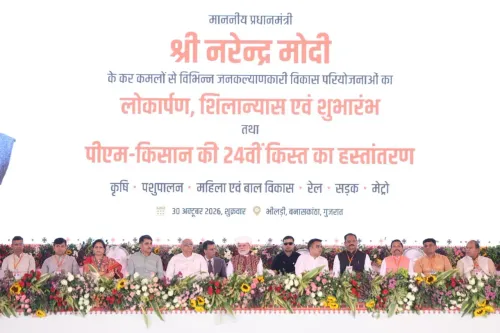
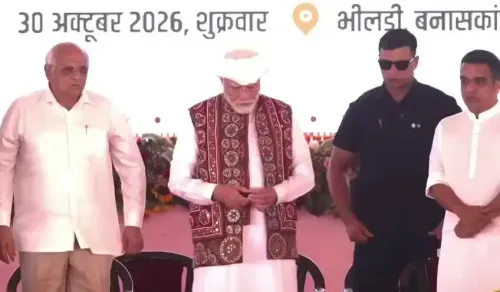
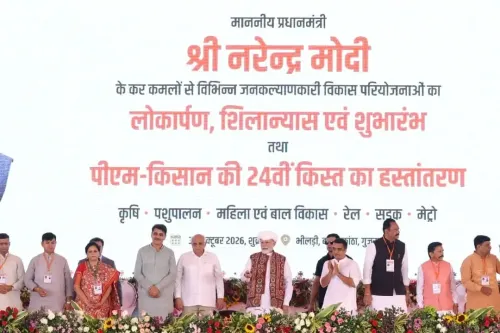
PM Modi disbursed ₹18,690 crore as the 24th instalment of PM-KISAN from Banaskantha, Gujarat on 30 October 2026 .
9.34 crore farmer families received the funds directly in their bank accounts via Direct Benefit Transfer.
Nadda , BJP national president and Union Health and Chemicals Minister, publicly congratulated both farmers and the PM.
PM-KISAN was launched on 24 February 2019 and provides ₹6,000 per year in three instalments to eligible landholding farmers.
Nadda cited quality seeds, cheap fertilisers, irrigation, livestock health and disaster compensation as complementary pillars of farm support.
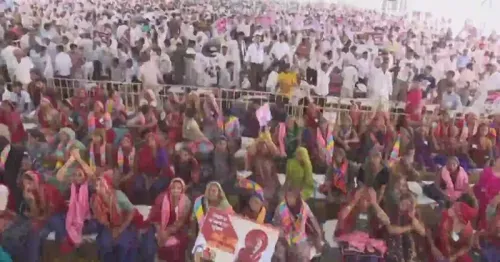
Banaskantha, a major potato and dairy hub in Gujarat, was chosen as the symbolic venue for the disbursal event.
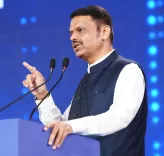
Over ₹18,690 crore landed directly in the bank accounts of 9.34 crore farmer families on Friday, 30 October 2026 — the 24th instalment of the Pradhan Mantri Kisan Samman Nidhi (PM-KISAN) scheme, disbursed by Prime Minister Narendra Modi from Banaskantha, Gujarat. Union Health Minister J. P. Nadda was among the first to salute the transfer, calling it a milestone in a twelve-year arc of farm-welfare policy.
What Nadda said — and what the numbers mean
Posting on X in Hindi, Nadda wrote: 'विगत 12 वर्षों में प्रधानमंत्री मोदी जी के नेतृत्व में केंद्र सरकार अन्नदाता बंधुओं की समस्याओं के समाधान… के लिए कृतसंकल्पित है' — 'Over the past 12 years, under the leadership of PM Modi, the central government has remained committed to resolving the problems of our farmer brothers and sisters.' He specifically highlighted quality seeds and affordable fertilisers, adequate irrigation water, protection of livestock from disease, and compensation for natural-disaster losses as pillars of that commitment.
The scale of Friday's transfer is striking on its own terms. If the figures cited hold, the single-day disbursal of more than ₹18,690 crore via Direct Benefit Transfer to 9.34 crore accounts represents one of the largest single-instalment payouts under the scheme since its launch.
PM-KISAN at seven: from launch to 24 instalments
The Pradhan Mantri Kisan Samman Nidhi scheme was launched on 24 February 2019 to provide eligible landholding farmer families ₹6,000 per year in three equal instalments of ₹2,000 each, transferred directly to bank accounts to cut out intermediaries. Banaskantha — a largely agrarian district in northern Gujarat — has served as a symbolic venue for several farmer-welfare announcements, underlining the political as well as administrative intent behind the rollout.
The DBT architecture underpinning PM-KISAN was expanded significantly after 2014 as part of a broader push to reduce leakage in welfare delivery. By routing funds directly to verified farmer accounts linked to Aadhaar, the scheme aimed to ensure that small and marginal landholders — historically the most vulnerable to middleman exploitation — received the full benefit.
A wider web of farm support Nadda invoked
Nadda's post was notable for going beyond the cash transfer itself. He framed the instalment as one thread in a larger fabric: subsidised and quality seeds, cheap fertilisers, irrigation infrastructure, livestock health, and crop-loss compensation for natural disasters. Together, these touch almost every stage of the farm production cycle — an implicit argument that income support alone does not define this government's agricultural agenda.
The BJP national president, who also holds the agriculture-adjacent Chemicals and Fertilizers portfolio, is well-placed to draw that line: fertiliser policy directly shapes input costs for the very farmers PM-KISAN targets.
Why Banaskantha, and why now
Gujarat's Banaskantha is India's largest potato-producing district and a major hub for dairy and oilseeds — making it a resonant backdrop for a farmer-welfare event ahead of the winter crop season. Releases of PM-KISAN instalments have frequently been timed to coincide with sowing periods, when liquidity matters most to farmers buying seeds and inputs on credit.
With the next Union Budget cycle approaching and parliamentary sessions on agriculture on the horizon, Friday's transfer sets a visible benchmark — and a political one — for what the government will point to as evidence of delivery on its rural promises.
Point of View
Expect PM-KISAN figures to anchor the government's farm-welfare narrative in parliamentary debates. The scheme's longevity across multiple fiscal cycles has also normalised DBT as the default delivery architecture for rural welfare, a structural shift with lasting administrative consequences.
NationPress
31 Oct 2026
Frequently Asked Questions
What is the PM-KISAN 24th instalment amount and how many farmers benefited?
The 24th instalment of PM-KISAN transferred over ₹18,690 crore directly to 9.34 crore farmer families across India, as announced on 30 October 2026.
When was the Pradhan Mantri Kisan Samman Nidhi scheme launched?
PM-KISAN was launched on 24 February 2019 to provide ₹6,000 per year in three equal instalments of ₹2,000 each to eligible landholding farmer families.
Why was Banaskantha chosen for the PM-KISAN 24th instalment release?
Banaskantha in northern Gujarat is one of India's major agricultural districts — known for potato cultivation, dairy, and oilseeds — making it a resonant venue for farmer-welfare events.
What did J. P. Nadda say about the PM-KISAN instalment?
Nadda congratulated all beneficiary farmers and praised PM Modi, stating that over 12 years the government has remained committed to resolving farmers' problems through quality seeds, cheap fertilisers, irrigation, livestock protection, and disaster compensation.
How does PM-KISAN money reach farmers?
PM-KISAN uses the Direct Benefit Transfer (DBT) mechanism, routing funds directly into Aadhaar-linked bank accounts of verified farmer families to minimise leakage and intermediaries.