Nadda invokes 1975 Emergency to hit Congress on democracy
Synopsis
Union Health Minister and BJP president J. P. Nadda invoked the 1975 Emergency on 30 October 2026, claiming 1.30 lakh people were jailed without trial under Indira Gandhi — more than even British colonial rulers imprisoned — to challenge Congress's democratic credentials.
Key Takeaways
Nadda , Union Health Minister and BJP national president, attacked Congress over its democratic record on 30 October 2026 .
Nadda cited 1.30 lakh detentions without trial during Indira Gandhi's 1975–77 Emergency as evidence of Congress authoritarianism.
He argued the colonial British administration did not jail as many people even during India's independence movement.
The post was hashtagged #SaveDemocracyRemoveAnarchy , signalling an organised BJP messaging campaign.
The 1975 Emergency was declared under Article 352 on 25 June 1975 and lasted 21 months , suspending fundamental rights.
BJP leaders have consistently deployed the Emergency as a counter-narrative to Congress claims on institutional democracy.
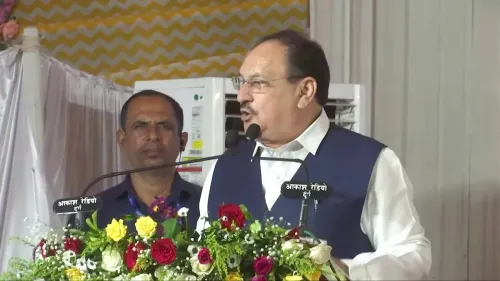
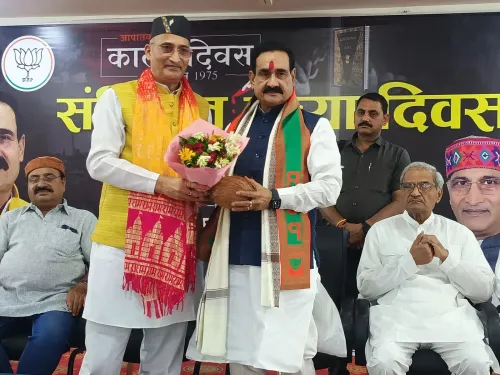
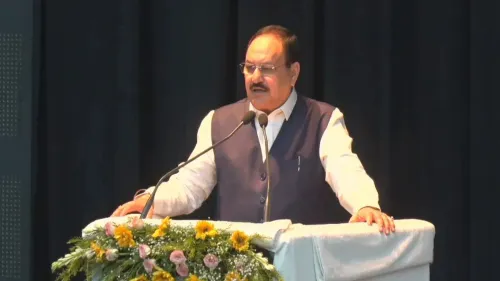
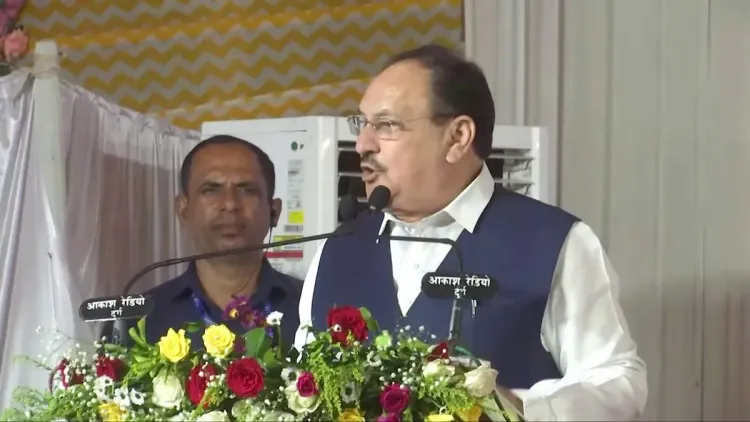
Fifty years on, the 1975 Emergency is back at the centre of India's political battleground. Union Health Minister and BJP national president J. P. Nadda launched a sharp broadside against the Indian National Congress on Friday, 30 October 2026, invoking former Prime Minister Indira Gandhi's suspension of civil liberties to challenge what he called the Opposition's hollow claims on democracy.
Posting under the hashtag #SaveDemocracyRemoveAnarchy, Nadda asked pointedly: 'Who put democracy in chains? Who imposed the Emergency?' He then cited a figure of 1.30 lakh people jailed without trial during Indira Gandhi's rule — and went further, arguing that even the British colonial administration had not imprisoned that many people in a single sweep during India's freedom movement. 'This is Congress's democracy!' he wrote.
The Emergency's long shadow over Indian politics
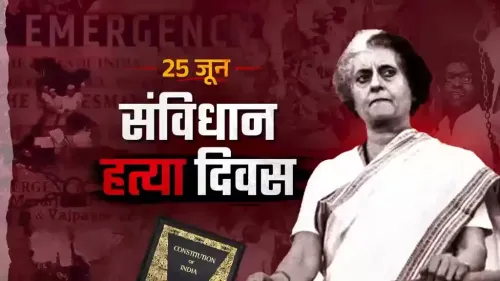
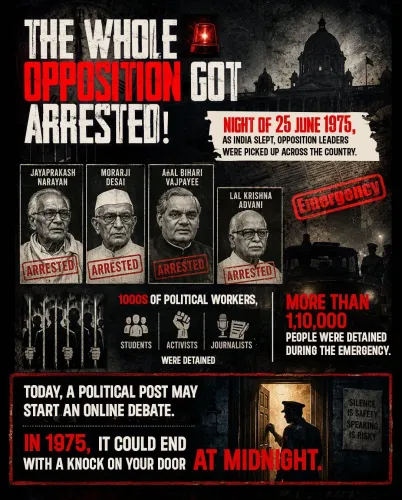
The Emergency of 1975–77 remains one of the most contested episodes in independent India's history. Declared by Prime Minister Indira Gandhi on 25 June 1975 under Article 352 of the Constitution — citing 'internal disturbance' — it suspended fundamental rights, muzzled the press, and enabled mass detentions under preventive detention laws. The 21-month period ended with the 1977 general election, in which the Congress was routed for the first time.
The scale of arrests during those months has been disputed by historians, but the episode's legacy as a democratic low point is broadly accepted across the political spectrum. Courts, civil liberties organisations, and successive parliamentary debates have cited it as a cautionary example of executive overreach.
BJP's recurring playbook — and why it lands now
This is not the first time senior BJP leaders have reached for the Emergency as a rhetorical weapon. The party has consistently deployed it in election seasons and parliamentary debates to frame the Congress as institutionally authoritarian, contrasting it with what the BJP presents as its own commitment to constitutional norms. Nadda's post fits squarely in that pattern — but the timing, a charged political moment underscored by the #SaveDemocracyRemoveAnarchy hashtag, signals an escalation in that messaging.
The comparison to British-era crackdowns is the sharpest edge of the post. By placing the 1975 detentions in the same frame as colonial repression — and arguing they exceeded it in numerical scale — Nadda is reaching for a moral register that goes beyond normal political point-scoring.
As parliament's next session and a clutch of state elections approach, expect this framing of 'democratic credentials' to harden into one of the BJP's primary lines of attack against the Congress.
Point of View
Designed to anchor the Emergency not just in partisan history but in a deeper moral vocabulary about freedom and repression. With the #SaveDemocracyRemoveAnarchy hashtag suggesting a coordinated campaign, the post also hints that 'democracy vs anarchy' may be shaping up as a core BJP frame heading into the next electoral cycle — one the Congress will need a sharper counter-narrative to neutralise.
NationPress
30 Oct 2026
Frequently Asked Questions
What did J. P. Nadda say about the 1975 Emergency?
Nadda posted on 30 October 2026 that 1.30 lakh people were jailed without trial under Indira Gandhi's Emergency rule, calling it worse than British colonial repression and challenging Congress's credibility on democracy.
When was the Emergency declared in India and by whom?
The national Emergency was declared on 25 June 1975 by Prime Minister Indira Gandhi under Article 352 of the Constitution, citing internal disturbance. It lasted 21 months until March 1977.
How many people were arrested during the 1975 Emergency?
Nadda cited a figure of 1.30 lakh (130,000) detentions without trial during the Emergency. Historians have noted large-scale preventive detentions in that period, though exact figures remain a matter of debate.
What is the BJP's position on the 1975 Emergency?
The BJP consistently describes the Emergency as the darkest chapter in post-independence India's democratic history and uses it to argue that the Congress party has an authoritarian streak that disqualifies it from speaking on democratic values.
What does the hashtag SaveDemocracyRemoveAnarchy refer to?
The hashtag, used by Nadda in his October 2026 post, appears to be part of a BJP social media campaign framing the party as a defender of democratic institutions against what it characterises as Opposition-backed disorder.