Nadda marks Samvidhan Hatya Diwas, recalls JP's 1974 Patna call
Synopsis
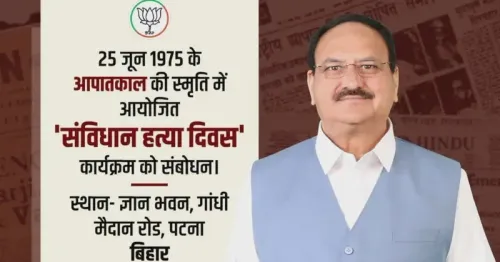
Union Health Minister J. P. Nadda marked Samvidhan Hatya Diwas on 25 June 2026, invoking Jayaprakash Narayan's 1974 Total Revolution call at Gandhi Maidan, Patna, and disclosing his own participation in the movement against Emergency-era rule.
Key Takeaways
25 June 2026 was observed as Samvidhan Hatya Diwas (Constitution Murder Day) across India, marking the anniversary of the 1975 Emergency proclamation.
Nadda highlighted Patna's Gandhi Maidan as the symbolic origin of democratic resistance, where Jayaprakash Narayan launched the Sampoorna Kranti call on 5 June 1974 .
Nadda stated he personally participated in the pro-democracy movement during the 1975–77 Emergency period.
The Emergency was imposed under Article 352 on 25 June 1975 and lasted until 21 March 1977 , suspending civil liberties and press freedom.
The BJP has institutionalised 25 June as an annual commemorative date, framing the Emergency as a Congress-era assault on constitutional order.
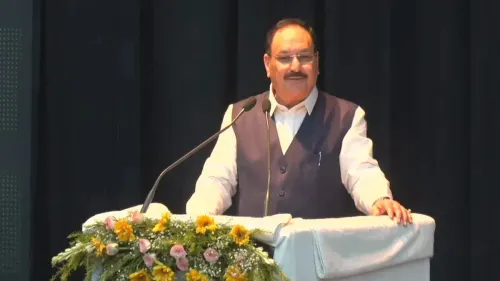
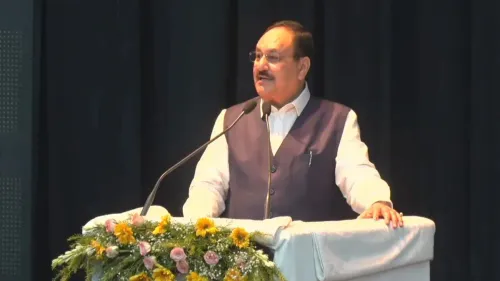
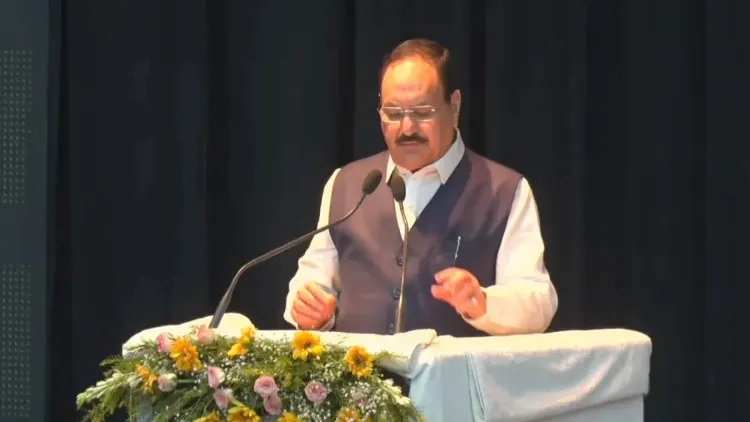
Union Health Minister J. P. Nadda on Thursday, 25 June 2026, joined nationwide observances of Samvidhan Hatya Diwas, reflecting on the 1975–77 Emergency and tracing the roots of democratic resistance to Jayaprakash Narayan's historic address at Gandhi Maidan, Patna, on 5 June 1974. Nadda also disclosed that he personally participated in the movement to defend democracy during that period.
Context
Posting in Hindi on X, Nadda wrote: 'Aaj Samvidhan Hatya Diwas ko deshbhar mein manakar us kaale daur ko yaad kiya ja raha hai' ('Today, by observing Samvidhan Hatya Diwas across the country, that dark era is being remembered'). He described the Patna event as especially significant because the seed of the fight against the 'murder of democracy' was sown on the grounds of Gandhi Maidan when Jayaprakash Narayan issued the call for Sampoorna Kranti ('Total Revolution') on 5 June 1974. Nadda added: 'It was my good fortune that I too was a participant in that movement to protect democracy.'
Policy Backdrop
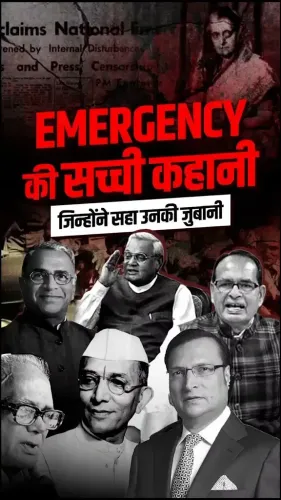
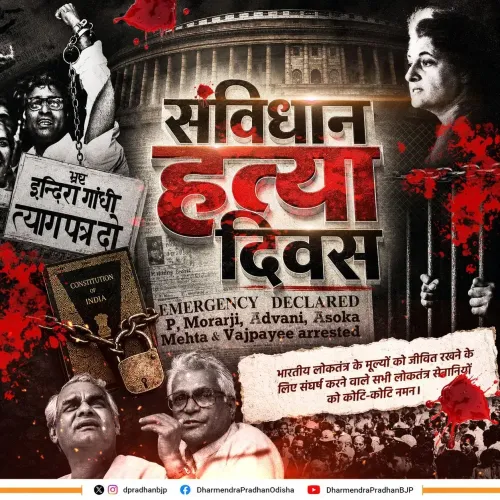
The national Emergency was proclaimed on 25 June 1975 under Article 352 of the Constitution, suspending civil liberties, imposing press censorship, and detaining opposition leaders. It remained in force until 21 March 1977. The BJP-led government has institutionalised 25 June as Samvidhan Hatya Diwas — Constitution Murder Day — positioning the date as an annual reminder of what it calls a Congress-era assault on constitutional norms.
Jayaprakash Narayan's 5 June 1974 rally at Gandhi Maidan predated the Emergency by over a year but is widely regarded as the moment that unified disparate opposition currents into a coherent movement, one that eventually ended Emergency rule and returned democratic governance in the 1977 general elections. The BJP's annual narrative explicitly positions the party as the political inheritor of JP's legacy.
Stakeholders and Impact
The observance draws together opposition veterans, democracy activists, and BJP workers across states, using state-level events to reinforce a historical contrast between Emergency-era governance and present constitutional order. Patna, as the symbolic birthplace of the Sampoorna Kranti movement, holds particular resonance in this framing, and events there carry added weight given Bihar's central role in the 1974–77 resistance.
For Nadda, the personal disclosure of participation in the movement adds a biographical dimension to what is otherwise a party-level commemorative exercise, lending the statement a degree of individual testimony beyond institutional messaging.
What's Next
State-level programmes on 25 June are expected to continue as an annual feature on the political calendar, with the observance likely to surface in parliamentary debates around Constitution-related discussions. How opposition parties — particularly the Congress — respond to the framing of Emergency rule as 'Samvidhan Hatya' will shape the contours of this recurring political conversation in the run-up to future electoral cycles.
Point of View
The BJP reinforces its claim to be the ideological successor of the anti-Emergency movement — a narrative that simultaneously marginalises the Congress and elevates Bihar as a cradle of democratic resistance. The personal disclosure of participation is a rare biographical touch that humanises institutional messaging. Sustained annual observance of 25 June is steadily embedding the Emergency as a defining fault-line in India's political identity, one the ruling party intends to keep live in public memory well beyond election cycles.
NationPress
25 Jun 2026
Frequently Asked Questions
What is Samvidhan Hatya Diwas and why is it observed on 25 June?
Samvidhan Hatya Diwas, or Constitution Murder Day, is observed on 25 June to mark the anniversary of the proclamation of the national Emergency on 25 June 1975 , when civil liberties were suspended and opposition leaders detained. The BJP-led government institutionalised the annual observance to highlight the Emergency as an assault on constitutional norms.
What was Jayaprakash Narayan's Sampoorna Kranti call?
Jayaprakash Narayan issued the call for Sampoorna Kranti , or Total Revolution, at Gandhi Maidan in Patna on 5 June 1974 . The address unified opposition movements against the Congress government and is widely seen as the starting point of the resistance that eventually ended Emergency rule in 1977 .
What did J. P. Nadda say about the Emergency on Samvidhan Hatya Diwas 2026?
J. P. Nadda said the Patna event was especially significant because the seed of the fight against the 'murder of democracy' was sown at Gandhi Maidan by Jayaprakash Narayan in 1974 . He also disclosed that he personally participated in the pro-democracy movement during the Emergency period.
How long did the 1975 Emergency last in India?
The national Emergency was proclaimed on 25 June 1975 under Article 352 of the Constitution and remained in force until 21 March 1977 — a period of roughly 21 months during which civil liberties were suspended and press censorship was imposed.
Why is Patna considered significant in India's anti-Emergency history?
Patna is considered the symbolic birthplace of the anti-Emergency resistance because it was at Gandhi Maidan in Patna that Jayaprakash Narayan launched the Sampoorna Kranti movement on 5 June 1974 , more than a year before the Emergency was formally declared, unifying opposition forces across the country.