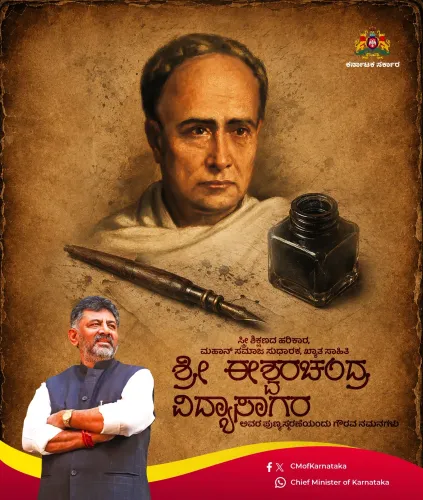
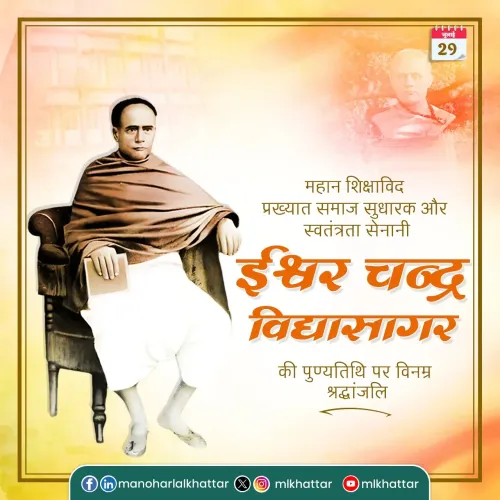
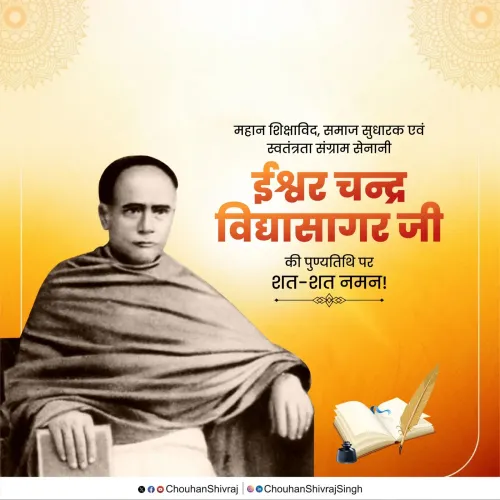
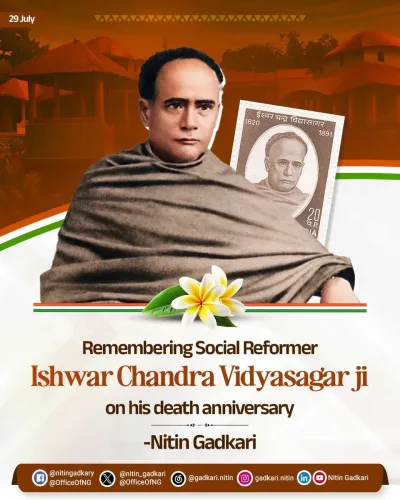
Nadda Pays Tribute to Ishwar Chandra Vidyasagar on Death Anniversary
Synopsis
Union Health Minister J. P. Nadda marked the death anniversary of 19th-century Bengali reformer Ishwar Chandra Vidyasagar on 29 July 2026, honouring his campaigns for women's education, widow remarriage, and abolition of child marriage — work that shaped the Hindu Widow Remarriage Act of 1856.
Key Takeaways
Union Health Minister J.
Nadda paid tribute to Ishwar Chandra Vidyasagar on his death anniversary on 29 July 2026 .
Vidyasagar was a 19th-century Bengali polymath who championed women's education, widow remarriage, and the abolition of child marriage and polygamy.
His advocacy directly contributed to the Hindu Widow Remarriage Act of 1856 , which legalised widow remarriage under colonial rule.
Nadda credited Vidyasagar's work with 'ushering in a new era in Indian society' and called his contribution to nation-building 'incomparable.' Indian political leaders across parties regularly mark Vidyasagar's birth and death anniversaries, reflecting his status as a cross-ideological national icon.
A reformer who rewrote the rules of 19th-century Indian society gets his due remembrance. On Wednesday, 29 July 2026, Union Health Minister J. P. Nadda paid homage to Ishwar Chandra Vidyasagar on the scholar-activist's death anniversary, honouring a legacy that stretches from Bengal's village schoolrooms to the floor of colonial legislatures.
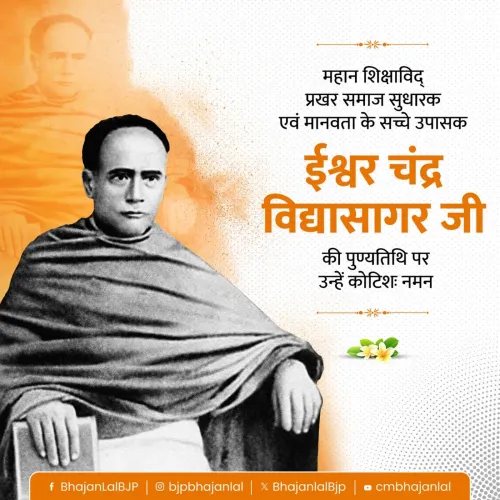
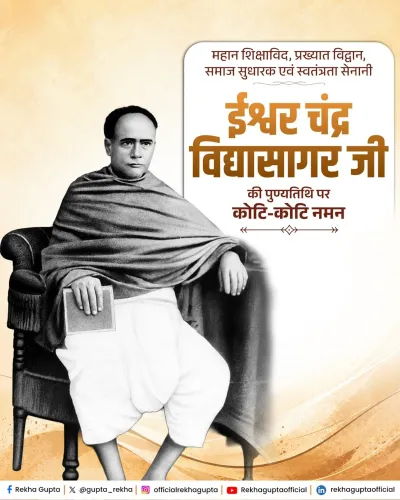
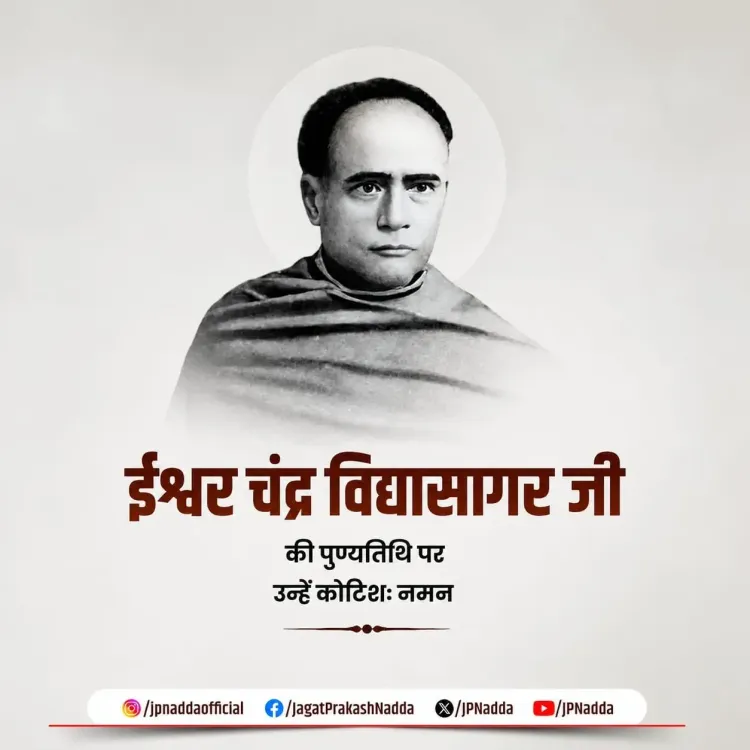
Posting in Hindi, Nadda wrote: 'महान शिक्षाविद, प्रखर समाज सुधारक और स्वतंत्रता सेनानी ईश्वर चंद्र विद्यासागर जी की पुण्यतिथि पर उन्हें भावपूर्ण नमन करता हूँ' — 'I offer heartfelt tribute to the great educationist, staunch social reformer and freedom fighter Ishwar Chandra Vidyasagar on his death anniversary.' He credited Vidyasagar's struggle for women's education, their rights, and social empowerment with 'ushering in a new era in Indian society.'
The Man Who Changed What India Thought Was Possible for Women
Ishwar Chandra Vidyasagar — born in 1820 in Bengal — was not a man who petitioned quietly. He fought on multiple fronts simultaneously: opening schools for girls when female education was considered transgressive, campaigning against child marriage and polygamy, and most consequentially, driving the legislative push that produced the Hindu Widow Remarriage Act of 1856. That single law, for the first time under colonial rule, gave Hindu widows the legal right to remarry — a seismic shift in a society that had condemned them to lives of social erasure. His work on the Bengali script and literature made him a cultural force as much as a political one. The title 'Vidyasagar' — meaning 'ocean of knowledge' — was not self-styled; it was conferred by Calcutta's Sanskrit College, where he would later serve as principal and from where he would push open its doors to students regardless of caste.Why Political Leaders Mark This Day
Tributes to 19th-century reformers are a consistent feature of India's political calendar, and Vidyasagar commands particular reverence across ideological lines. His insistence on reason over orthodoxy, and his use of education as the sharpest tool of social change, map cleanly onto contemporary policy priorities around girls' schooling and gender equity. Nadda's post underlines that the reformer's 'incomparable contribution to nation-building, social awakening, and strengthening national self-respect will always be remembered.' For a minister who oversees both health and the chemical-fertiliser portfolio while also leading the BJP nationally, invoking Vidyasagar is also an act of cultural reclamation — asserting a shared civilisational inheritance that transcends regional or party lines. Vidyasagar's death anniversary is a reminder that the arguments he won in the 1850s are still the arguments India is consolidating today — in classrooms, in courts, and in the statistics on female literacy that governments cite as proof of progress.Point of View
A lineage the ruling dispensation is keen to align with. The tribute also keeps women's empowerment — a recurring policy theme under multiple central schemes — tethered to a deep historical root. Marking such anniversaries publicly reinforces the government's narrative that contemporary gender-equity goals are the continuation of a long, unfinished reform project.
NationPress
29 Jul 2026
Frequently Asked Questions
Who was Ishwar Chandra Vidyasagar?
Ishwar Chandra Vidyasagar was a 19th-century Bengali polymath, educationist and social reformer born in 1820. He championed women's education, fought against child marriage and polygamy, and was a key figure behind the Hindu Widow Remarriage Act of 1856.
What is the Hindu Widow Remarriage Act of 1856?
The Hindu Widow Remarriage Act of 1856 was a colonial-era law that legalised widow remarriage among Hindus in India. Ishwar Chandra Vidyasagar's persistent advocacy was central to its passage.
Why did JP Nadda pay tribute to Vidyasagar?
J. P. Nadda posted a tribute on 29 July 2026 to mark Vidyasagar's death anniversary, honouring his legacy in women's education, social reform, and nation-building.
What did Vidyasagar do for women's education in India?
Vidyasagar opened schools for girls in 19th-century Bengal at a time when female education was widely opposed, and he campaigned actively for women's rights and social empowerment.
When is Ishwar Chandra Vidyasagar's death anniversary?
Ishwar Chandra Vidyasagar's death anniversary falls on 29 July, the date on which Indian leaders and institutions pay tribute to his contributions to education and social reform.