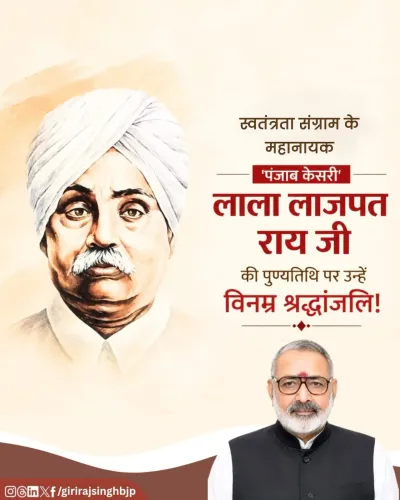
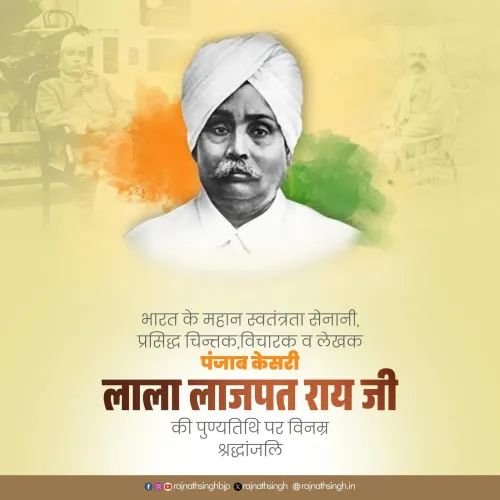
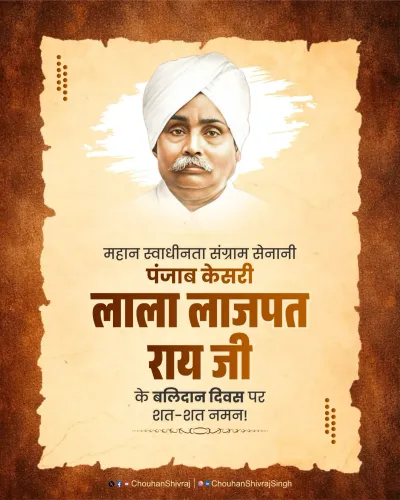
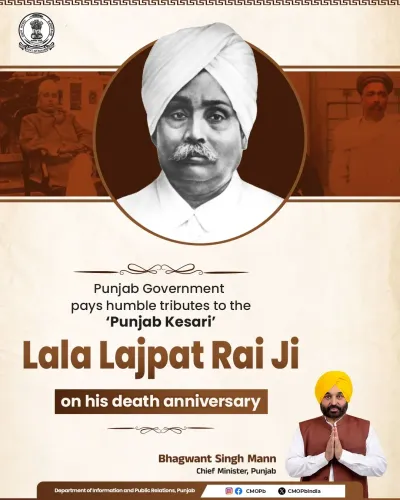
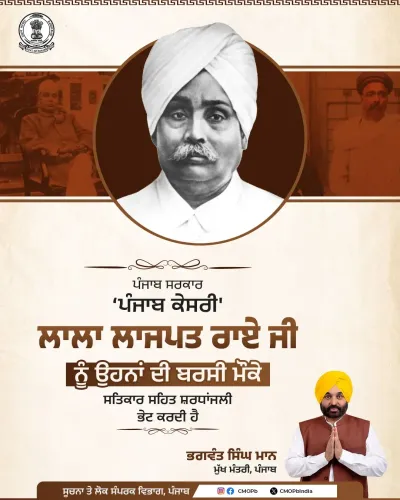
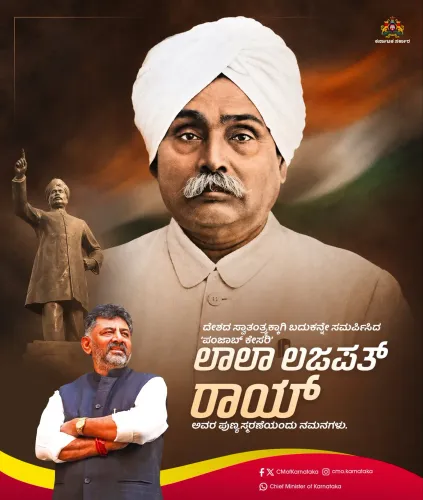
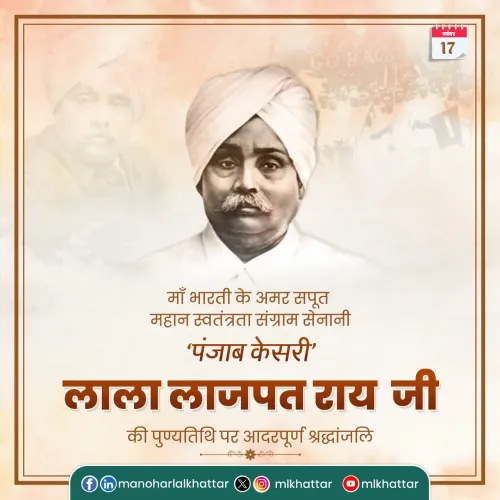
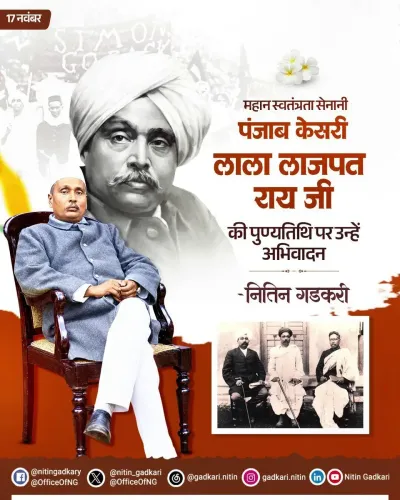
Nadda pays tribute to Lala Lajpat Rai on death anniversary
Synopsis
Union Health Minister J. P. Nadda honoured 'Punjab Kesari' Lala Lajpat Rai on his death anniversary on November 17, 2026, remembering his role in the Swadeshi movement, anti-colonial struggle, and the enduring ideal of self-reliance as the path to self-rule.
Key Takeaways
Nadda posted a Hindi tribute to Lala Lajpat Rai on his death anniversary, November 17, 2026 .
Lajpat Rai, known as 'Punjab Kesari' (Lion of Punjab), was a leading figure of the Swadeshi movement and member of the Lal-Bal-Pal nationalist trio.
He died in 1928 after suffering injuries during a lathi charge by British police while protesting the Simon Commission in Lahore.
Nadda cited Lajpat Rai's core idea: achieving swarajya (self-rule) through swavlamban (self-reliance) as an enduring inspiration for Indians.
Tributes to freedom fighters on death anniversaries are a cross-party ritual in Indian politics, with particular ideological resonance for the BJP .
A freedom fighter who stared down an empire and paid for it with his life — Union Health Minister J. P. Nadda honoured 'Punjab Kesari' Lala Lajpat Rai on his death anniversary on Tuesday, November 17, 2026, remembering the nationalist icon's singular role in awakening India's conscience against British rule.
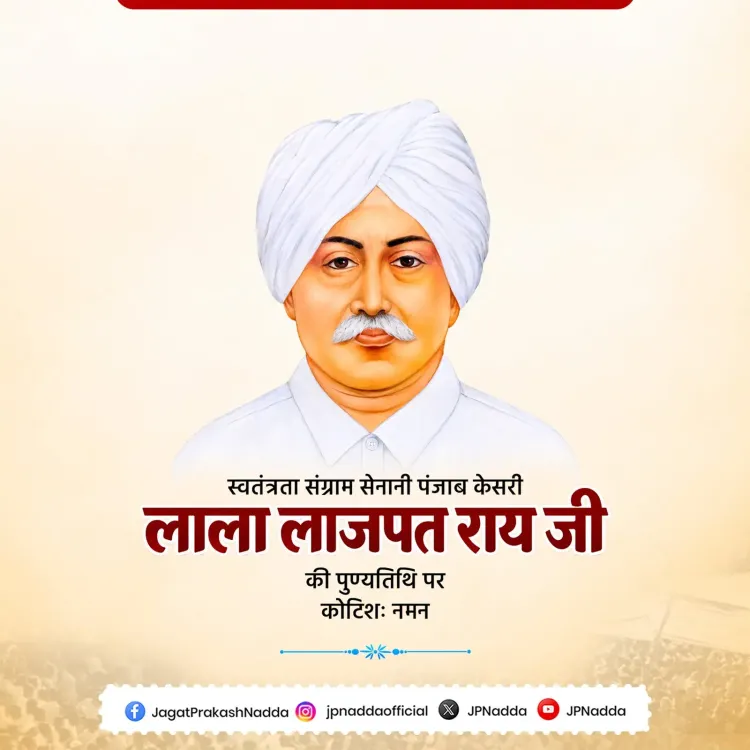
Posting in Hindi on X, Nadda offered his salutations — 'कोटिशः नमन' (a million salutes) — to the immortal fighter of India's independence struggle. He wrote that Lajpat Rai's contribution to the fight against British rule was 'unforgettable,' and that he had given fresh energy to the Swadeshi movement while inspiring a sense of nationalism among the people and playing a crucial role in organising them for the freedom struggle. 'The idea of achieving swarajya through swavlamban (self-rule through self-reliance) remains a source of inspiration for every Indian even today,' Nadda noted.Who was Lala Lajpat Rai — and why the title 'Punjab Kesari'?
Lala Lajpat Rai earned the sobriquet 'Punjab Kesari' — the Lion of Punjab — for his ferocious and uncompromising opposition to colonial rule. He was a towering figure in the celebrated Lal-Bal-Pal trio alongside Bal Gangadhar Tilak and Bipin Chandra Pal, the trident of assertive nationalist politics in early twentieth-century India. Together, they pushed the Indian National Congress toward a more confrontational posture against the British, away from moderate petitioning. Lajpat Rai was among the most visible faces of the Swadeshi movement, which urged Indians to boycott British goods and champion domestic enterprise — a philosophy that maps directly onto the self-reliance theme Nadda invoked. He also championed mass political education, believing that organised public consciousness was the essential pre-condition for independence.The lathi charge that made him a martyr
Lajpat Rai's death in 1928 became one of the defining moments of the late freedom struggle. When the Simon Commission — a British parliamentary committee that included no Indian members — arrived in India, it was met with nationwide protest. Lala Lajpat Rai led a demonstration in Lahore against the commission. British police responded with a brutal lathi charge, and Lajpat Rai suffered severe injuries. He died weeks later. His last reported words — that every blow struck on him was a nail in the coffin of the British Empire — passed instantly into legend. His death galvanised younger revolutionaries, including Bhagat Singh, and permanently raised the temperature of the independence movement.A routine tribute — and what it signals
Tributes to freedom fighters on their birth and death anniversaries have become a fixed ritual in Indian political life, observed across party lines. For the BJP, invoking figures like Lajpat Rai carries particular resonance: his emphasis on self-reliance and nationalism aligns with ideological themes the party regularly amplifies. Nadda's post, in that sense, is both a sincere historical salute and a subtle reinforcement of a political vocabulary the ruling party has long cultivated. The Lion of Punjab died nearly a century ago. His ideas about self-reliance as the foundation of sovereignty are very much alive in India's current policy conversation.Point of View
Linking Lajpat Rai's Swadeshi-era self-reliance philosophy to the BJP's own 'Atmanirbhar Bharat' policy vocabulary. The choice of emphasis — self-reliance as the route to sovereignty — is not incidental. It reflects a deliberate effort to anchor contemporary economic nationalism in a credible historical lineage. While the tribute is sincere on its surface, it also functions as soft ideological positioning ahead of ongoing debates about domestic manufacturing and import-substitution policy.
NationPress
17 Nov 2026
Frequently Asked Questions
When did Lala Lajpat Rai die and how?
Lala Lajpat Rai died in 1928 after sustaining serious injuries from a lathi charge by British police during a protest against the Simon Commission in Lahore .
Why is Lala Lajpat Rai called Punjab Kesari?
'Punjab Kesari,' meaning the Lion of Punjab, was a title given to Lala Lajpat Rai for his fierce and uncompromising leadership against British colonial rule and his central role in mobilising Punjab's masses for the freedom struggle.
What was the Lal-Bal-Pal trio?
The Lal-Bal-Pal trio referred to three assertive nationalist leaders — Lala Lajpat Rai , Bal Gangadhar Tilak , and Bipin Chandra Pal — who together pushed the Indian independence movement toward more direct confrontation with British rule in the early twentieth century.
What was Lala Lajpat Rai's connection to the Swadeshi movement?
Lala Lajpat Rai was one of the most prominent advocates of the Swadeshi movement, which called on Indians to boycott British goods and develop domestic industries as a tool of both economic and political resistance against colonial rule.
What did JP Nadda say about Lala Lajpat Rai?
On Lajpat Rai's death anniversary on November 17, 2026 , J. P. Nadda called his contribution to the freedom struggle 'unforgettable,' praised him for energising the Swadeshi movement, and said his idea of achieving self-rule through self-reliance remains an inspiration for every Indian today.