Nadda Pays Tribute to Mukherjee, Links Legacy to Viksit Bharat
Synopsis
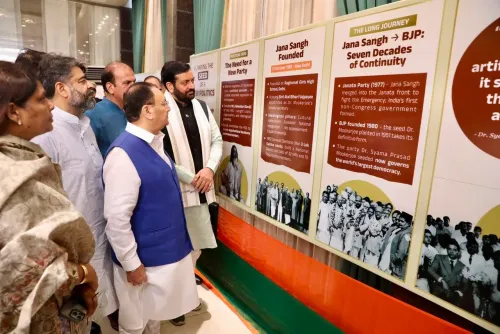
Union Minister and BJP chief J. P. Nadda on 6 July 2026 commemorated Dr. Shyama Prasad Mukherjee, the founder of the Bharatiya Jana Sangh, asserting that PM Modi's Viksit Bharat mission carries forward Mukherjee's nationalist vision for India.
Key Takeaways
Nadda , Union Health Minister and BJP National President, paid tribute to Dr.
Shyama Prasad Mukherjee on 6 July 2026 .
Nadda stated that Mukherjee gave India 'a new direction and thought' and that PM Modi is committed to building a Viksit Bharat in his ideological tradition.
Mukherjee founded the Bharatiya Jana Sangh in 1951 , the direct organisational predecessor of the present BJP .
The BJP has formally commemorated Mukherjee every year since 2014 , often linking the occasion to Kashmir integration and national development milestones.
The Viksit Bharat vision targets a fully developed India by 2047 , the centenary of Independence.
The tribute is part of the BJP's broader strategy of anchoring its contemporary governance agenda within a nationalist historical narrative.
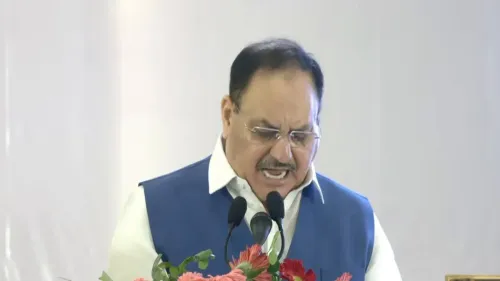
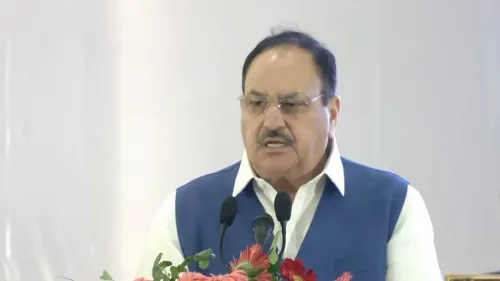
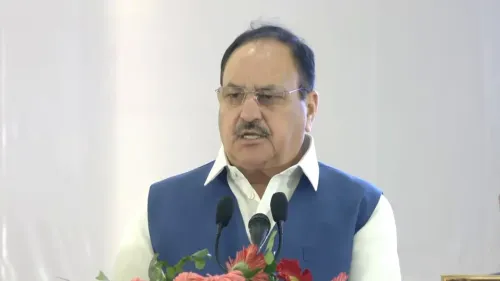
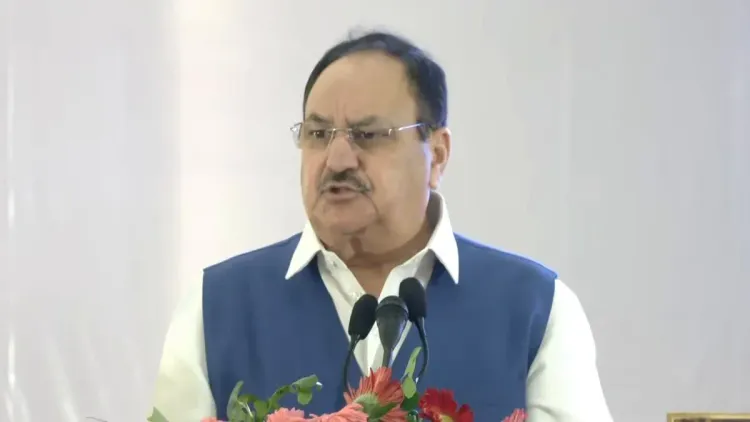
Union Health Minister and BJP National President J. P. Nadda on Monday, 6 July 2026 paid tribute to Dr. Shyama Prasad Mukherjee, invoking the nationalist leader's ideological legacy and connecting it directly to Prime Minister Narendra Modi's Viksit Bharat vision for a developed India by 2047.
Context
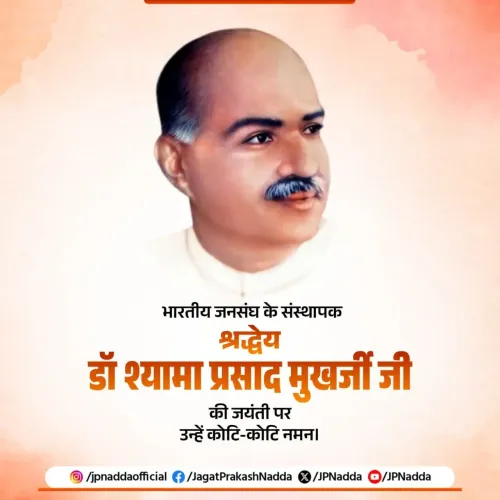
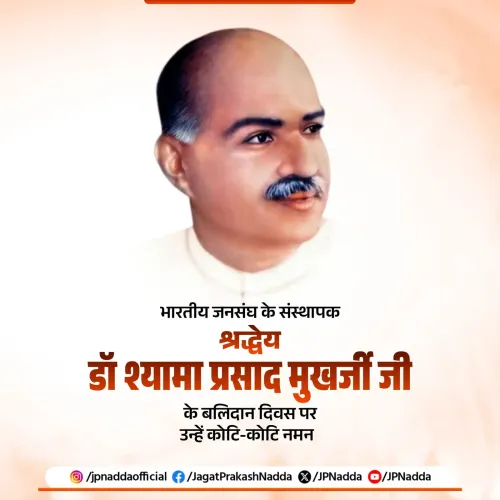
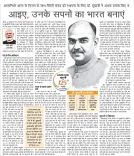
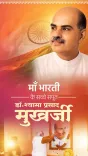
Nadda's post, written in Hindi, states: 'Aaj jab hum Dr. Shyama Prasad Mukherjee ji ko yaad karte hain' ['Today, as we remember Dr. Shyama Prasad Mukherjee, we should take pride in the fact that he gave the country a new direction and thought.'] He added that Prime Minister Narendra Modi is committed to building a Viksit Bharat, carrying Mukherjee's ideas forward. The post was accompanied by a video, underlining the commemorative nature of the message on what is observed as Mukherjee's death anniversary.
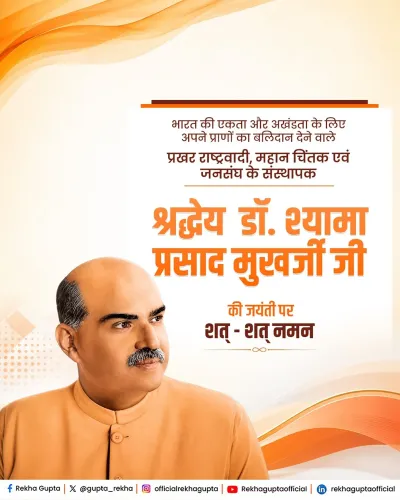
Dr. Shyama Prasad Mukherjee founded the Bharatiya Jana Sangh in 1951, establishing the organisational and ideological precursor to the present Bharatiya Janata Party (BJP). He was a prominent nationalist who advocated for the complete integration of Jammu and Kashmir with India, a cause that has remained central to BJP's political identity.
Policy Backdrop
The BJP was formally established in 1980, explicitly claiming continuity with Mukherjee's vision of integral humanism and national unity. Since 2014, the Modi government has commemorated Mukherjee annually on 6 July, often alongside policy milestones in Jammu and Kashmir — most notably the abrogation of Article 370 in 2019, which the party framed as a fulfilment of Mukherjee's lifelong demand.
The Viksit Bharat programme, targeting a fully developed India by 2047 — the centenary of Independence — has been repeatedly linked by BJP leaders to Mukherjee's nationalist thought. The framing positions economic development as an extension of the party's foundational ideological commitments, not merely a technocratic goal.
Stakeholders and Impact
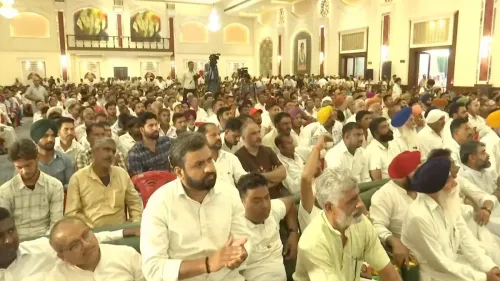
For BJP cadre and affiliated nationalist organisations, commemorations of Mukherjee serve as an annual moment of ideological reaffirmation. Nadda's statement, coming from the party's national president who also holds two Union Cabinet portfolios, carries both political and institutional weight.
The tribute also signals to a broader audience that the ruling party's development agenda — spanning health, infrastructure, and economic growth — is rooted in a nationalist historical narrative rather than being presented in isolation. This framing is aimed at differentiating the BJP's governance record from Congress-era policies, particularly on Kashmir and national integration.
What's Next
Further commemorative events and policy references centred on Mukherjee's legacy are expected around his birth anniversary later in the year. State-level programmes invoking his name in education and integration themes are also likely, as the BJP continues to weave his memory into its governance narrative ahead of upcoming electoral cycles. The consistency of this messaging suggests the party will sustain the Mukherjee-to-Viksit Bharat ideological arc as a long-term political and policy communication strategy.
Point of View
The party signals that its development goals are not technocratic imports but are rooted in its own historical DNA. This also serves a cadre-mobilisation function, reinforcing a sense of mission among party workers. The consistency of this framing year after year suggests it has become a durable pillar of BJP political communication, unlikely to shift regardless of electoral context.
NationPress
6 Jul 2026
Frequently Asked Questions
Who was Dr. Shyama Prasad Mukherjee?
Dr. Shyama Prasad Mukherjee was a prominent Indian nationalist leader who founded the Bharatiya Jana Sangh in 1951, the ideological and organisational predecessor of the present BJP. He is particularly remembered for his advocacy of complete integration of Jammu and Kashmir with India.
Why is 6 July significant for the BJP?
6 July marks the death anniversary of Dr. Shyama Prasad Mukherjee, whom the BJP regards as its founding ideological father. The party has commemorated the day annually since 2014, often linking it to policy milestones.
What is Viksit Bharat?
Viksit Bharat is the Modi government's vision for a fully developed India by 2047, the centenary of Independence. BJP leaders have consistently framed it as an extension of the nationalist thought associated with leaders like Dr. Mukherjee.
What did J. P. Nadda say about Dr. Mukherjee?
Nadda said that Dr. Mukherjee gave India 'a new direction and thought' and that PM Narendra Modi is committed to building a Viksit Bharat by carrying those ideas forward.
What is J. P. Nadda's current role?
J. P. Nadda is the Union Minister of Health and Family Welfare, Minister of Chemicals and Fertilizers, and the National President of the Bharatiya Janata Party.