Mandaviya Addresses IAS Trainees, Officials at LBSNAA Mussoorie
Synopsis
Union Minister Mansukh Mandaviya addressed 2024-batch IAS probationers, mid-career officers, and municipal administrators at LBSNAA Mussoorie on 7 July 2026, invoking 'Nagrik Devo Bhava' and calling on civil servants to serve as the driving force behind PM Modi's Viksit Bharat vision.
Key Takeaways
Mansukh Mandaviya addressed civil servants at LBSNAA, Mussoorie on 7 July 2026 .
The audience included 2024-batch IAS probationers , mid-career training programme officers, and municipal administrators .
He invoked 'Nagrik Devo Bhava' — 'the citizen is god' — as the governing ethos for public servants.
Officers were described as Karmayogis and sarthis (charioteers) of the Viksit Bharat@2047 mission.
Mission Karmayogi , launched in 2020 , targets training over 1.5 crore government employees with a citizen-first orientation.
LBSNAA has been India's premier IAS training institution since 1959 , with its mid-career mandate significantly expanded post-2014.
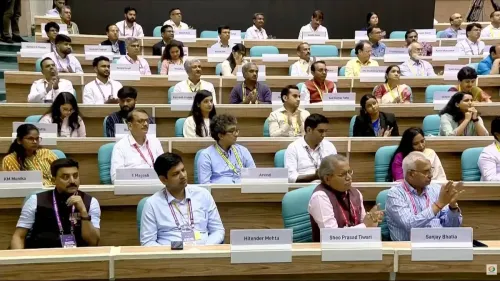
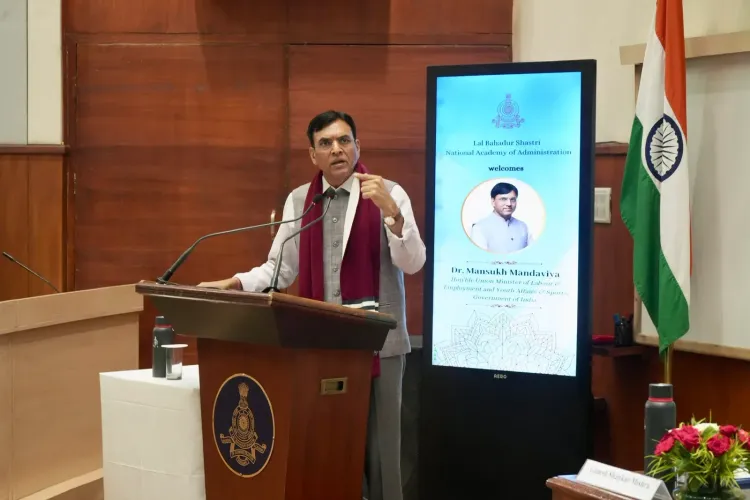
Union Labour and Sports Minister Mansukh Mandaviya on Monday, 7 July 2026 addressed municipal administrators, mid-career training programme officers, and 2024-batch IAS probationers at the Lal Bahadur Shastri National Academy of Administration (LBSNAA) in Mussoorie, Uttarakhand, invoking the ethos of citizen-first governance.
Mandaviya opened his address with the phrase 'Nagrik Devo Bhava' ('The citizen is god'), framing civil servants as the driving force behind Prime Minister Narendra Modi's vision of a Viksit Bharat ('Developed India'). He described the assembled officers as 'Karmayogis' — duty-bound workers — who must bring full energy to accelerating national development.
Context
LBSNAA, situated in the hill station of Mussoorie in Uttarakhand, has been India's premier civil services training institution since 1959. It conducts the mandatory foundation course for newly recruited IAS officers and has expanded its mid-career programmes in recent years to include municipal and state-level administrators, reflecting a broader push to professionalise governance at every tier.
Mandaviya's address brought together three distinct cohorts: fresh 2024-batch IAS probationers undergoing foundational training, officers attending mid-career development courses, and municipal administrators — a combination that signals the government's intent to align all levels of the administrative machinery around a common citizen-centric framework.
Policy Backdrop
The address fits squarely within the Mission Karmayogi framework — the National Programme for Civil Services Capacity Building approved by the Union Cabinet in 2020. The programme targets training for over 1.5 crore government employees, shifting the emphasis from rule-based compliance to role-based competency and a 'citizen first' service orientation.
Since 2014, successive central governments have expanded LBSNAA's mandate to incorporate modules on technology-driven governance, last-mile service delivery, and district-level administration. The Viksit Bharat@2047 goal — transforming India into a developed nation by the centenary of Independence — has given renewed urgency to these capacity-building efforts, with civil servants positioned as key implementation partners.
Stakeholders and Impact
IAS probationers of the 2024 batch are at the earliest stage of careers that will span decades of public administration. The values and frameworks instilled at LBSNAA shape their approach to governance long after they leave Mussoorie. For municipal administrators, mid-career exposure to national-level policy thinking can directly influence urban service delivery for millions of citizens.
Mandaviya's presence as a senior Union Cabinet minister — rather than a bureaucratic trainer — underscores the political weight the government attaches to this orientation. Framing civil servants as 'sarthis' ('charioteers') of the Viksit Bharat mission positions administrative capacity building not merely as a training exercise but as a political and developmental commitment.
What's Next
The government is expected to roll out the next phases of Mission Karmayogi, including state-level capacity hubs intended to decentralise training infrastructure beyond LBSNAA. Impact assessments of the 2024–26 IAS batches on ground-level governance metrics will be closely watched as indicators of whether the citizen-centric orientation translates into measurable improvements in public service delivery.
As India moves closer to the 2047 horizon, the calibre and orientation of officers trained in this period will be critical to whether the Viksit Bharat ambition becomes administrative reality.
Point of View
Reinforcing that the government sees bureaucratic reform as inseparable from its Viksit Bharat narrative. Bringing municipal administrators alongside IAS probationers signals an intent to close the gap between Union-level vision and local-level delivery. Whether this ministerial engagement translates into measurable governance outcomes will depend on the institutional follow-through beyond the training campus.
NationPress
5 Oct 2026
Frequently Asked Questions
What did Mansukh Mandaviya say at LBSNAA Mussoorie?
Mandaviya addressed 2024-batch IAS probationers, mid-career officers, and municipal administrators at LBSNAA on 7 July 2026, invoking 'Nagrik Devo Bhava' and urging civil servants to act as the driving force behind PM Modi's Viksit Bharat mission.
What is LBSNAA and where is it located?
The Lal Bahadur Shastri National Academy of Administration (LBSNAA) is India's premier training institution for IAS officers, located in Mussoorie, Uttarakhand. It has conducted foundation training since 1959 and expanded mid-career programmes in recent years.
What is Mission Karmayogi?
Mission Karmayogi is the National Programme for Civil Services Capacity Building, approved by the Union Cabinet in 2020. It aims to train over 1.5 crore government employees, shifting from rule-based to role-based, citizen-first governance.
What is Viksit Bharat and how does civil service training relate to it?
Viksit Bharat@2047 is PM Modi's vision to make India a developed nation by the centenary of Independence. Civil service training at LBSNAA is positioned as a key vehicle for building the administrative capacity needed to achieve this goal.
Who were the three groups addressed by Mandaviya at LBSNAA?
Mandaviya addressed three groups: 2024-batch IAS probationers undergoing foundational training, officers attending mid-career development programmes, and municipal administrators — all gathered at LBSNAA in Mussoorie.