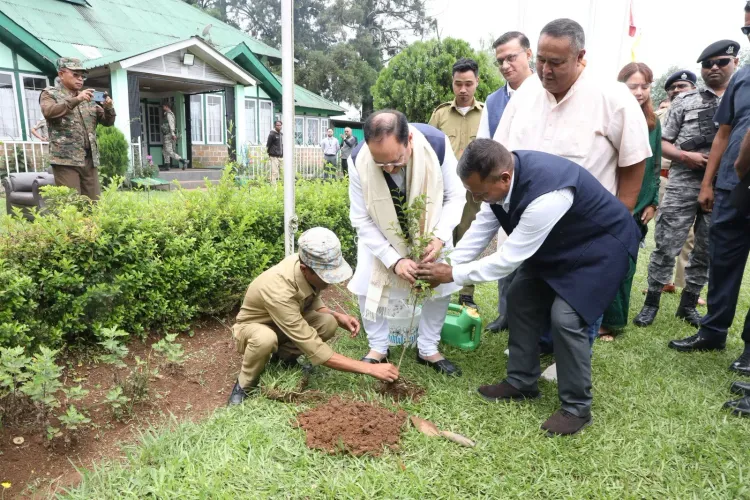
Nadda Plants Saplings in Shillong on World Environment Day
Synopsis
Union Health Minister J. P. Nadda planted saplings in Shillong on World Environment Day 2026, reaffirming India's Ek Ped Maa Ke Naam campaign — launched by PM Modi in 2024 — as a crore-strong public movement linking cultural values with national afforestation goals.
Key Takeaways
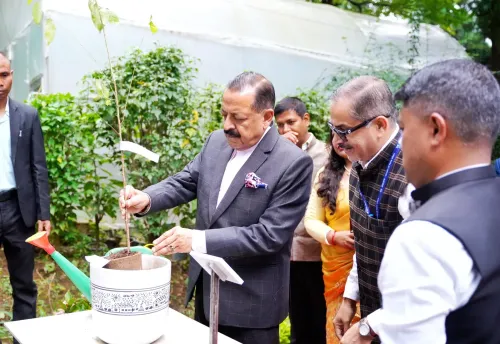
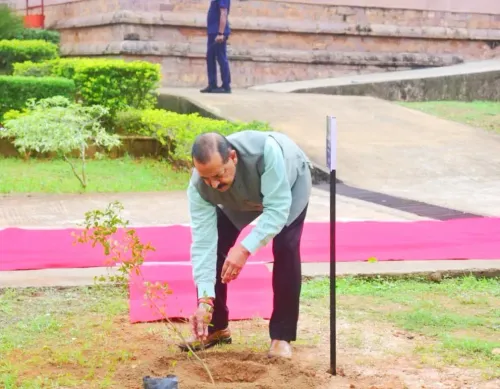
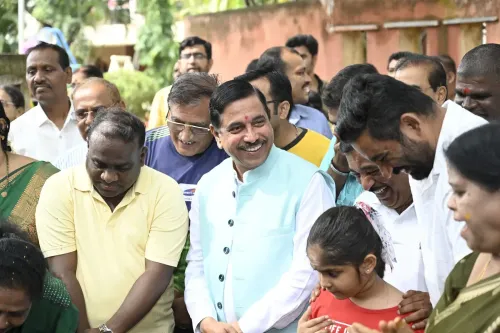
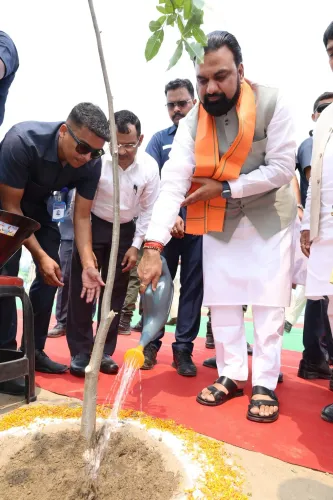
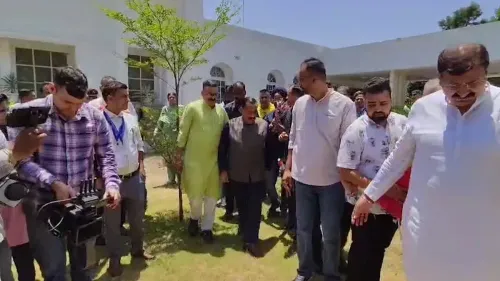
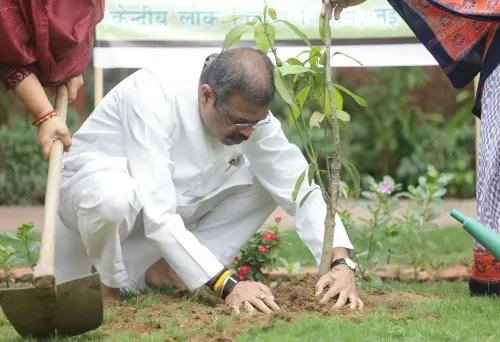
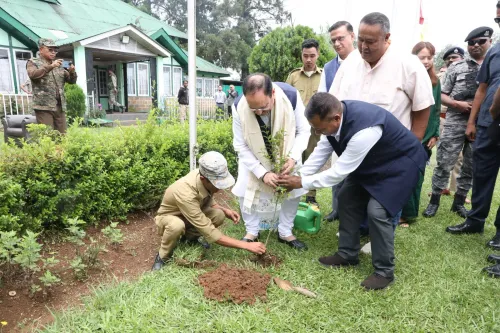
Nadda participated in a tree plantation event in Shillong, Meghalaya on 5 June 2026 , World Environment Day.
He renewed the pledge for environmental conservation with fellow participants at the event.
Nadda highlighted the 'Ek Ped Maa Ke Naam' campaign, launched by PM Narendra Modi in June 2024 , as having grown into a movement of crores of participants .
The campaign encourages citizens to plant and dedicate a sapling to their mothers, linking ecological action with cultural sentiment.
The drive supports India's national targets for expanding forest and tree cover as part of its climate commitments.
Nadda called on all citizens to contribute to building a 'clean, green and safe environment for future generations.'
Union Health Minister J. P. Nadda participated in a tree plantation drive in Shillong, Meghalaya, on 5 June 2026, marking World Environment Day, and renewed a public pledge for environmental conservation alongside fellow participants.
Posting on X, Nadda wrote: 'आज विश्व पर्यावरण दिवस के अवसर पर मेघालय के शिलांग में पौधारोपण किया' ('Today, on the occasion of World Environment Day, I planted saplings in Shillong, Meghalaya') and called on citizens to collectively build a 'clean, green and safe environment for future generations.'
Context
World Environment Day, observed every year on 5 June, is the United Nations' principal vehicle for encouraging awareness and action on environmental protection. This year's observance saw senior central government leaders participate in plantation events across multiple states, with Shillong serving as the venue for Nadda's participation.
Meghalaya, one of India's biodiversity-rich north-eastern states, is already heavily forested, but government-led plantation drives in the region are framed as reinforcing community stewardship of natural resources and aligning state efforts with national afforestation targets.
Policy Backdrop
Nadda specifically invoked the 'Ek Ped Maa Ke Naam' (One Tree in Mother's Name) campaign, launched by Prime Minister Narendra Modi in June 2024, which encourages every citizen to plant and dedicate a sapling to their mother. In his post, Nadda described the initiative as having grown from 'a single sapling' into a mass movement with the participation of crores of people.
The campaign draws on a cultural narrative that links ecological responsibility with familial and spiritual reverence, a framing successive governments have used to mobilise broad public participation in afforestation. The drive aligns with India's nationally determined contributions under the Paris Agreement, which include expanding forest and tree cover to create an additional carbon sink.
Stakeholders and Impact
The primary beneficiaries of sustained afforestation efforts are Indian citizens — particularly those in ecologically vulnerable regions — along with state governments that must meet forest-cover targets embedded in national environment policy. North-eastern states like Meghalaya play an outsized role in India's overall green cover statistics, making local participation in such campaigns symbolically and practically significant.
By participating personally in Shillong, Nadda, who also serves as BJP national president, signals the party's intent to project environmental stewardship as a governance priority ahead of continued scrutiny of India's climate commitments on the global stage.
What's Next
The Environment Ministry and state governments are expected to report periodic updates on the total number of saplings planted under Ek Ped Maa Ke Naam, with figures likely to feature in upcoming budget statements and environment ministry releases. Nadda's call to action — 'let us all together contribute to building a clean, green and safe environment for coming generations' — signals continued high-level political visibility for the campaign through the remainder of 2026.
Point of View
A region with both ecological significance and electoral salience. Invoking 'Ek Ped Maa Ke Naam' keeps PM Modi's 2024 initiative in the public conversation, reinforcing a pattern where senior party figures amplify flagship schemes on symbolic occasions. The cultural framing — nature as 'an inseparable part of our culture, faith and existence' — is consistent with the government's broader strategy of embedding policy goals within heritage narratives to maximise mass participation. Whether the campaign translates into measurable, independently verified afforestation gains will determine its long-term policy legacy beyond its mobilisation value.
NationPress
23 Oct 2026
Frequently Asked Questions
What is the Ek Ped Maa Ke Naam campaign?
'Ek Ped Maa Ke Naam' (One Tree in Mother's Name) is a nationwide tree plantation campaign launched by Prime Minister Narendra Modi in June 2024, encouraging every citizen to plant a sapling and dedicate it to their mother as a gesture linking environmental care with familial reverence.
Why did JP Nadda go to Shillong on World Environment Day?
J. P. Nadda visited Shillong, Meghalaya, to participate in a tree plantation event on World Environment Day, 5 June 2026, renewing a public pledge for environmental conservation alongside fellow participants.
When is World Environment Day celebrated?
World Environment Day is observed every year on 5 June. It is the United Nations' principal platform for encouraging global awareness and action on environmental protection.
What did JP Nadda say about the environment on World Environment Day 2026?
Nadda stated that nature is not merely the foundation of life but 'an inseparable part of our culture, faith and existence,' and called on all citizens to contribute to building a clean, green and safe environment for future generations.
How many people have joined Ek Ped Maa Ke Naam?
According to J. P. Nadda's post on 5 June 2026, the Ek Ped Maa Ke Naam campaign has grown into a mass movement with the participation of crores of people across India.