Nadda chairs Hindi Advisory Meet at Chemicals Ministry
Synopsis
Union Minister J. P. Nadda chaired the Hindi Advisory Committee of the Ministry of Chemicals and Fertilizers in New Delhi on 26 October 2026, calling for Hindi to move beyond office use and become the primary channel for delivering fertilizer guidance and Jan Aushadhi scheme information to farmers and citizens.
Key Takeaways
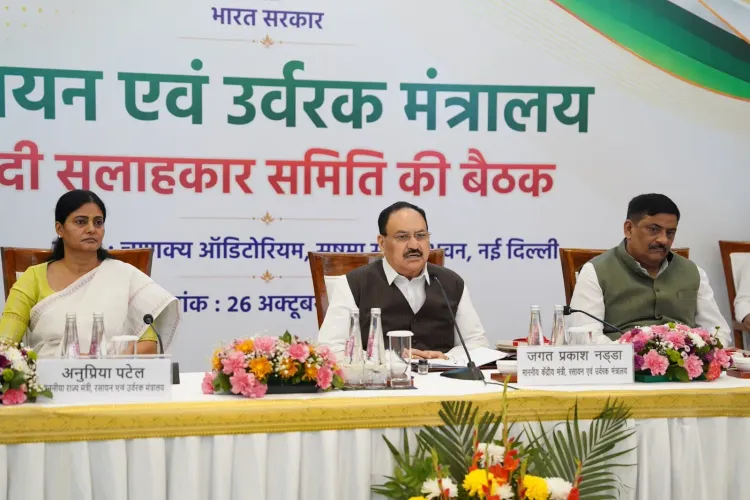
Nadda chaired the Hindi Advisory Committee meeting of the Ministry of Chemicals and Fertilizers in New Delhi on 26 October 2026 .
Discussions covered expanding Hindi and regional-language technical materials across the Fertilizers, Chemicals and Petrochemicals, and Pharmaceuticals departments.
Farmers were identified as a key audience for Hindi-language guidance on balanced fertilizer use .
Information on the Pradhan Mantri Bharatiya Jan Aushadhi Pariyojana (launched 2015 ) is being made available in Hindi and multiple regional languages.
Nadda called for Hindi to go beyond official-language compliance and become a 'powerful medium' for last-mile scheme delivery to ordinary citizens.
The push aligns with obligations under the Official Languages Act, 1963 , which mandates progressive use of Hindi in Union government work.
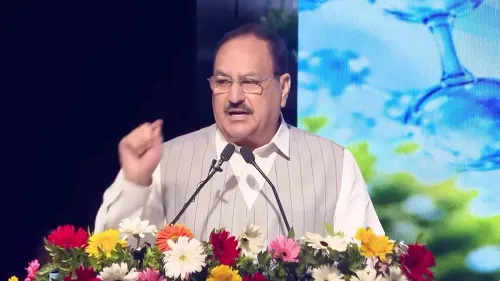
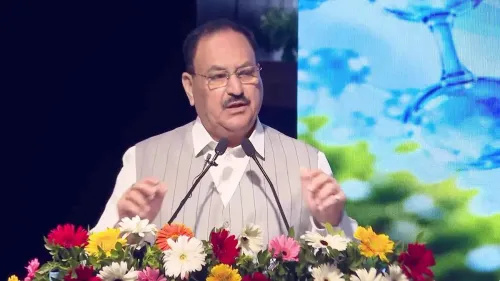
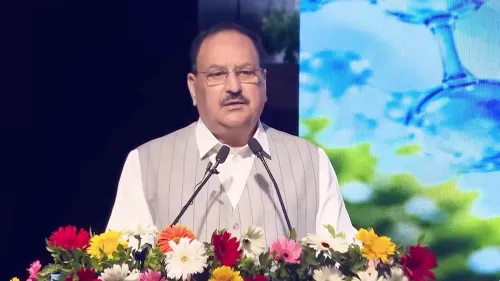
Hindi should not be confined to office circulars and internal files — it must become the living bridge between government schemes and every citizen who depends on them. That was the sharp message Union Minister J. P. Nadda delivered on Monday, 26 October 2026, as he chaired the Hindi Advisory Committee meeting of the Ministry of Chemicals and Fertilizers in New Delhi.
What the committee put on the table
The meeting brought together representatives of the ministry's three departments — Fertilizers, Chemicals and Petrochemicals, and Pharmaceuticals — to review how Hindi is being woven into their day-to-day official work. Discussions covered simplifying the language used in government communications, expanding Hindi and regional-language technical material, Hindi training programmes for staff, and publishing inspection reports, articles, and technical glossaries in Hindi.
Nadda stressed that the goal must go beyond compliance. 'हिंदी केवल कार्यालयी भाषा बनकर न रह जाए' — Hindi must not remain merely an office language — he said, adding that it should become 'a powerful medium to deliver government services, schemes, and public-welfare initiatives to ordinary citizens with ease.'
Farmers and Jan Aushadhi beneficiaries in focus
Two citizen groups emerged as the clearest beneficiaries from the committee's agenda. Farmers were cited as a priority audience for accessible information on balanced fertilizer use — technical guidance that, when locked in administrative English or dense jargon, rarely reaches the field. The second group is the millions who rely on the Pradhan Mantri Bharatiya Jan Aushadhi Pariyojana, the flagship scheme launched in 2015 that supplies quality generic medicines at low cost through Jan Aushadhi Kendras across India. The meeting noted that scheme information is already being made available in Hindi and multiple regional languages — an effort the committee is looking to deepen.
Official language law meets last-mile delivery
The Hindi Advisory Committee is not a new construct. Under the Official Languages Act, 1963, central ministries are required to progressively use Hindi for official purposes while accommodating regional languages — and each ministry maintains such a committee to track compliance and set direction. What distinguishes today's meeting is its explicit link between language promotion and scheme delivery: the push for Hindi is framed not as a cultural exercise but as a last-mile communication tool for agriculture inputs and public health.
This framing — Hindi as a policy-delivery instrument — has been a consistent thread across administrations, but the Chemicals Ministry's combination of fertilizer advisory services and the Jan Aushadhi network gives it unusual reach: from kisan soil-health decisions to the neighbourhood generic-medicine counter.
Point of View
Language policy is being positioned as a last-mile delivery mechanism for flagship schemes like Jan Aushadhi and fertilizer advisory services. This fits a broader pattern under the current government of bundling cultural and administrative goals — Hindi expansion — with measurable citizen-welfare outcomes. With Nadda holding the dual charge of Health and Chemicals, the convergence of pharmaceutical access and agricultural inputs under one Hindi-outreach roof amplifies the political messaging. Watch whether the committee's recommendations translate into auditable targets on regional-language material, or remain aspirational declarations.
NationPress
26 Oct 2026
Frequently Asked Questions
What is the Hindi Advisory Committee of a central ministry?
Every central ministry constitutes a Hindi Advisory Committee under the Official Languages Act, 1963, to oversee the progressive use of Hindi in official work, track compliance, and recommend steps to expand Hindi in communications and scheme delivery.
What did J. P. Nadda say at the Chemicals Ministry Hindi meeting?
Nadda said Hindi should not remain merely an office language but must become a powerful medium to deliver government services, schemes, and public-welfare initiatives to ordinary citizens with ease — including fertilizer guidance for farmers and Jan Aushadhi scheme information.
How does the Pradhan Mantri Bharatiya Jan Aushadhi Pariyojana relate to Hindi promotion?
The Jan Aushadhi scheme, launched in 2015, supplies affordable generic medicines through dedicated Kendras. Information about the scheme is being made available in Hindi and regional languages so that citizens, especially in non-English-speaking areas, can access details about low-cost medicines.
Why is Hindi-language fertilizer information important for farmers?
Most Indian farmers operate in regional languages, and technical guidance on balanced fertilizer use is often published in English or complex jargon. Providing this information in Hindi and regional languages directly improves soil-health decisions and reduces input misuse at the farm level.
What is the Official Languages Act, 1963?
The Official Languages Act, 1963 requires the central government to progressively use Hindi for official purposes of the Union, while permitting the continued use of English and recognising the role of regional languages, particularly in states that have not adopted Hindi as their primary language.