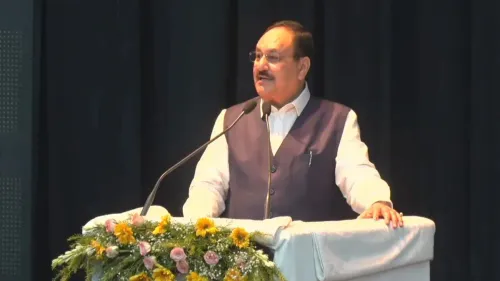
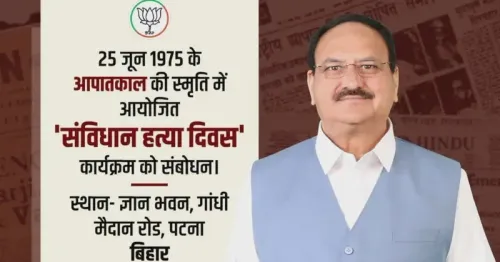
Nadda recalls student arrest during JP's Patna visit on Emergency anniversary
Synopsis
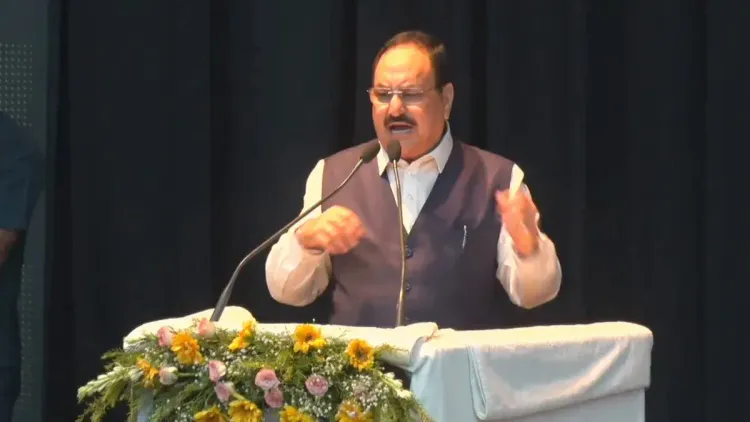
Union Health Minister J. P. Nadda on 25 June 2026 shared a personal account of his arrest as a Patna College student after supporting Jayaprakash Narayan during the 1975 Emergency, using the memory to warn that Congress's anti-democratic instincts remain unchanged and must be kept from power.
Key Takeaways
Nadda recalled being arrested as a Patna College student within 15 minutes of raising slogans in support of Jayaprakash Narayan during the latter's visit to Darbhanga House , Patna.
Ravi Shankar Prasad , then a Patna University student, is named as a co-participant in the protest.
The post was made on 25 June 2026 , the 51st anniversary of the 1975 Emergency imposed under Article 352 by the Indira Gandhi government.
The BJP has observed 25 June as Samvidhan Hatya Diwas since 2014 , framing the Emergency as evidence of Congress authoritarianism.
Nadda called it a 'national responsibility' to keep Congress away from power, directly linking the historical episode to present-day electoral politics.
College campuses in Patna were described as having been converted into 'cantonments' during the Emergency period.
Union Health Minister J. P. Nadda on Thursday, 25 June 2026 shared a personal account of being arrested as a student in Patna after raising slogans in support of socialist leader Jayaprakash Narayan, marking the occasion of what the BJP designates Samvidhan Hatya Diwas (Constitution Murder Day) — the anniversary of the 1975 Emergency imposed by the Indian National Congress government.
Context
In his post, Nadda recalled that Jayaprakash Narayan had come to Patna for a few days and visited the Kali temple at Darbhanga House for prayers. Nadda, then a student of Patna College, along with Ravi Shankar Prasad — a student of Patna University at the time — helped mobilise fellow students who raised the slogan: 'Loknayak Jayaprakash aage badho, hum tumhare saath hain' ('Loknayak Jayaprakash, march forward, we are with you'). He said that within 15 minutes of Narayan's departure, the entire class was arrested.
Nadda noted that college campuses of the era had effectively been turned into military cantonments, with constant surveillance and crackdowns on student voices. The post was accompanied by the hashtag #SamvidhanHatyaDiwas.
Policy backdrop
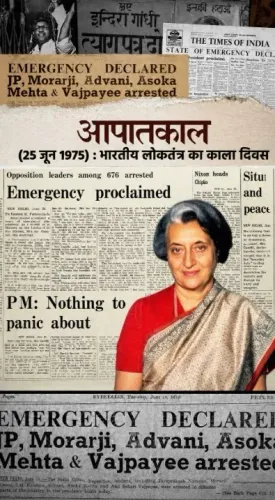
On 25 June 1975, then Prime Minister Indira Gandhi invoked Article 352 of the Constitution to impose a national Emergency that lasted until March 1977. The period saw the suspension of fundamental rights, press censorship, and the mass detention of opposition leaders — most prominently Jayaprakash Narayan, who had spearheaded a nationwide movement demanding the government's resignation.
Since 2014, the BJP has formally commemorated 25 June as Samvidhan Hatya Diwas, framing the Emergency as a defining act of Congress authoritarianism and positioning the party as the constitutional guardian against such overreach. The observance has become a fixed point in the BJP's political calendar, particularly sharpened ahead of state and national elections.
Stakeholders and impact
Ravi Shankar Prasad, named in Nadda's account as a co-participant in the student protest, is a senior BJP leader and former Union Minister who has himself spoken publicly about his Emergency-era activism on multiple occasions. The mention reinforces a shared generational identity among senior BJP leaders rooted in anti-Emergency resistance.
Nadda's post directly addresses Congress, asserting that the party's 'thinking has not changed even today' and calling it a 'national responsibility' to keep such forces away from power. The framing links a 51-year-old historical episode to present-day electoral politics, a rhetorical pattern the BJP has consistently employed to question the opposition's democratic credentials.
What's next
Commemorations around 25 June are expected to intensify across BJP-governed states, with party units likely to organise public programmes, seminars, and social media campaigns under the Samvidhan Hatya Diwas banner. Parliamentary references to the Emergency anniversary typically surface during monsoon sessions of both Houses.
With several state assembly elections on the horizon, the BJP's annual framing of 25 June as a warning against Congress rule is likely to feature prominently in campaign messaging, making the Emergency narrative a recurring axis of political contestation in the months ahead.
Point of View
He simultaneously humanises the BJP's anti-Congress narrative and reinforces a generational legitimacy claim — that today's ruling party was forged in democratic resistance. The invocation of Ravi Shankar Prasad as a fellow student-activist broadens that legitimacy to the senior leadership collective. Marking Samvidhan Hatya Diwas annually allows the BJP to keep the Emergency as a live wound in public discourse rather than a closed historical chapter, particularly effective when state elections are approaching. The explicit warning that 'Congress's thinking has not changed' signals that the Emergency frame will be a central plank in the party's upcoming campaign vocabulary.
NationPress
24 Sept 2026
Frequently Asked Questions
What is Samvidhan Hatya Diwas?
Samvidhan Hatya Diwas, or 'Constitution Murder Day', is the name the BJP has given to 25 June — the anniversary of the 1975 Emergency imposed by Prime Minister Indira Gandhi — to mark what the party describes as Congress's assault on constitutional democracy. The BJP has observed this date annually since 2014 .
What did J. P. Nadda say about the Emergency?
Nadda shared that as a student at Patna College he helped mobilise fellow students to raise slogans in support of Jayaprakash Narayan during Narayan's visit to Darbhanga House in Patna, and that the entire class was arrested within 15 minutes of Narayan's departure. He used the memory to argue that Congress's anti-democratic nature remains unchanged.
What was the 1975 Emergency in India?
The national Emergency was proclaimed on 25 June 1975 by Prime Minister Indira Gandhi under Article 352 of the Constitution and lasted until March 1977 . It suspended fundamental rights, imposed press censorship, and led to the mass detention of opposition leaders including Jayaprakash Narayan .
Who is Jayaprakash Narayan?
Jayaprakash Narayan , popularly called 'Loknayak', was a veteran socialist leader who led a nationwide peoples' movement demanding Indira Gandhi's resignation in the mid-1970s. He was arrested at the outset of the 1975 Emergency and became the defining symbol of resistance to that period.
Was Ravi Shankar Prasad also involved in Emergency-era protests?
According to J. P. Nadda's post, Ravi Shankar Prasad — then a student at Patna University — participated alongside Nadda in the student mobilisation in support of Jayaprakash Narayan during the Emergency period. Prasad has himself spoken publicly about his activism during those years on prior occasions.