Nadda Reviews New AMCC and ANC Facilities at PGIMER Chandigarh
Synopsis
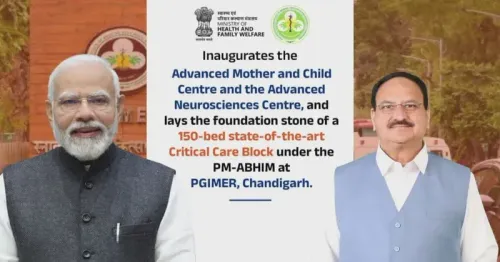
Union Health Minister J. P. Nadda visited the newly inaugurated Advanced Mother and Child Centre and Advanced Neurosciences Centre at PGIMER, Chandigarh, praising the facilities as world-class and reaffirming the government's commitment to expanding tertiary healthcare. He also recognised SARATHI volunteers for their patient-support work.
Key Takeaways
Union Health Minister J.
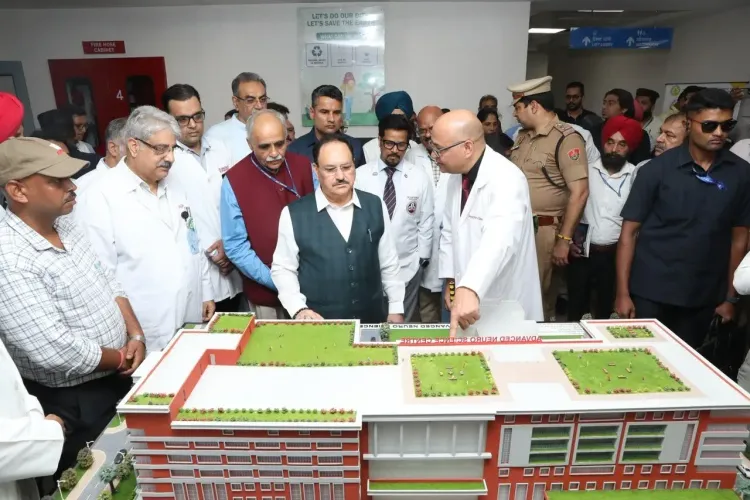
Nadda visited the Advanced Mother & Child Centre (AMCC) and Advanced Neurosciences Centre (ANC) at PGIMER, Chandigarh on 18 July 2026 .
Both centres have been newly inaugurated and are described as 'world-class facilities' set to strengthen maternal, child, and neurosciences care in northern India.
Nadda interacted with SARATHI volunteers and appreciated their role in supporting patients and attendants at the institute.
The Minister commended PGIMER's leadership, faculty, engineers, and staff for building what he called 'landmark institutions.' The development aligns with the central government's long-standing strategy of creating specialised centres of excellence within established premier medical institutes.
Further rollout of similar infrastructure at other central institutes and the next Union Budget's health allocation are key developments to watch.
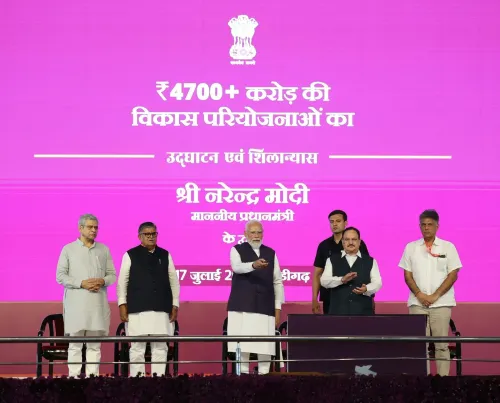
Union Health Minister J. P. Nadda visited the newly inaugurated Advanced Mother & Child Centre (AMCC) and Advanced Neurosciences Centre (ANC) at PGIMER, Chandigarh, on Friday, 18 July 2026, to review the state-of-the-art healthcare infrastructure at one of northern India's premier central medical institutions.
Context
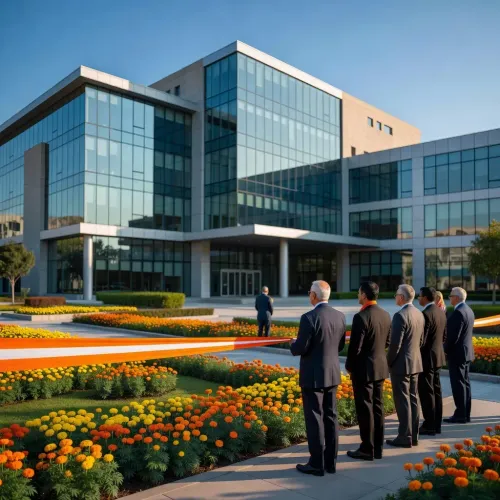
The Union Minister described the two centres as 'world-class facilities' that 'will significantly strengthen maternal and child healthcare, advanced neurosciences care, medical education, and research.' The visit follows the formal inauguration of both blocks at PGIMER, the Postgraduate Institute of Medical Education and Research, which functions as a central government institute serving a vast patient catchment across northern India.
During the visit, Nadda also interacted with SARATHI volunteers — a patient-support initiative at the institute — and appreciated their 'dedicated service in supporting patients and attendants,' underscoring what he called their 'invaluable contribution to patient-centric healthcare.'
Policy Backdrop
The development of specialised blocks within established institutes such as PGIMER is consistent with a long-standing central government strategy of creating centres of excellence rather than relying solely on new greenfield projects. The Pradhan Mantri Swasthya Suraksha Yojana (PMSSY), launched in 2003, has provided capital funding to upgrade existing premier medical institutions, including PGIMER, for advanced tertiary care.
Successive Union Budgets have prioritised maternal and child health infrastructure alongside neurosciences capacity through targeted grants to central institutes. The AMCC and ANC at PGIMER represent this approach — channelling investment into an already-established research and teaching hospital to expand the scope and scale of specialised care available to patients who may not have access to such facilities in their home states.
Stakeholders and Impact
The primary beneficiaries of the AMCC are mothers and children from across the northern region, who currently travel long distances to access advanced obstetric, neonatal, and paediatric care. The ANC is expected to expand access to neurosurgery, neurology, and allied specialties, reducing the burden on facilities concentrated in larger metros.
Medical faculty, postgraduate students, and researchers at PGIMER stand to benefit from enhanced teaching infrastructure and research capacity. Nadda specifically 'commended the leadership, faculty, engineers, and staff of PGIMER for creating these landmark institutions,' reaffirming the Government of India's 'unwavering commitment to expanding access to world-class tertiary healthcare across the country.'
The SARATHI volunteer programme, which supports patients and their attendants navigating the institute, received particular recognition from the Minister — highlighting the growing emphasis on soft infrastructure and patient experience alongside clinical capacity.
What's Next
The inauguration of the AMCC and ANC at PGIMER is likely to set a template for similar specialised blocks at other central institutes across the country. Observers will watch whether the health component of the next Union Budget allocates fresh capital for comparable mother-and-child and neurosciences infrastructure at institutions in other regions.
State governments hosting central medical institutes may also face pressure to complement these investments with last-mile connectivity and referral networks, ensuring that patients from remote districts can actually reach and benefit from the upgraded facilities.
Point of View
High-impact, and difficult to contest politically. By personally commending SARATHI volunteers, Nadda also nudges the national conversation toward patient experience, a metric that has historically received far less policy attention than bed counts or equipment. The broader arc points to PGIMER being positioned as a model for replication at other central institutes ahead of the next budget cycle.
NationPress
16 Oct 2026
Frequently Asked Questions
What is the Advanced Mother and Child Centre at PGIMER Chandigarh?
The Advanced Mother & Child Centre (AMCC) is a newly inaugurated specialised facility at PGIMER, Chandigarh, designed to strengthen maternal and child healthcare, including advanced obstetric, neonatal, and paediatric services for patients across northern India.
What is the Advanced Neurosciences Centre at PGIMER?
The Advanced Neurosciences Centre (ANC) is a newly inaugurated block at PGIMER, Chandigarh, focused on expanding neurosurgery, neurology, and allied specialties, as well as supporting medical education and research in the neurosciences.
Why did J. P. Nadda visit PGIMER Chandigarh?
Union Health Minister J. P. Nadda visited PGIMER, Chandigarh, on 18 July 2026 to review the state-of-the-art infrastructure of the newly inaugurated AMCC and ANC, interact with SARATHI volunteers, and reaffirm the government's commitment to world-class tertiary healthcare.
Who are SARATHI volunteers at PGIMER?
SARATHI volunteers are a patient-support group at PGIMER who assist patients and their attendants in navigating the institute. Union Health Minister J. P. Nadda appreciated their dedicated service during his visit on 18 July 2026.
What is the government's plan for expanding tertiary healthcare in India?
The central government's strategy focuses on creating specialised centres of excellence within established premier medical institutes, supported by schemes such as the Pradhan Mantri Swasthya Suraksha Yojana, with the aim of decentralising advanced care beyond major metros.