Nadda flags PGIMER expansion, links health to Swachh Bharat
Synopsis
Union Health Minister J. P. Nadda shared PM Modi's remarks on 17 July 2026 highlighting the expansion of an Advanced Neuro Science Centre, Advanced Mother and Child Centre, and Critical Care Hospital Block at PGIMER Chandigarh, tying the infrastructure push to the Swachh Bharat Mission's sanitation-health rationale.
Key Takeaways
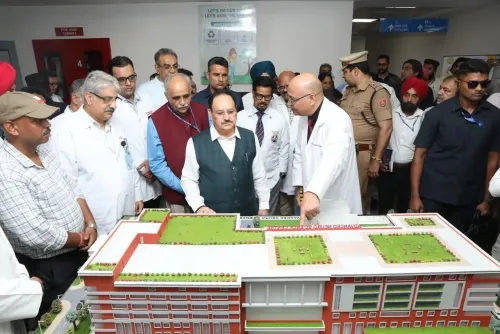
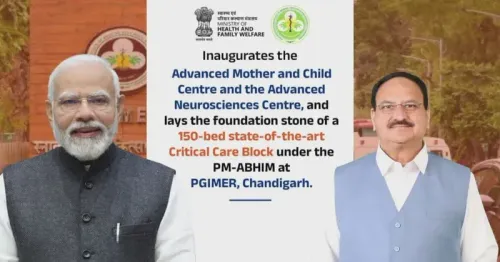
Three new facilities — an Advanced Neuro Science Centre, Advanced Mother and Child Centre, and Critical Care Hospital Block — are being added at PGIMER Chandigarh .
The projects are described as serving lakhs of patients across northern India with improved tertiary care access.
PM Modi linked the expansion to the broader principle that sanitation is fundamental to health outcomes.
The Swachh Bharat Mission , launched on 2 October 2014 , was cited as the government's foundational preventive-health initiative underpinning this approach.
PGIMER upgrades have historically been supported through the Pradhan Mantri Swasthya Suraksha Yojana (PMSSY) , expanded significantly after 2014.
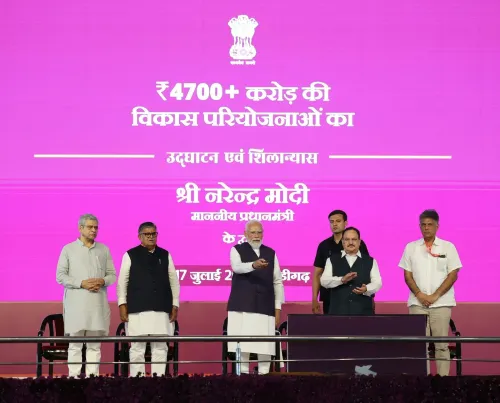
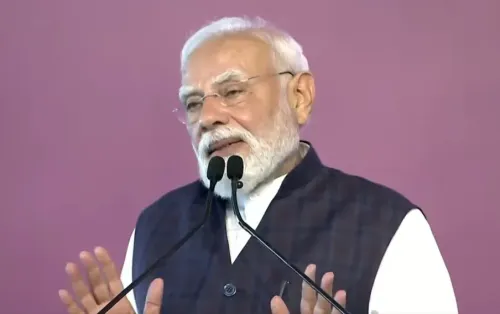
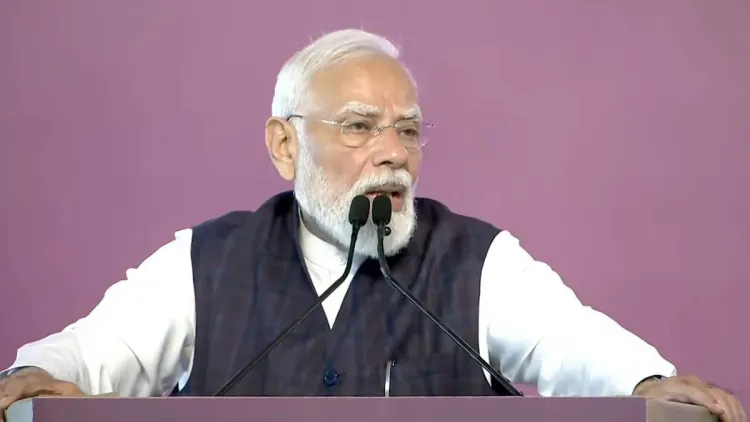
Union Health Minister J. P. Nadda on Friday, 17 July 2026 highlighted the expansion of advanced healthcare facilities at PGIMER Chandigarh, citing new projects in neuroscience, mother-and-child care, and critical care as milestones in the government's push to strengthen tertiary public health infrastructure. Sharing remarks attributed to Prime Minister Narendra Modi, Nadda underscored the government's view that sanitation is inseparable from health outcomes.
Context
The post, shared from Nadda's official account, quotes Prime Minister Modi directly: 'आज चंडीगढ़ पीजीआई में एडवांस हेल्थ केयर फैसिलिटीज का विस्तार हो रहा है' ('Today, advanced healthcare facilities are being expanded at Chandigarh PGI'). Three specific projects were named — an Advanced Neuro Science Centre, an Advanced Mother and Child Centre, and a Critical Care Hospital Block — described as facilities that will provide better treatment to 'lakhs of people.' The Prime Minister is further quoted drawing an explicit link between health and cleanliness, referencing the government's decision to launch the Swachh Bharat Mission after coming to power.
Policy Backdrop
The Swachh Bharat Mission was launched on 2 October 2014 with the stated goal of eliminating open defecation and building a sanitation infrastructure that would directly improve public health. The government has consistently argued that hygiene and sanitation are foundational preventive-health interventions, reducing the disease burden that tertiary hospitals must then address.
PGIMER Chandigarh is one of India's premier postgraduate medical education and research institutions, serving patients across northern India and neighbouring states. Upgrades to institutions like PGIMER have historically been channelled through the Pradhan Mantri Swasthya Suraksha Yojana (PMSSY), which was initiated in 2003 and significantly expanded after 2014 to cover tertiary-care infrastructure at AIIMS campuses and institutes like PGIMER.
Stakeholders and Impact
The three new blocks are expected to benefit a broad cross-section of patients. The Advanced Mother and Child Centre targets maternal and paediatric care, a segment that carries significant weight in India's public-health indices. The Advanced Neuro Science Centre addresses a growing demand for specialised neurological care in the region, while the Critical Care Hospital Block is aimed at expanding capacity for the most acute cases across northern India.
Patients who currently travel long distances to access specialised care at PGIMER stand to benefit most directly, as expanded capacity could reduce wait times and improve access for those from lower-income backgrounds who depend on public-sector tertiary facilities.
What's Next
Attention will now turn to the commissioning timelines for each of the three new blocks and any dedicated budget allocations that may follow in the next Union Health Budget. Parliamentary questions on PGIMER's infrastructure projects are also expected to shed further light on the operational schedules. The government's dual-track approach — expanding tertiary infrastructure while reinforcing preventive-health messaging through missions like Swachh Bharat — is likely to remain a recurring theme in official health communications ahead of the next budget cycle.
Point of View
Reinforcing a narrative of continuity from sanitation to specialised care. By attributing the remarks to PM Modi rather than speaking in his own voice, Nadda positions the PGIMER expansion as a prime-ministerial priority, lending it greater political weight ahead of a potential budget cycle. The explicit Swachh Bharat callback is a recurring rhetorical device that ties preventive and curative health into a single governance arc. Analysts will watch whether the commissioning of these blocks translates into measurable capacity gains at a hospital that routinely operates beyond its bed strength.
NationPress
16 Oct 2026
Frequently Asked Questions
What new facilities are being built at PGIMER Chandigarh?
Three new facilities are being added at PGIMER Chandigarh: an Advanced Neuro Science Centre, an Advanced Mother and Child Centre, and a Critical Care Hospital Block, all aimed at expanding specialised tertiary care for patients across northern India.
What is the Swachh Bharat Mission and how is it related to health?
The Swachh Bharat Mission is a national sanitation and cleanliness campaign launched on 2 October 2014 to eliminate open defecation and strengthen hygiene infrastructure. The government argues that better sanitation directly reduces the disease burden and improves public health outcomes.
Why did JP Nadda post about PGIMER Chandigarh?
Union Health Minister J. P. Nadda shared remarks by PM Modi on 17 July 2026 to highlight the government's ongoing expansion of advanced healthcare infrastructure at PGIMER Chandigarh, one of India's premier public tertiary-care institutions.
Who benefits from the new PGIMER Chandigarh blocks?
The new blocks are expected to benefit lakhs of patients from northern India and neighbouring states who depend on PGIMER for specialised neurological care, maternal and child health services, and critical care treatment.
What is PMSSY and does it fund PGIMER projects?
The Pradhan Mantri Swasthya Suraksha Yojana (PMSSY) is a central scheme initiated in 2003 and expanded after 2014 to upgrade premier tertiary-care institutions, including AIIMS campuses and PGIMER, making it a key funding channel for such infrastructure projects.