Nadda shares President Murmu's words on NHP 2017 and telemedicine reach
Synopsis
Union Health Minister J. P. Nadda amplified President Draupadi Murmu's statement on X, citing the National Health Policy 2017's focus on preventive and palliative care, over 48 crore telemedicine consultations, and crores of NCD screenings for diabetes, mental stress, and cancer across India.
Key Takeaways
Union Health Minister J.
Nadda shared President Draupadi Murmu's statement on X on November 20, 2026 , highlighting India's health policy achievements.
The National Health Policy 2017 explicitly prioritised preventive, promotive, rehabilitative, and palliative care alongside curative services — a departure from the 2002 policy.
The government claims over 48 crore telemedicine consultations have been delivered, expanding health access to remote and underserved populations.
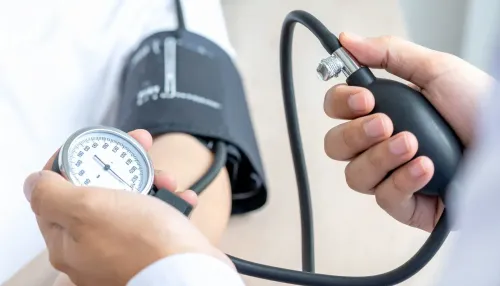
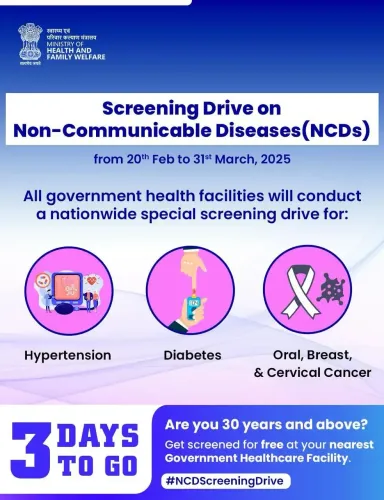
Crores of tests have been conducted for non-communicable diseases including diabetes, mental stress, and cancer to enable early detection.
President Murmu, the first person from a tribal community to serve as President of India, lent constitutional weight to the government's health record.
The statement comes ahead of a likely parliamentary winter session where NCD screening and telemedicine figures may face legislative scrutiny.
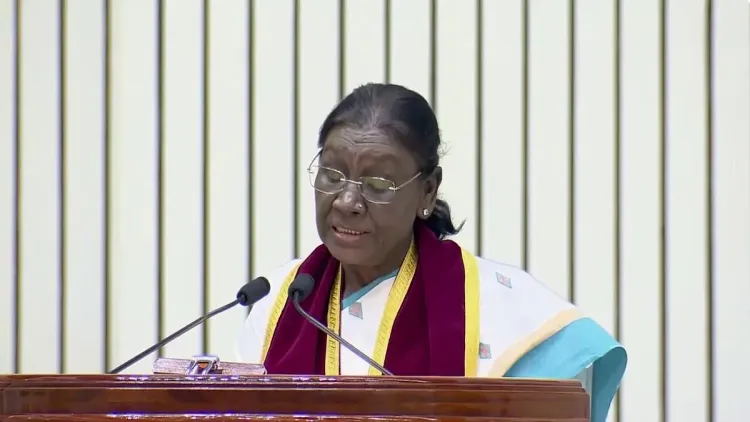
India's shift from treating illness to preventing it has a clear timestamp — 2017 — and the numbers being cited today are staggering. Union Health Minister J. P. Nadda took to X on Friday, November 20, 2026, quoting President Draupadi Murmu on the transformative reach of India's National Health Policy 2017, highlighting over 48 crore telemedicine consultations delivered across the country and crores of screenings conducted for non-communicable diseases including diabetes, mental stress, and cancer.
The post, shared in Hindi, quotes President Murmu: '2017 की राष्ट्रीय स्वास्थ्य नीति में उपचारात्मक सेवाओं के साथ निवारक, प्रोत्साहक, पुनर्वास और पैलिएटिव केयर पर जोर दिया गया' — ('The National Health Policy of 2017 emphasised preventive, promotive, rehabilitative and palliative care alongside curative services'). The statement underscores a deliberate, decade-long reorientation of India's public health architecture.
What NHP 2017 changed — and why it mattered
India's National Health Policy 2017 was the country's third such policy, replacing a version from 2002, and it marked a conscious strategic pivot. For the first time, the policy placed preventive, promotive, rehabilitative, and palliative care on equal footing with curative treatment — an acknowledgement that simply building more hospitals was not enough to address a population increasingly burdened by lifestyle-linked conditions.
Diabetes, mental health disorders, and cancer — the three conditions named in President Murmu's statement — are among the fastest-growing non-communicable disease (NCD) categories in India. Early detection matters enormously for all three: a cancer caught early, a blood-sugar spike flagged before it becomes full-blown Type 2 diabetes, a mental health crisis identified before it deepens. The government's claim of crores of tests conducted reflects the policy's bet on screening at scale.
48 crore consultations — telemedicine as the access equaliser
The figure that leaps off the post is 48 crore-plus telemedicine consultations. That is a number large enough to represent more than a third of India's entire population receiving at least one virtual consultation. Telemedicine — connecting patients in remote or underserved areas to doctors via digital platforms — was already embedded in the government's digital health strategy, but the momentum accelerated sharply after 2020, when the Telemedicine Practice Guidelines were formalised.
For rural India, where specialist shortages are acute, telemedicine has functioned as a geographic equaliser: a patient in a tribal district can access a specialist consultation that would otherwise require a day's journey. President Murmu, herself the first person from a tribal community to hold India's highest constitutional office since taking charge in July 2022, lending her voice to this particular achievement carries pointed symbolic weight.
President Murmu's voice in the health policy conversation
Nadda's decision to amplify the President's words — rather than issue a ministerial statement in his own name — is itself notable. The post is tagged to the @rashtrapatibhvn (Rashtrapati Bhavan) account, anchoring the message in constitutional authority. The framing signals a broad governmental consensus: the health ministry presenting its record not through political assertion, but through the voice of the head of state.
With a parliamentary winter session likely to bring questions on NCD screening coverage and telemedicine utilisation figures, the timing of this amplification is unlikely to be accidental. The government is laying out a statistical case for its decade of health policy direction — and doing it from the highest podium available.
The 2017 policy promised to move India toward universal health coverage. Nine years on, the numbers being invoked are the government's answer to whether the promise held.
Point of View
Nadda positions the NHP 2017's achievements as a matter of national consensus rather than partisan credit-claiming — a subtle but deliberate framing choice. The 48 crore telemedicine figure, if sustained under scrutiny, would represent one of the largest digital health delivery achievements by any democratic government globally, strengthening India's universal health coverage narrative at a time when the winter session is likely to probe exactly these numbers. The amplification also highlights a broader pattern: the BJP-led administration increasingly uses the constitutional office of the President — particularly one held by a figure who embodies tribal representation — to underscore social-sector outcomes. Watch whether the opposition moves to verify the telemedicine and NCD screening data through parliamentary questions, which could either validate or complicate the government's headline numbers.
NationPress
20 Nov 2026
Frequently Asked Questions
What is India's National Health Policy 2017?
India's National Health Policy 2017 is the country's third national health policy, replacing the 2002 version. It shifted focus beyond curative care to include preventive, promotive, rehabilitative, and palliative care, and set a direction toward universal health coverage while addressing the rising burden of non-communicable diseases.
How many telemedicine consultations has India provided?
According to the statement quoted by Union Health Minister J. P. Nadda from President Draupadi Murmu, India has delivered over 48 crore (480 million) telemedicine consultations , significantly expanding health access in remote and underserved areas.
What diseases are being screened under India's NCD prevention programme?
The government has conducted crores of tests targeting non-communicable diseases (NCDs) including diabetes, mental stress, and cancer , prioritising early detection and timely prevention as outlined in the National Health Policy 2017.
Who is President Draupadi Murmu?
Draupadi Murmu is the President of India, in office since July 2022 . She is the first person from a tribal community to hold the office of President of India.
Why did JP Nadda quote President Murmu on health policy?
Union Health Minister J. P. Nadda shared President Murmu's statement to highlight achievements under the National Health Policy 2017 , lending constitutional authority to the government's health record — particularly on telemedicine reach and NCD screening — likely ahead of parliamentary scrutiny during the winter session.