Nadda targets Congress on President's Rule misuse history
Synopsis
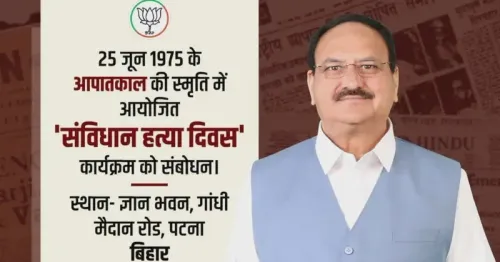
On June 25, 2026, BJP president J. P. Nadda attacked Congress and the INDI Alliance as anti-democratic, citing Nehru's and Indira Gandhi's repeated use of Article 356 to dissolve elected state governments. The post is part of the BJP's #SamvidhanHatyaDiwas campaign marking the Emergency anniversary.
Key Takeaways
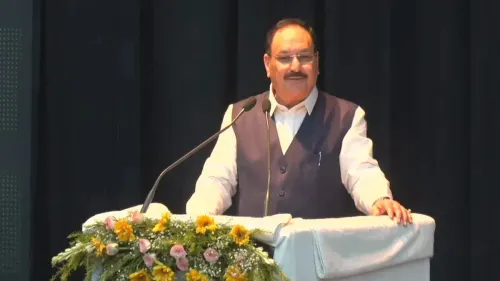
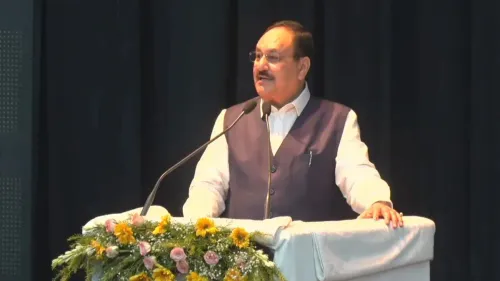
Nadda , BJP national president and Union Health Minister, posted on June 25, 2026 accusing Congress and the INDI Alliance of an anti-democratic mindset.
He claimed Jawaharlal Nehru imposed President's Rule on states 'more than 8 times' and Indira Gandhi did so 'more than 50 times.' The post was tagged #SamvidhanHatyaDiwas (Constitution Murder Day), a BJP campaign framing June 25 — the Emergency anniversary — as a day of constitutional reckoning.
Union of India (1994) Supreme Court ruling and the Sarkaria Commission (1988) both sought to limit arbitrary use of Article 356 .
The 44th Constitutional Amendment (1978) introduced safeguards against indefinite central rule in states following the Emergency.
The debate reflects a long-standing pattern in Indian politics of invoking Article 356 history to challenge rivals' democratic credentials.
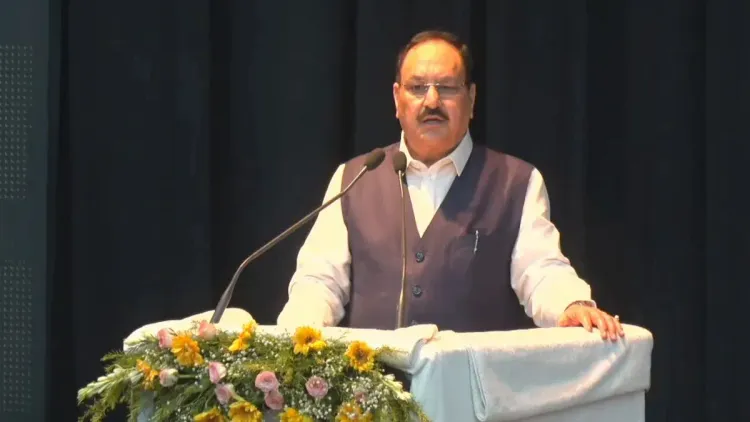
Union Health Minister and BJP national president J. P. Nadda on Thursday, June 25, 2026, sharply attacked the Congress party and the INDI Alliance, accusing them of harbouring an anti-democratic mindset. Invoking the hashtag #SamvidhanHatyaDiwas (Constitution Murder Day), he cited the historical use of Article 356 — President's Rule — by Congress-led governments to dismiss elected state governments across India.
Context
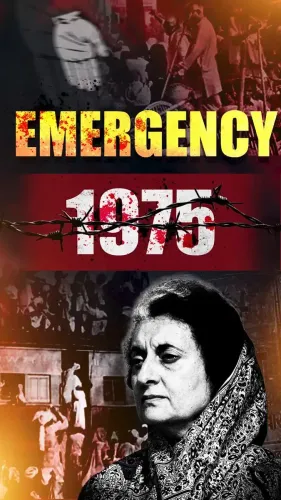
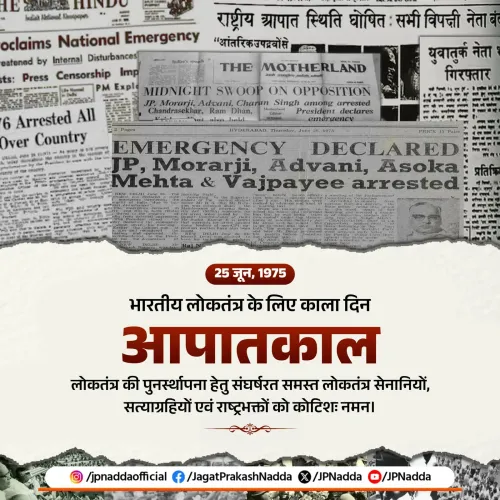
Posting in Hindi on June 25 — a date that marks the anniversary of the 1975 Emergency imposed by Indira Gandhi — Nadda wrote that Jawaharlal Nehru had imposed President's Rule on states 'more than 8 times,' while Indira Gandhi did so 'more than 50 times,' dissolving elected governments in the process. He stated that the Congress party and all opposition parties sitting in the INDI Alliance have an 'anti-democracy' outlook (praja-tantra virodhi soch). The post is part of a broader BJP campaign framing June 25 as a day of constitutional reckoning against the Congress legacy.
Policy Backdrop
Article 356 of the Indian Constitution empowers the Centre to impose President's Rule in a state if constitutional governance is deemed to have broken down. The provision was used extensively in the decades following Independence, drawing sustained criticism from constitutional scholars and regional parties alike. The landmark S. R. Bommai v. Union of India Supreme Court judgment of 1994 significantly curtailed its arbitrary use, ruling that a floor test — not a Governor's report alone — must determine whether a state government has lost its majority before President's Rule can be imposed.
Earlier, the Sarkaria Commission of 1988 had recommended that Article 356 be invoked only in the most exceptional circumstances, to preserve federal principles. The 44th Constitutional Amendment of 1978, passed in the immediate aftermath of the Emergency, introduced additional safeguards against indefinite central rule in states. These reforms together reflect decades of political and judicial effort to rein in what critics called the 'dismissal machine' of the Centre.
Stakeholders and Impact
The Congress party and the broader INDI Alliance — which includes regional parties with their own records on centre-state relations — are the direct targets of Nadda's remarks. Opposition parties have not yet issued a formal response to this specific post. State governments led by non-BJP parties are also stakeholders in this debate, as the question of Article 356 misuse directly concerns their political security and the federal compact.
For ordinary citizens, the debate touches on the sanctity of electoral mandates at the state level. The Bommai ruling is widely regarded as a constitutional safeguard that brought greater stability to state governments, regardless of which party holds power at the Centre. Nadda's post, by invoking these historical figures and numbers, is aimed at shaping public memory around June 25 as a symbol of Congress-era constitutional overreach.
What's Next
The #SamvidhanHatyaDiwas campaign is likely to intensify through the day across BJP social media handles and public events, given the significance of the June 25 date in Indian political memory. Parliamentary sessions and state assembly debates in the coming weeks may see opposition parties push back with their own data and framing on federalism and constitutional propriety. The exchange signals that the question of Article 356's historical use will remain a live flashpoint in the ongoing contest between the ruling alliance and the opposition over democratic credentials.
Point of View
Using the BJP's established #SamvidhanHatyaDiwas framing to keep Congress on the defensive over its historical record. By naming Nehru and Indira Gandhi specifically, the BJP seeks to personalise and historicise the charge of anti-democratic conduct, making it harder for Congress to deflect. The invocation of Article 356 data — even if the precise figures remain unverified — fits a broader BJP strategy of contesting the Congress narrative on constitutional propriety. Whether the opposition can mount an effective counter-narrative on federalism and democratic norms in the current political climate will shape how this anniversary is remembered in 2026.
NationPress
25 Jun 2026
Frequently Asked Questions
What is #SamvidhanHatyaDiwas?
#SamvidhanHatyaDiwas , meaning 'Constitution Murder Day,' is a campaign associated with the BJP that marks June 25 — the anniversary of the 1975 Emergency — as a day when democratic and constitutional norms were violated by the Congress government.
How many times was President's Rule imposed by Nehru and Indira Gandhi?
According to J. P. Nadda's post , Jawaharlal Nehru imposed President's Rule on states 'more than 8 times' and Indira Gandhi did so 'more than 50 times,' though these specific figures are drawn from his post and have not been independently verified in this report.
What is Article 356 of the Indian Constitution?
Article 356 allows the Central government to impose President's Rule in a state when constitutional governance is deemed to have failed, effectively dismissing the elected state government. Its use was significantly curtailed by the S. R. Bommai v. Union of India Supreme Court ruling in 1994 .
What did the S. R. Bommai judgment say about President's Rule?
The S. R. Bommai v. Union of India (1994) Supreme Court judgment ruled that a floor test in the state assembly — not merely a Governor's report — must be the basis for determining loss of majority before President's Rule can be imposed, sharply limiting arbitrary central intervention.
Why is June 25 significant in Indian politics?
June 25 marks the anniversary of the 1975 Emergency declared by then Prime Minister Indira Gandhi , during which civil liberties were suspended and political opponents were jailed. The BJP observes it annually as #SamvidhanHatyaDiwas to highlight what it calls Congress's anti-democratic record.