Nadda marks One Health Day, urges zoonotic disease vigilance
Synopsis
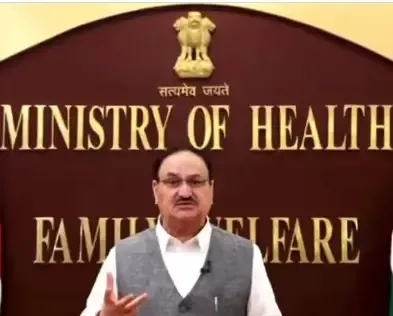
On One Health Day 2026, Union Health Minister J. P. Nadda called for stronger disease surveillance and coordinated action across human, animal and environmental health to prevent zoonotic diseases — echoing India's hard-won lessons from Nipah, avian influenza and COVID-19.
Key Takeaways
Union Health Minister J.
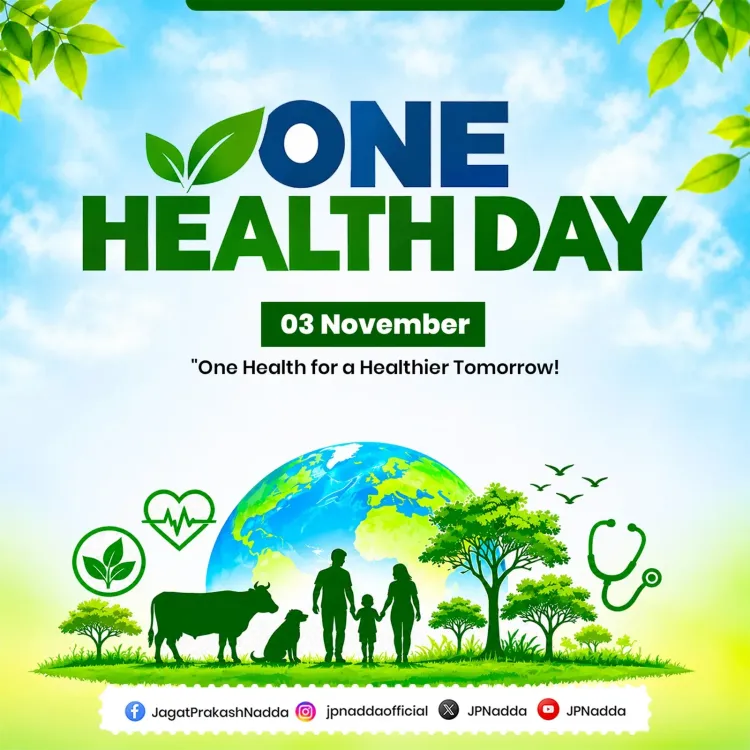
Nadda marked One Health Day on 3 November 2026 by urging integrated action across human, animal and environmental health.
One Health Day has been observed annually on 3 November since 2016 , when the One Health Commission launched it to promote cross-sector health collaboration.
Nadda called for 'stronger disease surveillance, early detection and coordinated action' as tools to prevent zoonotic diseases .
India has used the One Health framework in responses to Nipah virus outbreaks in Kerala and recurring avian influenza events.
Post-COVID global health policy has sharply prioritised preventing spillover at the human-animal interface , with India progressively building inter-ministerial surveillance linkages.
Upcoming health-ministry announcements will reveal whether the One Health recommitment leads to updated national surveillance protocols or new inter-agency coordination mechanisms.
The planet's most dangerous diseases don't respect species boundaries — and on One Health Day, 3 November 2026, Union Health Minister J. P. Nadda called on India to sharpen the integrated surveillance that stands between a pathogen in an animal reservoir and an epidemic in a human population.
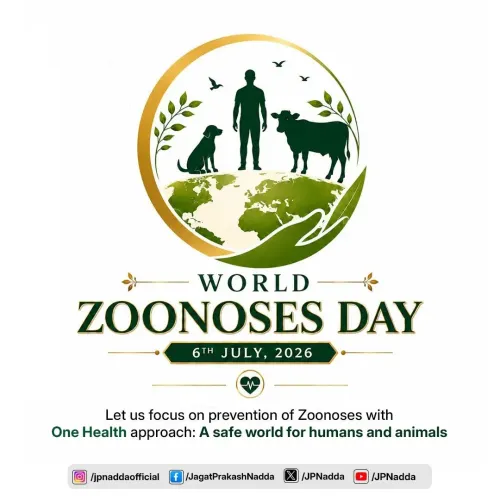
Nadda's message distilled the One Health philosophy to its essence: 'Healthy People. Healthy Animals. Healthy Planet.' He underscored the need for 'stronger disease surveillance, early detection and coordinated action across human, animal and environmental health,' framing a shared cross-sector approach as the critical lever for preventing zoonotic disease.
What One Health Day stands for — and why India has skin in the game
One Health Day has been observed annually on 3 November since its launch in 2016 by the One Health Commission and its global partners. The observance exists to drive home a scientific reality that has become policy consensus: human health, animal health, and ecosystem health are inseparable, and a breakdown in any one domain can trigger a cascade in the others.
India knows this from hard experience. Zoonotic events — Nipah virus outbreaks in Kerala, recurring avian influenza flare-ups, and, above all, the COVID-19 pandemic — have repeatedly tested the country's ability to detect spillover at the human-animal interface before it scales. Each episode pushed Indian public-health agencies toward closer collaboration with veterinary services and environmental monitoring bodies.
Surveillance at the animal-human interface: India's evolving architecture
In the years after COVID-19, global health architecture pivoted sharply toward preventing the next spillover rather than merely responding to it. India has progressively built on this momentum, weaving human-animal-environment surveillance threads into national outbreak-response protocols and inter-ministerial coordination frameworks.
The logic is straightforward: an early signal caught by a veterinarian in a poultry farm or a wildlife officer in a forest corridor can, if fed into the right surveillance pipeline fast enough, trigger a public-health intervention before a virus ever reaches a hospital ward. Speed and cross-sector trust are everything.
Nadda's call for 'coordinated action' maps directly onto this architecture — keeping political attention trained on the joints between ministries and agencies where pathogens most often slip through undetected.
The watch list: what follows a minister's pledge
Ministerial One Health Day statements carry symbolic weight, but their practical value is measured in what follows: updated national surveillance protocols, expanded inter-ministerial working groups, or fresh investments in early-warning laboratory networks. Future health-ministry announcements will signal whether today's recommitment translates into operational upgrades on the ground.
With new zoonotic threats emerging at a pace that makes complacency expensive, the gap between a posted pledge and a funded protocol is the one worth watching.
Point of View
Not merely ceremonial. India's repeated encounters with Nipah and avian influenza have made the country a test case for One Health protocols, and keeping ministerial attention focused on surveillance gaps is itself a policy act. The real measure will come in budget allocations and inter-ministerial coordination structures, not in annual observance posts.
NationPress
3 Nov 2026
Frequently Asked Questions
What is One Health Day and when is it observed?
One Health Day is an annual global observance held on 3 November , launched in 2016 by the One Health Commission to promote the idea that human, animal and environmental health are deeply interconnected and must be managed together.
What did JP Nadda say on One Health Day 2026?
Union Health Minister J. P. Nadda called for 'stronger disease surveillance, early detection and coordinated action across human, animal and environmental health,' stressing that a shared approach is key to preventing zoonotic diseases.
What are zoonotic diseases and why does India focus on them?
Zoonotic diseases are infections that jump from animals to humans. India has experienced high-profile zoonotic events including Nipah virus outbreaks in Kerala and repeated avian influenza incidents, making early detection at the human-animal interface a national public-health priority.
How has India implemented the One Health approach?
India has progressively integrated human, animal and environmental surveillance following major zoonotic outbreaks, coordinating across health and veterinary ministries, and aligned national protocols more closely with the global One Health framework especially after COVID-19 .
What should we watch for after India's One Health Day commitments?
Key indicators include the rollout of updated national disease-surveillance protocols, expanded inter-ministerial coordination mechanisms, and fresh investments in early-warning laboratory networks — the operational steps that convert political pledges into on-the-ground capacity.