Nadda marks World ORS Day, urges ORS-Zinc use to cut child deaths
Synopsis
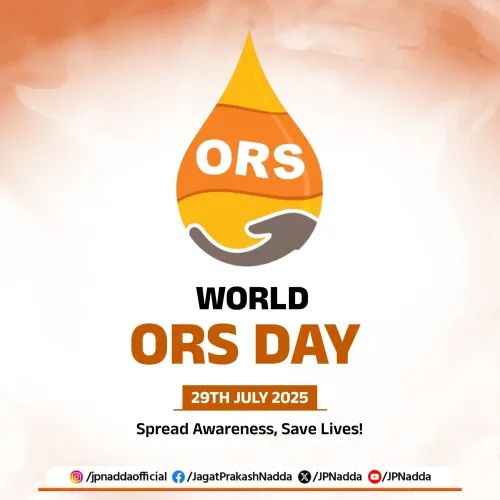
On World ORS Day, 29 July 2026, Union Health Minister J. P. Nadda called for wider ORS and Zinc use to prevent under-five deaths from diarrhoea, reinforcing India's four-decade community-level child survival strategy under the National Health Mission.
Key Takeaways
World ORS Day is observed annually on 29 July to highlight the life-saving role of Oral Rehydration Solution in diarrhoea management.
Union Health Minister J.
Nadda emphasised pairing ORS with Zinc supplementation to reduce childhood illness and deaths from diarrhoeal diseases.
India launched its Control of Diarrhoeal Diseases Programme in 1978 , one of the world's earliest large-scale ORS promotion drives.
Zinc was added to national diarrhoea management guidelines in 2004 following WHO-UNICEF recommendations, making ORS-Zinc the standard of care.
The National Health Mission continues to embed ORS and Zinc promotion through frontline health workers, with household-level awareness identified as the critical remaining gap.
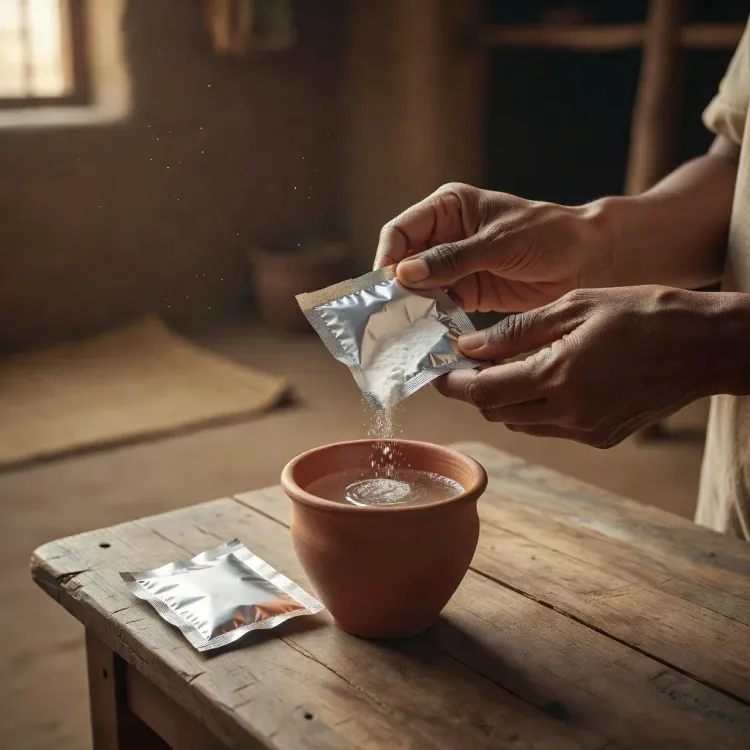
A simple sachet dissolved in water has saved millions of young lives — and on World ORS Day, 29 July 2026, Union Health Minister J. P. Nadda used the occasion to reinforce India's commitment to that deceptively powerful intervention.
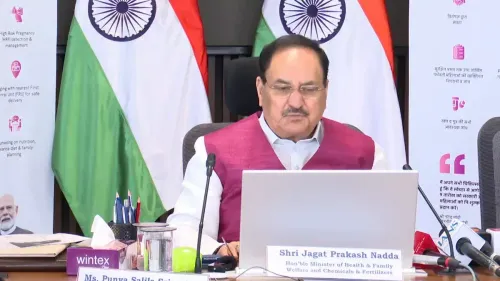
In a post on X, Nadda underlined the 'life-saving role of Oral Rehydration Solution (ORS) in preventing and treating dehydration caused by diarrhoea,' stressing the importance of pairing ORS with Zinc supplementation to reduce childhood illness and deaths from diarrhoeal diseases. He also called for stronger community awareness and early household-level management of diarrhoea — framing these not as medical niceties but as tools to meet India's national goal of cutting under-five morbidity and mortality.
Forty-eight years of fighting diarrhoea at the doorstep
India's relationship with ORS goes back to 1978, when the government launched the Control of Diarrhoeal Diseases Programme — one of the earliest state-led pushes in the developing world to move diarrhoea treatment out of hospitals and into homes. The logic was blunt: most children who died from diarrhoea did not die from the disease itself but from the dehydration it caused, and ORS could reverse that at near-zero cost. The strategy deepened in 2004, when India incorporated Zinc supplementation alongside ORS into national diarrhoea management guidelines, following a joint WHO-UNICEF recommendation. Zinc shortens the duration and severity of diarrhoeal episodes and reduces the likelihood of recurrence — making the ORS-Zinc combination the global standard of care for children under five.Why household awareness remains the last mile
The science is settled. The supply chains exist. The challenge, as Nadda's post implicitly acknowledges, is behaviour — whether a caregiver in a remote village reaches for an ORS packet before seeking a clinic, or waits too long. The National Health Mission has long embedded ORS promotion into its frontline health-worker network, but coverage gaps persist, particularly in high-burden states. Diarrhoea remains one of the leading causes of preventable death among children under five globally. India has made documented progress in reducing such deaths since the 1980s, but the gains are uneven. Each World ORS Day is, in effect, a pressure test on whether awareness has reached the households that need it most. The next clear signal will come from coverage data in the forthcoming round of the National Family Health Survey or Health Management Information System reports — numbers that will show whether the message is landing where it matters.Point of View
Yet the minister's call for 'community awareness' suggests coverage remains the weak link, not the protocol. The post lands at a moment when India's under-five mortality data will face fresh scrutiny in the next NFHS round, giving this observance more than ceremonial weight. For the BJP-led government, child survival metrics are also a political ledger — progress is a governance dividend, stagnation a liability.
NationPress
13 Sept 2026
Frequently Asked Questions
What is World ORS Day and when is it observed?
World ORS Day is observed every year on 29 July to highlight the importance of Oral Rehydration Solution in preventing and treating dehydration caused by diarrhoea, particularly in young children.
What did J. P. Nadda say on World ORS Day 2026?
Union Health Minister J. P. Nadda called for timely and correct use of ORS along with Zinc supplementation to reduce childhood illness and deaths from diarrhoeal diseases, and urged stronger community awareness for household-level management.
Why is Zinc given along with ORS for diarrhoea?
Zinc supplementation alongside ORS shortens the duration and severity of diarrhoeal episodes and reduces the chance of recurrence. India incorporated this combination into national guidelines in 2004 following WHO-UNICEF recommendations.
When did India start its diarrhoea control programme?
India launched the Control of Diarrhoeal Diseases Programme in 1978 , one of the earliest government-led efforts to promote ORS use at the community level and reduce child deaths from diarrhoea.
How does ORS prevent child deaths from diarrhoea?
Most children who die from diarrhoea do not die from the infection itself but from the dehydration it causes. ORS rapidly restores lost fluids and electrolytes, preventing fatal dehydration at low cost and without requiring a hospital visit.