Nadda marks Menstrual Hygiene Day, cites NHM efforts
Synopsis
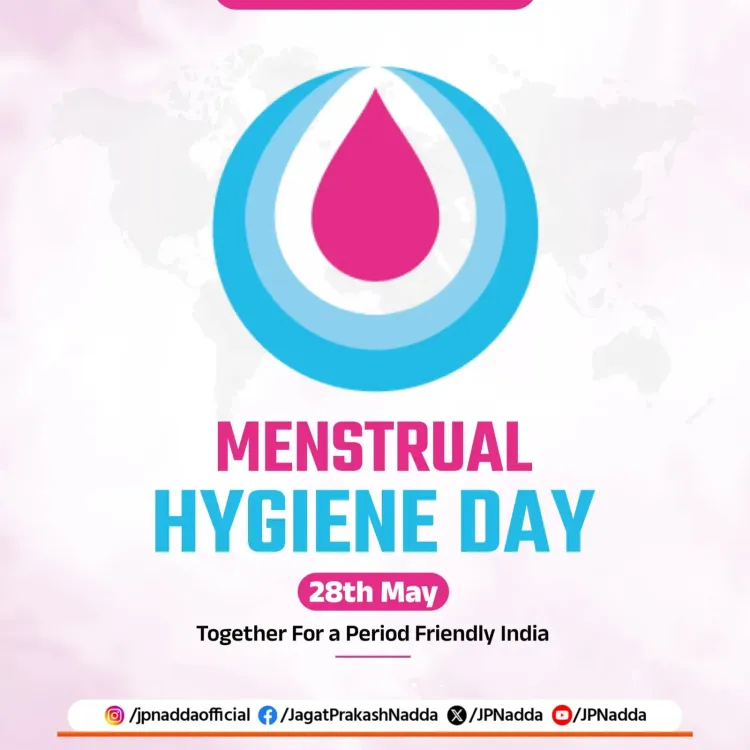
Union Health Minister J. P. Nadda marked Menstrual Hygiene Day on 28 May 2026, citing National Health Mission programmes improving access to sanitary products and awareness for adolescent girls, and calling for an inclusive, stigma-free India under the theme 'Together for a Period Friendly India'.
Key Takeaways
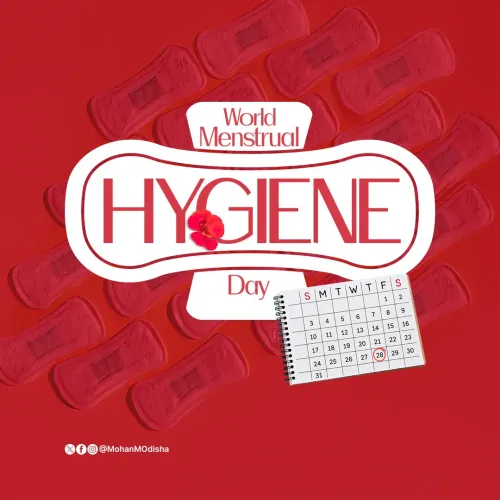
Menstrual Hygiene Day is observed annually on 28 May ; Union Health Minister J.
Nadda marked the occasion with a post on 28 May 2026 .
This year's theme is 'Together for a Period Friendly India' , focusing on breaking stereotypes and building an inclusive society.
The National Health Mission (NHM) , launched in 2013 , anchors the government's menstrual hygiene efforts through awareness, sanitation and product access programmes.
A subsidised sanitary napkin scheme for rural adolescent girls was introduced as early as 2011 under the National Rural Health Mission.
The Rashtriya Kishor Swasthya Karyakram (2014) extended menstrual hygiene education and counselling to schools and communities nationwide.
Nadda called for 'a healthier, safer and more supportive environment where every girl lives with dignity and confidence.'
Union Health Minister J. P. Nadda on Thursday, 28 May 2026, marked Menstrual Hygiene Day by calling for greater awareness, dignity, and access to hygiene products for every adolescent girl and woman in India, invoking this year's theme 'Together for a Period Friendly India' and underlining the role of the National Health Mission in advancing menstrual health across the country.
Context
Menstrual Hygiene Day is observed globally every year on 28 May to spotlight the importance of menstrual hygiene management, access to sanitary products, and the need to dismantle social stigma. Nadda's post stated that the occasion 'is a reminder that awareness, dignity and access to hygiene are essential for every adolescent girl and woman,' and called on citizens to 'break stereotypes and create a more inclusive society.'
The minister noted that efforts through the National Health Mission and related programmes are 'helping improve awareness, sanitation and access to menstrual hygiene products for girls across the country,' and urged the creation of 'a healthier, safer and more supportive environment where every girl lives with dignity and confidence.'
Policy Backdrop
The National Health Mission (NHM), launched in 2013, is the Government of India's flagship programme supporting rural and urban health delivery, with dedicated reproductive and adolescent health components. A predecessor scheme under the National Rural Health Mission introduced in 2011 had already begun providing subsidised sanitary napkins to adolescent girls in rural areas, embedding menstrual hygiene within a broader public health framework.
The Rashtriya Kishor Swasthya Karyakram, rolled out in 2014, further expanded the focus to adolescent health counselling and menstrual hygiene education in schools and communities. Successive governments have also linked menstrual hygiene goals to the Swachh Bharat Mission, particularly around toilet access and school water, sanitation and hygiene infrastructure, reflecting a recognition that product access alone is insufficient without adequate sanitation facilities.
Stakeholders and Impact
The primary beneficiaries of these programmes are adolescent girls and women, particularly in rural and semi-urban areas where access to affordable sanitary products and hygiene infrastructure remains uneven. Community-level awareness drives and school-based counselling under NHM have sought to address both the practical and social dimensions of menstrual health, including persistent stigma that can affect girls' school attendance and participation in public life.
The shift in official messaging — from a purely clinical framing toward language centred on dignity, inclusion, and breaking stereotypes — reflects a broader evolution in how central health policy communicates with the public on reproductive and adolescent health issues. Civil society groups and state health departments are key implementing partners in translating these goals into ground-level outcomes.
What's Next
Annual NHM implementation reports and state-level data on sanitary napkin distribution under free or subsidised schemes will indicate whether coverage is deepening in aspirational districts and underserved communities. Parliamentary discussions and budget allocations in the coming cycle may reflect the government's appetite for expanded investment in menstrual hygiene infrastructure and awareness. The framing of this year's theme around a 'Period Friendly India' signals continued momentum toward normalising public discourse on menstrual health at the national level.
Point of View
Lending institutional credibility to what might otherwise read as ceremonial outreach. The choice to foreground 'dignity' and 'breaking stereotypes' alongside programme delivery signals a deliberate effort to shift public discourse beyond product access toward social norm change — a framing that carries political resonance ahead of any budget or parliamentary cycle. As BJP national president, Nadda's visibility on women's health issues also serves a dual function: reinforcing the party's governance record while broadening its appeal among women voters. The real test, however, will be whether NHM implementation reports and state-level data reflect meaningful gains in coverage, particularly in aspirational districts where gaps remain widest.
NationPress
12 Oct 2026
Frequently Asked Questions
What is Menstrual Hygiene Day and when is it observed?
Menstrual Hygiene Day is a global observance held every year on 28 May to highlight the importance of menstrual hygiene management, access to sanitary products, and the need to end stigma around menstruation.
What is the theme for Menstrual Hygiene Day 2026 in India?
The theme highlighted by Union Health Minister J. P. Nadda for 2026 is 'Together for a Period Friendly India' , which focuses on breaking stereotypes and fostering an inclusive society.
What is the government doing to improve menstrual hygiene for girls in India?
The National Health Mission (NHM) supports awareness, sanitation and access to menstrual hygiene products for adolescent girls. A subsidised sanitary napkin scheme has been in place since 2011 , and the Rashtriya Kishor Swasthya Karyakram (2014) provides counselling and education in schools and communities.
Who is J. P. Nadda and what is his role in health policy?
J. P. Nadda is India's Union Minister of Health and Family Welfare and Minister of Chemicals and Fertilizers , and also serves as BJP national president . In his health ministry role he oversees programmes including the National Health Mission.
How does the National Health Mission support menstrual hygiene in India?
The National Health Mission , launched in 2013 , funds reproductive and adolescent health components at state level, including distribution of subsidised sanitary napkins, school WASH infrastructure and community-level awareness drives aimed at improving menstrual hygiene outcomes for girls across India.