CM Mann launches menstrual health curriculum in Punjab schools
Synopsis
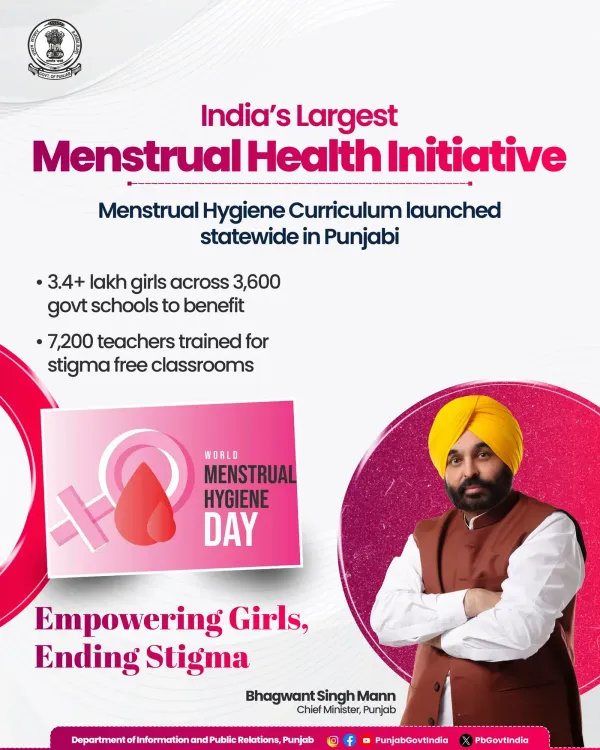
The Punjab government, under Chief Minister Bhagwant Mann, has launched a Menstrual Hygiene Curriculum across over 3,600 government schools in all 23 districts, targeting more than 3.4 lakh adolescent girls in Classes VI to X. The first session was held on 29 May 2026, a day after Menstrual Hygiene Day.
Key Takeaways
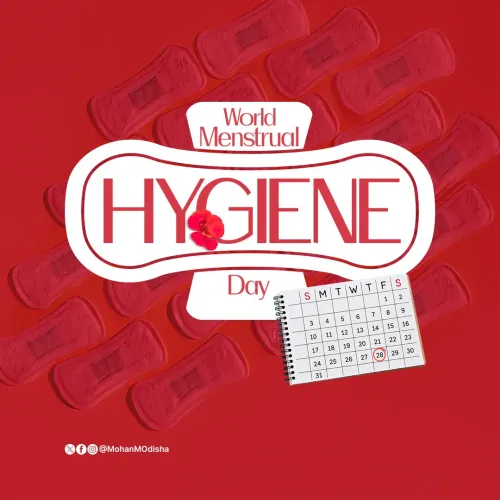
The Punjab government launched a Menstrual Hygiene Curriculum on Menstrual Hygiene Day, 28 May 2026 .
The initiative covers government high and senior secondary schools across all 23 districts of Punjab.
More than 3.4 lakh girl students in Classes VI to X are expected to benefit directly.
Over 3,600 government schools are included in the rollout.
The first curriculum session was conducted on 29 May 2026 .
The programme is described as one of India's largest school-based menstrual health education initiatives.
The Chief Minister's Office of Punjab announced on 28 May 2026, on the occasion of Menstrual Hygiene Day, the phased statewide expansion of a Menstrual Hygiene Curriculum across government high and senior secondary schools in all 23 districts of Punjab — marking one of India's largest school-based menstrual health education initiatives.
The programme, launched under the leadership of Chief Minister Bhagwant Mann, is designed to deliver structured menstrual health education to adolescent girls enrolled in Classes VI to X in over 3,600 government schools across the state. The first session of the curriculum was conducted on 29 May 2026, with the initiative expected to directly benefit more than 3.4 lakh girl students.
Context
Menstrual Hygiene Day is observed globally every year on 28 May to raise awareness about the importance of menstrual health and hygiene. Punjab's announcement on this day signals a deliberate alignment of state policy with international advocacy goals around adolescent well-being and gender-sensitive schooling. The curriculum targets a critical age group — girls between Classes VI and X — at a stage where menstrual health awareness is most impactful in shaping school attendance and health outcomes.Policy Backdrop
India's Rashtriya Kishor Swasthya Karyakram (RKSK), launched nationally in 2014, had incorporated menstrual hygiene education modules as part of a broader adolescent health framework. Punjab's initiative builds on this national foundation by institutionalising the curriculum within the school timetable, rather than limiting it to standalone health camps or awareness drives. Multiple Indian states have introduced similar school-based programmes in recent years, driven by evidence linking menstrual health education to reduced dropout rates among adolescent girls. Punjab's rollout is distinguished by its planned simultaneous coverage of all 23 districts and its integration into the formal school system.Stakeholders and Impact
The primary beneficiaries are adolescent girl students in government schools — a demographic that often lacks access to accurate, destigmatised information on menstrual health. Government school teachers will be the frontline implementers of the curriculum, requiring adequate training and resource support for effective delivery. Broader stakeholders include parents and school management committees, whose awareness and cooperation will be critical to the programme's reception. The initiative also aligns with India's commitments under the Sustainable Development Goals, specifically on gender equality (SDG 5) and good health and well-being (SDG 3).What's Next
The government has described the rollout as 'phased,' suggesting a district-wise or school-cluster-wise sequencing beyond the first session held on 29 May 2026. Analysts and education administrators will watch whether the programme is accompanied by formal evaluation mechanisms — such as tracking attendance trends or health outcome surveys — that could provide replicable evidence for other states. If Punjab demonstrates measurable impact at scale, the model could inform national-level policy updates under the RKSK framework and similar adolescent health programmes.Point of View
The Mann government is making a visible public health and gender-equity statement ahead of what may be a competitive political cycle. The scale of 3.4 lakh beneficiaries across 3,600 schools sets a benchmark that invites scrutiny: the real test will be whether teacher training and institutional support match the ambition of the announcement. If evaluated rigorously, Punjab's model could become a reference point for national adolescent health policy reform.
NationPress
20 Sept 2026
Frequently Asked Questions
What is the Punjab Menstrual Hygiene Curriculum?
The Punjab Menstrual Hygiene Curriculum is a school-based programme that delivers structured menstrual health education to adolescent girls in Classes VI to X studying in government high and senior secondary schools across all 23 districts of Punjab.
How many students will benefit from Punjab's menstrual hygiene programme?
More than 3.4 lakh girl students enrolled in Classes VI to X across over 3,600 government schools in Punjab are expected to directly benefit from the initiative.
When was the first session of Punjab's Menstrual Hygiene Curriculum held?
The first session of the Menstrual Hygiene Curriculum was conducted on 29 May 2026, a day after the programme was announced on Menstrual Hygiene Day, 28 May 2026.
Which districts in Punjab are covered under this menstrual health initiative?
The curriculum is being rolled out across all 23 districts of Punjab in a phased manner, covering government high and senior secondary schools statewide.
How does Punjab's menstrual hygiene programme relate to national health policy?
Punjab's initiative builds on the national Rashtriya Kishor Swasthya Karyakram (RKSK), launched in 2014, which included menstrual hygiene modules for adolescents, and aligns with India's commitments under the Sustainable Development Goals on gender equality and health.