Punjab launches menstrual health curriculum for 3.4 lakh students across 23 districts
Synopsis
Punjab has quietly launched one of India's largest in-school menstrual health programmes — not a pilot, but a statewide rollout covering 3.4 lakh girls across 3,600 schools and 23 districts, backed by 7,200 trained teachers. The curriculum, delivered in Punjabi through story-based sessions, operationalises Supreme Court observations on menstrual dignity at classroom scale.
Key Takeaways
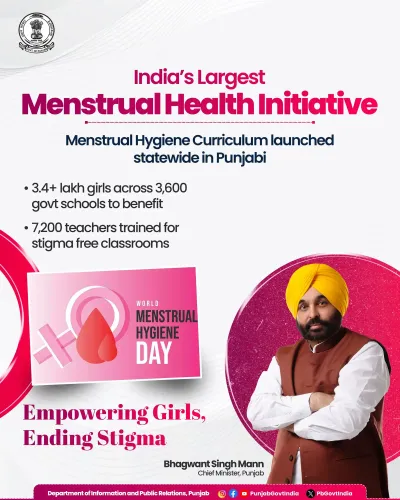
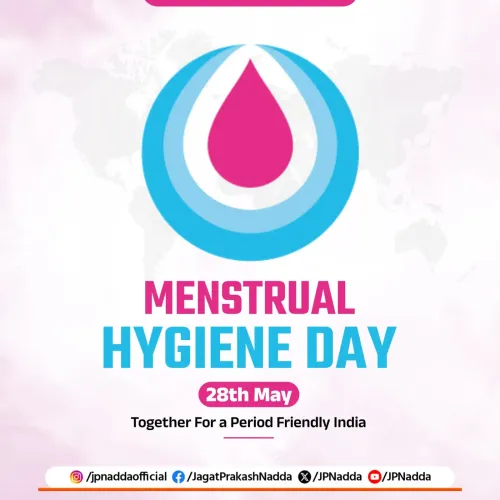
The Punjab government launched the Menstrual Hygiene Curriculum on Menstrual Hygiene Day, 29 May 2025 .
The programme covers more than 3.4 lakh girl students from Classes VI to X across over 3,600 government schools in 23 districts .
Approximately 7,200 teachers have been trained to facilitate the sessions.
The curriculum is delivered in Punjabi through a three-session model using interactive storytelling centred on a character named Ruby .
The initiative aligns with Supreme Court observations linking menstrual health to dignity, education, and equality for adolescent girls.
The programme was developed with an international non-profit organisation ; the first classroom sessions were scheduled for 30 May 2025 .
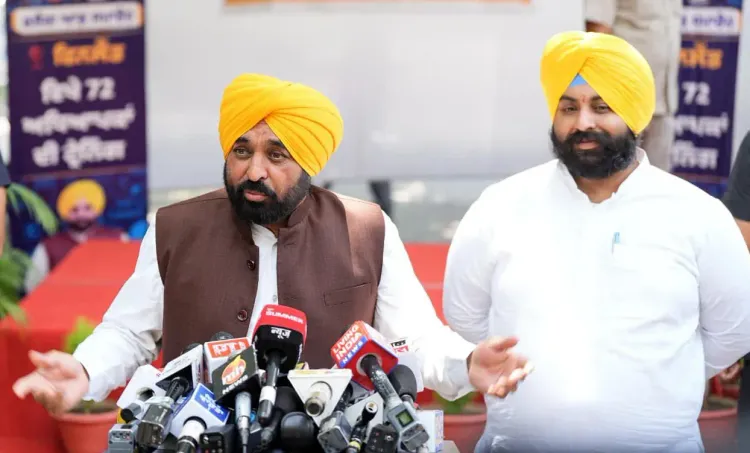
The Punjab government on Thursday, 29 May 2025 launched one of India's largest school-based menstrual health education programmes, rolling out a structured Menstrual Hygiene Curriculum across government high and senior secondary schools in all 23 districts of the state. The initiative, announced on Menstrual Hygiene Day, is set to directly benefit more than 3.4 lakh girl students from Classes VI to X enrolled in over 3,600 government schools.
What the Programme Covers
The curriculum has been developed in Punjabi to ensure students engage with the content in a familiar and comfortable language. Sessions are built around interactive storytelling featuring a central character named Ruby, aged 10, supplemented by guided classroom discussions and participatory activities designed to make learning relatable and safe.
The structured three-session intervention model focuses on helping students understand menstruation and bodily changes, strengthen hygiene and self-care practices, build confidence and self-esteem, and foster supportive peer and school environments. The first batch of sessions was scheduled to be conducted across participating schools on Friday, 30 May 2025.
Teacher Training and Implementation
To support effective rollout, the government has already trained approximately 7,200 teachers to facilitate these sessions sensitively and confidently inside classrooms. The programme was developed in collaboration with an international non-profit organisation working globally on menstrual health education and awareness, though the government statement did not identify the organisation by name.
Why This Initiative Matters
Officials said the programme is aimed at ensuring that menstruation never becomes a barrier to girls' education, confidence, participation, or well-being in school life. The initiative directly addresses what has traditionally been a subject surrounded by silence, myths, and social stigma in many communities.
The programme also aligns with observations made by the Supreme Court of India, which has recognised that menstrual health and hygiene are directly linked to dignity, education, and equality for adolescent girls. Notably, this is among the few state-level interventions to operationalise those judicial observations at classroom scale.
Broader Policy Context
The launch reflects a broader shift in Punjab's public education policy toward inclusivity and health literacy. By embedding menstrual health within the formal school curriculum rather than treating it as an extracurricular module, the state government has signalled a structural approach rather than a one-off awareness drive. With 3,600-plus schools and 7,200 trained teachers already in place, the groundwork for statewide scale appears more substantive than comparable initiatives in other states that have remained confined to pilot districts.
How consistently the three-session model is implemented across diverse school environments — urban, semi-urban, and rural — will determine whether this translates into measurable change in student awareness and school attendance among adolescent girls.
Point of View
One-day events, and pilots that never scale. Punjab's decision to embed a structured, three-session curriculum into the formal school timetable, train 7,200 teachers, and deploy across all 23 districts simultaneously is a different order of ambition. The alignment with Supreme Court observations on menstrual dignity gives the programme legal and moral grounding that is harder to quietly shelve. The real accountability test will come in the months ahead: whether attendance data for adolescent girls improves, whether teachers in rural schools facilitate sessions with the same consistency as those in urban centres, and whether the international partner's methodology is made publicly available for scrutiny. A programme this large deserves transparent outcome measurement — not just a launch-day press release.
NationPress
20 Sept 2026
Frequently Asked Questions
What is the Punjab Menstrual Hygiene Curriculum?
It is a structured, classroom-based menstrual health education programme launched by the Punjab government on 29 May 2025 for girl students in Classes VI to X across government high and senior secondary schools. The curriculum, developed in Punjabi, uses a three-session model built around interactive storytelling, guided discussions, and participatory activities.
How many students and schools are covered under this initiative?
The programme is expected to directly benefit more than 3.4 lakh girl students across over 3,600 government schools in all 23 districts of Punjab. The first sessions were scheduled to begin on 30 May 2025.
How are teachers being prepared to deliver the curriculum?
Approximately 7,200 teachers have already been trained by the government to facilitate the sessions sensitively and confidently inside classrooms, ahead of the statewide rollout.
Why is this programme significant for girls' education in India?
Officials say the initiative aims to ensure menstruation never becomes a barrier to girls' education, confidence, or school participation. It also aligns with Supreme Court observations recognising menstrual health as directly linked to dignity and equality for adolescent girls — making it one of the few state programmes to act on those observations at scale.
Who developed the Menstrual Hygiene Curriculum used in Punjab schools?
The curriculum was developed in collaboration with an international non-profit organisation working globally on menstrual health education and awareness. The government statement did not identify the organisation by name. The content has been adapted into Punjabi to ensure cultural and linguistic accessibility for students.