Nadda calls for whole-of-govt push on National Deworming Day
Synopsis
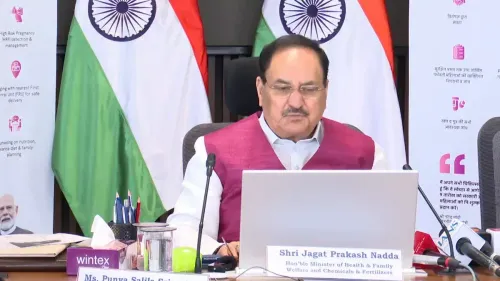
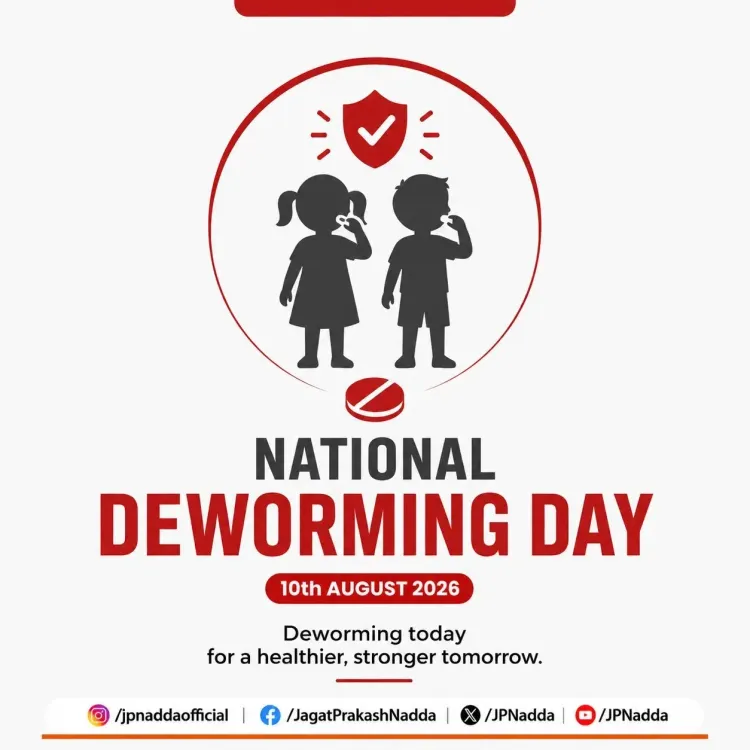
On National Deworming Day, 10 August 2026, Union Health Minister J. P. Nadda called for coordinated action across Health, Education and Women and Child Development ministries to deworm all children aged 1-19 and advance the Anemia Mukt Bharat mission.
Key Takeaways
National Deworming Day is observed biannually on 10 February and 10 August every year since 2015 under the National Health Mission.
The campaign targets children aged 1 to 19 years against soil-transmitted helminth infections.
Union Health Minister J.
Nadda called for a 'whole-of-government approach' involving Health, Women and Child Development, and Education departments.
Anemia Mukt Bharat , launched in 2018 , uses a six-by-six strategy combining deworming, iron-folic acid supplementation and dietary counselling.
Worm infections are a direct driver of iron-deficiency anaemia, making deworming central to India's child nutrition goals.
Inter-departmental coordination at the district level — not drug supply — is the key delivery challenge flagged by the minister.
Every child between the ages of 1 and 19 deserves protection from worm infections — and on National Deworming Day, 10 August 2026, Union Health Minister J. P. Nadda issued a clear call to action, urging a coordinated government-wide effort to ensure no child is left behind.
Nadda called for 'stronger coordination among Health, Women and Child Development and Education Departments' as the backbone of delivery, framing deworming not as a standalone health drive but as an integral pillar of the Anemia Mukt Bharat mission and the broader vision of a Viksit Bharat.
What National Deworming Day actually does
National Deworming Day is a biannual observance, held every 10 February and 10 August, that has run since 2015 under the National Health Mission. Its target: soil-transmitted helminth infections in children, parasites that quietly drain nutrition, stunt growth, and blunt cognitive development. The campaign reaches children through schools and anganwadis, making the school-based delivery model — which requires the Ministry of Education and the Ministry of Women and Child Development to work in lockstep with the Ministry of Health and Family Welfare — non-negotiable.The anaemia link that makes deworming matter more
Deworming and anaemia control are not parallel tracks — they are the same track. Worm infections are a direct driver of iron-deficiency anaemia, which remains stubbornly high among Indian children and adolescent girls. Anemia Mukt Bharat, approved in 2018, addresses this with a six-by-six strategy: six interventions across six beneficiary groups, combining weekly iron-folic acid supplementation, deworming, and dietary counselling. Nadda's call to 'create awareness on anaemia prevention and promote healthy practices' is a direct reference to this integrated architecture.Why the multi-ministry model is the hard part
The science of deworming a child is simple — one tablet. The logistics of reaching every child in a country of 1.4 billion is not. Coverage depends on whether teachers are trained, whether anganwadi workers are supplied, and whether health workers and education officials are talking to each other at the district level. Nadda's emphasis on a 'whole-of-government approach' signals that the ministry sees inter-departmental coordination — not drug availability — as the binding constraint on coverage. With the August 2026 deworming round now under way, the quality of that coordination will determine how many of India's children actually receive the tablet today — and how many remain counted but unreached.Point of View
Not medical capacity, as the primary barrier to full coverage. The linkage to Anemia Mukt Bharat reflects a deliberate policy choice to bundle deworming within a larger nutrition architecture rather than treat it as a one-day event. Coming ahead of any mid-term review of the programme's anaemia reduction targets, the statement also serves as a public accountability marker for district-level delivery. The Viksit Bharat framing positions child health outcomes as a human-capital argument, not merely a welfare one.
NationPress
24 Sept 2026
Frequently Asked Questions
What is National Deworming Day in India?
National Deworming Day is a government observance held twice a year — on 10 February and 10 August — since 2015 under the National Health Mission. It provides deworming tablets to children aged 1-19 through schools and anganwadis to combat soil-transmitted worm infections.
What is Anemia Mukt Bharat?
Anemia Mukt Bharat is a national programme launched in 2018 to reduce anaemia among children, adolescents and women. It uses a six-by-six strategy covering six interventions — including deworming, weekly iron-folic acid supplementation and dietary counselling — across six beneficiary groups.
Why is deworming important for children's health?
Worm infections caused by soil-transmitted helminths drain nutrition from the body, directly contributing to iron-deficiency anaemia, stunted growth and impaired cognitive development. Deworming removes this burden and improves the effectiveness of iron supplementation programmes.
Which ministries are involved in India's deworming programme?
The programme requires coordination among the Ministry of Health and Family Welfare , the Ministry of Women and Child Development and the Ministry of Education , since delivery happens through both schools and anganwadi centres.
What did JP Nadda say on National Deworming Day 2026?
J. P. Nadda called for a 'whole-of-government approach' to ensure every child aged 1-19 is dewormed, linking the effort to the goals of Anemia Mukt Bharat and the vision of a Viksit Bharat , and urging stronger coordination among Health, Education and Women and Child Development departments.