Nadda Calls for Parliament Debate on Student Issue
Synopsis
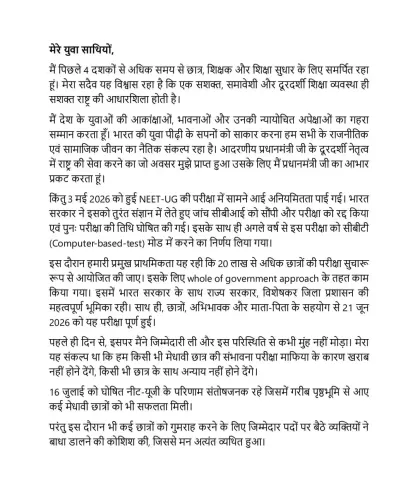
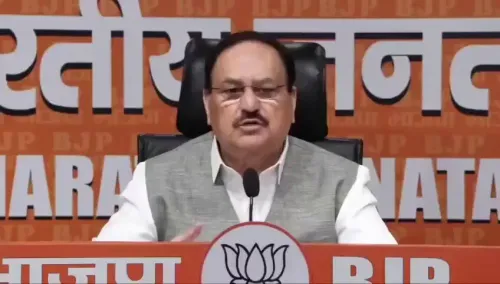
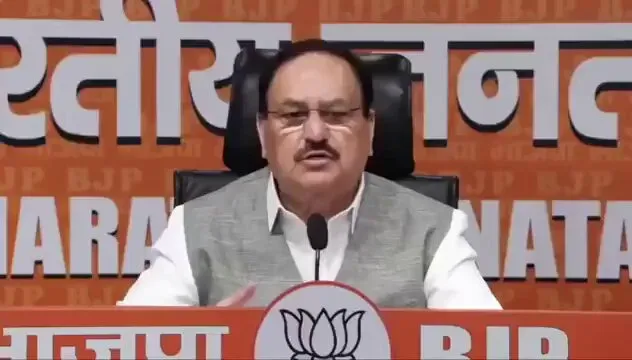
Union Minister G. Kishan Reddy shared a statement by BJP leader JP Nadda urging all parties to debate a student-related controversy in Parliament, with the government declaring readiness for a thorough discussion to ensure no injustice is done to students.
Key Takeaways
JP Nadda called for moving 'beyond allegations and counter-allegations' and taking the student-related matter to Parliament for debate.
The government declared itself 'ready for a thorough discussion so that every aspect is examined and no injustice is done to our students.' The statement was amplified by Union Minister G.
Kishan Reddy , BJP Telangana state president, signalling coordinated party messaging.
Prime Minister Narendra Modi's leadership was cited as the foundation of the BJP's commitment to safeguarding students' futures.
The BJP's call for parliamentary debate reflects its consistent preference for resolving contentious issues through institutional, structured forums.
The National Education Policy 2020 forms part of the policy backdrop, with youth welfare a stated priority of successive Modi governments.
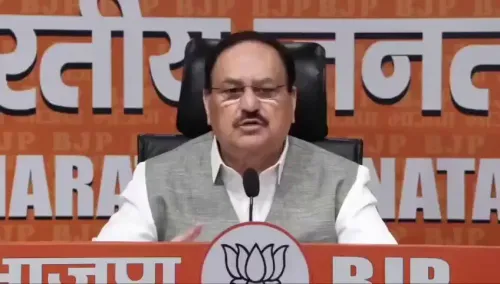
Union Coal and Mines Minister G. Kishan Reddy on Thursday, 23 July 2026, shared a statement by senior BJP leader and Union Minister JP Nadda calling on all parties to move past public allegations and bring the student-related matter before Parliament for a comprehensive debate. The post, shared from Kishan Reddy's official X account, underlines the BJP-led government's stated readiness for a thorough parliamentary examination of the issue.
Context
In the statement quoted by Kishan Reddy, JP Nadda said: 'We should move beyond allegations and counter-allegations and discuss this matter in the Parliament, the best forum for such a debate.' He added that 'the government is ready for a thorough discussion so that every aspect is examined and no injustice is done to our students.' The specific matter at the centre of the dispute has not been detailed in the post, but the framing points to a controversy involving students and their interests that has drawn public and political attention.
Kishan Reddy, who serves as Union Minister of Coal and Mines and is also the BJP Telangana state president, amplified Nadda's statement — a signal that the party is coordinating a unified messaging response across its leadership on the issue.
Policy Backdrop
The BJP-led government has consistently positioned youth welfare and education as pillars of its governance agenda. The National Education Policy (NEP) 2020, approved under Prime Minister Narendra Modi, set out sweeping reforms aimed at improving equity and quality in India's education system. Nadda's invocation of Modi's leadership in the statement — 'Under the leadership of Prime Minister Narendra Modi ji, the BJP is committed to safeguarding the future of our children, because they are the future of our nation' — is consistent with the party's broader framing of student welfare as a national development priority.
The appeal to parliamentary debate over street-level contestation also reflects the ruling party's established preference for channelling contentious disputes through institutional forums, lending the response a procedural legitimacy.
Stakeholders and Impact
Students and parents are the primary stakeholders in this developing situation. Any injustice to students in matters of education, examination, or opportunity carries significant electoral and social weight, particularly given India's large youth population. Opposition parties are likely to use any parliamentary discussion as an opportunity to press the government on specifics, making the floor debate, if it materialises, a high-stakes exchange.
The BJP's proactive call for debate — rather than deflection — is a tactical posture that seeks to demonstrate transparency while controlling the terms of the discussion within an institutional setting where the ruling party holds a majority.
What's Next
Attention will now turn to the schedule and agenda of the ongoing or upcoming Parliament session to see whether a formal discussion on the student-related matter is listed. Follow-up statements from the Ministry of Education and responses from opposition benches will be key indicators of how the issue develops. If Parliament takes up the matter, the nature of the allegations placed on record and the government's detailed response will determine the political and policy trajectory.
Point of View
Amplified across party ranks by leaders like Kishan Reddy, suggests the party is treating this as a reputational matter requiring unified, top-down messaging. Invoking Prime Minister Modi's leadership alongside a welfare commitment to students ties the issue to the party's core electoral identity around youth and national development. The real test will come on the Parliament floor, where opposition parties will have the procedural space to press for specifics the post deliberately leaves unnamed.
NationPress
21 Oct 2026
Frequently Asked Questions
What is JP Nadda's statement about students and Parliament?
JP Nadda called for moving past public allegations and holding a thorough parliamentary debate on a student-related matter, stating the government is ready for discussion to ensure no injustice is done to students.
Why did G. Kishan Reddy share JP Nadda's statement on X?
G. Kishan Reddy, Union Minister of Coal and Mines and BJP Telangana state president, shared the statement to amplify the party's unified position that the student issue should be debated in Parliament rather than through public allegations.
What student issue is being discussed in Parliament?
The specific matter has not been detailed in the post. The statement refers broadly to a controversy affecting students, with the government calling for parliamentary examination of all aspects.
What is the BJP's position on the student controversy?
The BJP, through JP Nadda, has positioned itself as favouring institutional debate in Parliament over public allegations, and has committed to ensuring no injustice is done to students under Prime Minister Modi's leadership.
When could Parliament discuss this student-related matter?
No specific date has been announced. Observers are watching the schedule of the ongoing or upcoming Parliament session for any listed discussion on the issue, along with follow-up statements from the Education Ministry.