Nadda Calls for Protecting Youth from Nicotine on No Tobacco Day
Synopsis
Union Health Minister J. P. Nadda marked World No Tobacco Day on 31 May 2026 by calling for collective action to protect children and youth from nicotine and tobacco addiction, spotlighting the risks of e-cigarettes, nicotine pouches, and synthetic nicotine under this year's WHO theme.
Key Takeaways
Union Health Minister J.
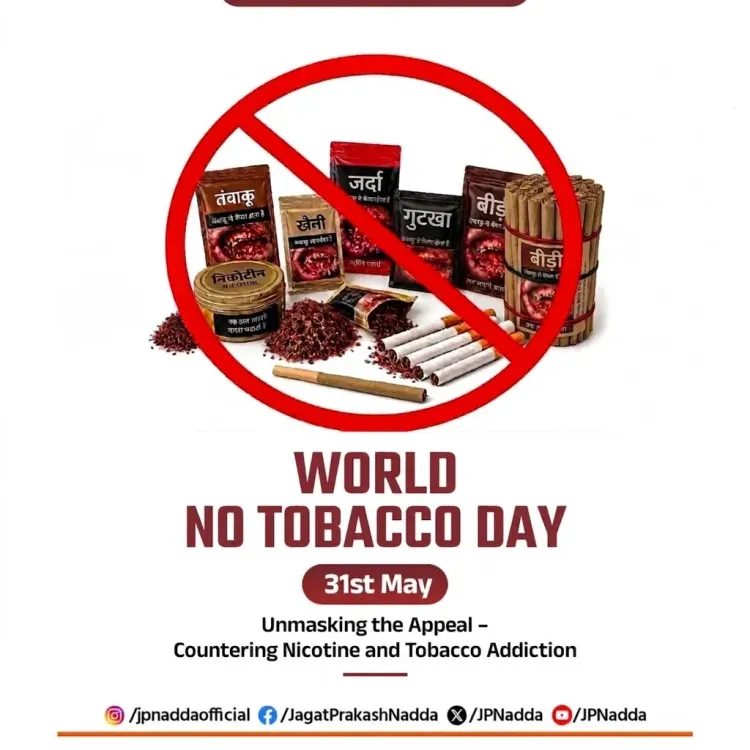
Nadda posted on World No Tobacco Day, 31 May 2026 , urging protection of children and youth from nicotine and tobacco addiction.
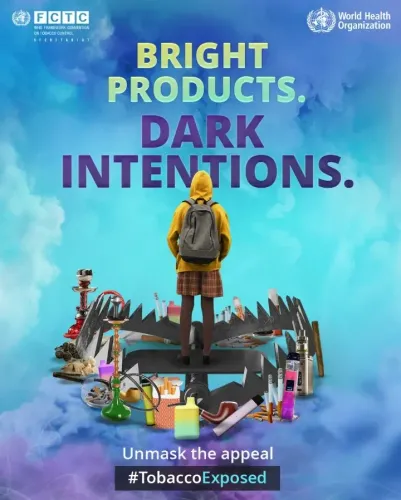
This year's WHO theme is 'Unmasking the Appeal – Countering Nicotine and Tobacco Addiction,' focusing on newer products like e-cigarettes and nicotine pouches.
India enacted the Prohibition of Electronic Cigarettes Act in 2019 , banning production, sale, and advertisement of e-cigarettes.
The National Tobacco Control Programme (NTCP) , launched in 2007-08 , supports state-level awareness and cessation services across India.
India ratified the WHO Framework Convention on Tobacco Control in 2005 , anchoring its national tobacco legislation in an international treaty framework.
Regulatory gaps around nicotine pouches and synthetic nicotine remain an active concern for health authorities and policymakers.
Union Health Minister J. P. Nadda on Sunday, 31 May 2026 marked World No Tobacco Day by calling for stronger commitment to shielding children and young people from nicotine and tobacco addiction, highlighting the risks posed by emerging products such as e-cigarettes, nicotine pouches, and synthetic nicotine.
Context
World No Tobacco Day is observed every year on 31 May under the aegis of the World Health Organization (WHO), which sets an annual theme to guide global tobacco-control messaging. This year's theme — 'Unmasking the Appeal – Countering Nicotine and Tobacco Addiction' — draws attention to products that are often perceived as less harmful than conventional cigarettes but carry significant health risks, particularly for adolescents and young adults.
Nadda's post underscored that awareness, education, and collective action are the primary tools to 'empower young people to make healthier choices and build a future free from addiction.' The message aligns with the ministry's sustained public health communication around tobacco and nicotine products.
Policy Backdrop
India's tobacco-control architecture rests on several legislative and programmatic pillars. The Cigarettes and Other Tobacco Products Act (COTPA), 2003 provides the primary legal framework for regulating tobacco advertising, sale near educational institutions, and public smoking. India ratified the WHO Framework Convention on Tobacco Control in 2005, committing to a range of demand- and supply-reduction measures.
The National Tobacco Control Programme (NTCP), launched in 2007-08, operationalises these commitments through state-level awareness campaigns, cessation services, and enforcement support. A landmark addition came in 2019 when the Prohibition of Electronic Cigarettes Act banned the production, import, sale, distribution, and advertisement of e-cigarettes across the country — one of the earliest such comprehensive bans globally.
Despite the e-cigarette ban, newer nicotine-delivery formats including nicotine pouches and products using synthetic nicotine have emerged in the market, creating regulatory grey areas that health authorities and policymakers are still navigating.
Stakeholders and Impact
The focus on children and youth is central to this year's theme. Tobacco companies have historically used flavoured products, discreet packaging, and digital marketing to attract younger consumers, a pattern that health advocates say is being replicated with next-generation nicotine products. State health departments, tobacco-control non-governmental organisations, and school and college administrators are key actors in translating national messaging into ground-level prevention.
India carries one of the world's largest tobacco-use burdens, with millions of adults using some form of tobacco. Preventing initiation among youth is widely regarded as the most cost-effective long-term public health intervention, making the ministry's communication on this day particularly significant for the country's non-communicable disease strategy.
What's Next
Observers and health advocates will watch for concrete follow-through in the form of enforcement updates on the existing e-cigarette ban and potential regulatory proposals covering nicotine pouches and synthetic nicotine products in forthcoming parliamentary sessions or Ministry of Health and Family Welfare notifications. With Nadda holding dual charge of the health portfolio and the chemicals and fertilizers ministry, coordinated regulatory action across departments remains a possibility. The broader trajectory of India's tobacco-control policy will likely hinge on how quickly the regulatory framework catches up with rapidly evolving nicotine-product markets.
Point of View
But its explicit call-out of e-cigarettes, nicotine pouches, and synthetic nicotine signals that the ministry is aware of the regulatory vacuum that has opened up since the 2019 e-cigarette ban. By invoking this year's WHO theme, the minister aligns India's messaging with a global push to counter the tobacco industry's repositioning around 'harm reduction' narratives. The dual emphasis on awareness and collective action, rather than new legislative announcements, suggests the government is still in a consultative phase on next-generation nicotine regulation. Whether this translates into enforceable policy before the next parliamentary session will be the real test of intent.
NationPress
26 Sept 2026
Frequently Asked Questions
What is World No Tobacco Day and when is it observed?
World No Tobacco Day is observed every year on 31 May and is led by the World Health Organization (WHO) to raise awareness about the health risks of tobacco use and advocate for effective tobacco-control policies globally.
What is the theme of World No Tobacco Day 2026?
The theme for World No Tobacco Day 2026 is 'Unmasking the Appeal – Countering Nicotine and Tobacco Addiction,' which focuses on the growing risks posed by products such as e-cigarettes, nicotine pouches, and synthetic nicotine, especially among young people.
Are e-cigarettes banned in India?
Yes. India enacted the Prohibition of Electronic Cigarettes Act in 2019 , which bans the production, import, sale, distribution, storage, and advertisement of e-cigarettes across the country.
What is India's National Tobacco Control Programme?
The National Tobacco Control Programme (NTCP) is a central government scheme launched in 2007-08 to implement tobacco-control laws, run awareness campaigns, and provide cessation services through state health departments.
What did Health Minister JP Nadda say on World No Tobacco Day 2026?
J. P. Nadda called for strengthening commitment to protecting children and youth from nicotine and tobacco addiction, highlighting the dangers of e-cigarettes, nicotine pouches, and synthetic nicotine, and urged awareness, education, and collective action to empower young people to make healthier choices.