Pralhad Joshi Urges Youth to Shun Tobacco on World No Tobacco Day
Synopsis
Union Consumer Affairs Minister Pralhad Joshi marked World No Tobacco Day on 31 May 2026 by urging Indians — especially youth — to shun tobacco and embrace healthy lifestyles, invoking India's broader tobacco-control framework including COTPA and the National Tobacco Control Programme.
Key Takeaways
Union Consumer Affairs Minister Pralhad Joshi issued a public appeal on World No Tobacco Day, 31 May 2026 , urging Indians to stay away from tobacco.
The appeal specifically targeted Indian youth , highlighting them as a priority audience for tobacco-prevention messaging.
World No Tobacco Day has been observed annually on 31 May since 1987 under WHO auspices.
India's tobacco-control framework includes COTPA 2003 , ratification of the WHO FCTC in 2005 , and the National Tobacco Control Programme launched in 2007-08 .
Rules requiring 85 per cent pictorial health warnings on tobacco packaging were notified in 2016 .
State-level NTCP compliance reports and future budgetary allocations for cessation programmes remain key indicators to watch.
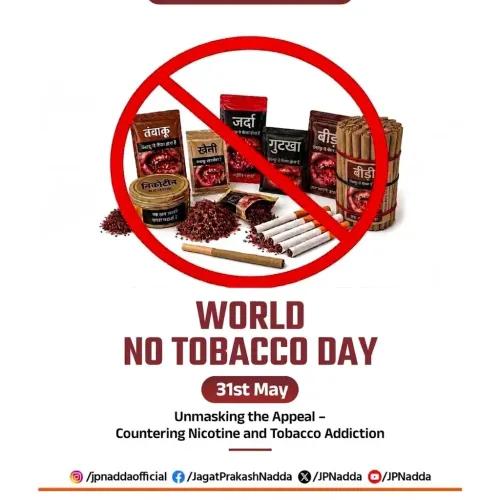
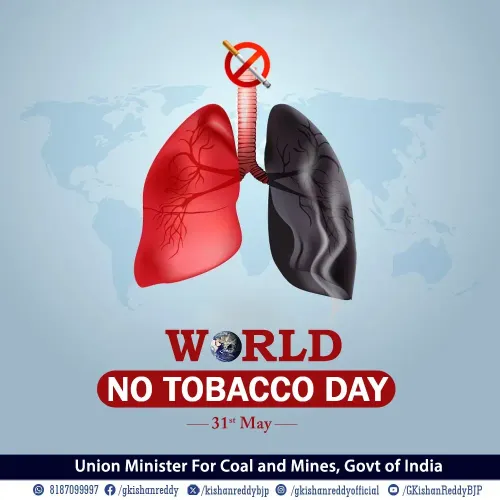
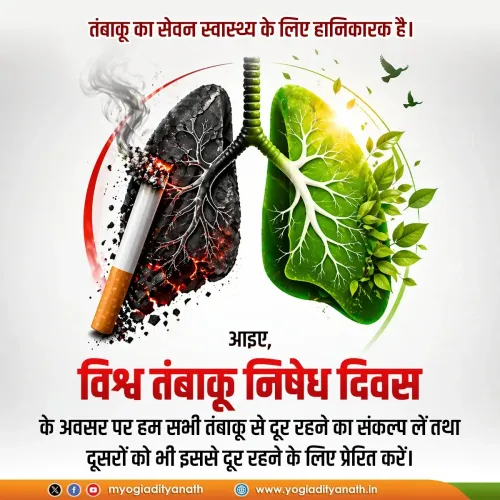
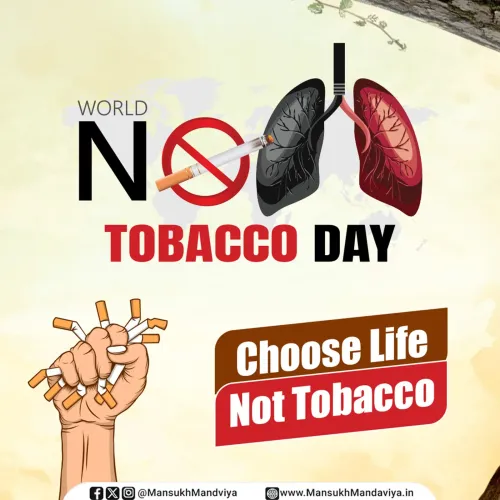
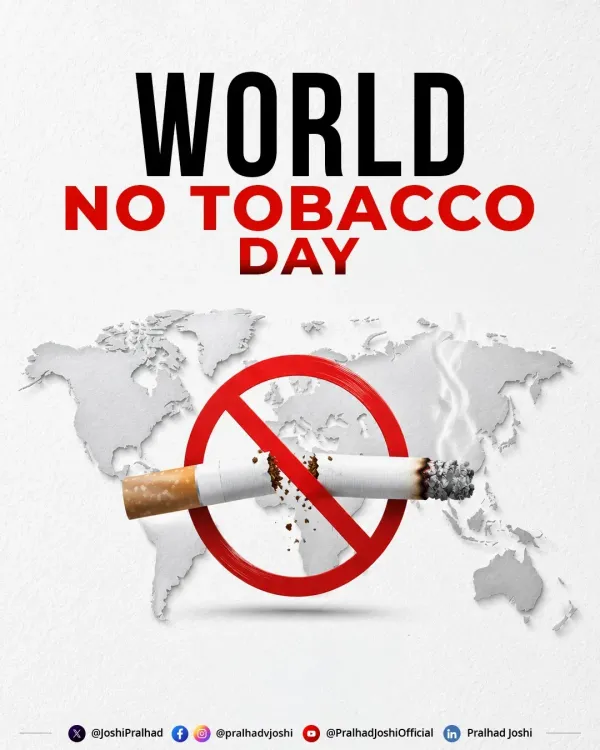
Union Consumer Affairs Minister Pralhad Joshi on Sunday, 31 May 2026 called on Indians — particularly the country's youth — to abandon tobacco use and adopt healthier lifestyles, marking World No Tobacco Day with a public appeal on social media.
Context
Posting on the occasion of World No Tobacco Day, Minister Joshi wrote: 'A tobacco-free society is essential for a healthier and more prosperous India. Let us work together to spread awareness, support those seeking to quit, and inspire positive change in our communities.' The appeal singled out the youth of the nation as a priority audience, reflecting longstanding public-health concerns about tobacco uptake among younger age groups.
World No Tobacco Day is observed every year on 31 May under the auspices of the World Health Organization (WHO), a tradition that dates to 1987. The day is designed to draw global attention to the health and economic harms of tobacco consumption and to mobilise coordinated action from governments, civil society and individuals.
Policy Backdrop
India has built a layered legislative and programmatic framework for tobacco control over the past two decades. The Cigarettes and Other Tobacco Products Act (COTPA), enacted by Parliament in 2003, regulates the sale, advertising and packaging of tobacco products nationwide. India subsequently ratified the WHO Framework Convention on Tobacco Control (FCTC) in 2005, committing to a set of internationally agreed demand- and supply-reduction measures.
The National Tobacco Control Programme (NTCP), launched in 2007-08, operationalises COTPA at the state level through awareness campaigns, enforcement support and cessation services. In 2016, rules mandating that 85 per cent of tobacco-product packaging be covered by pictorial health warnings were notified — among the largest such warning requirements in the world at the time. These measures collectively reflect successive governments' treatment of tobacco control as a core non-communicable disease prevention priority.
Stakeholders and Impact
The minister's appeal is directed most explicitly at Indian youth, who represent both the demographic most at risk of initiating tobacco use and the group whose long-term health outcomes would benefit most from prevention. State health departments bear primary responsibility for on-the-ground enforcement of COTPA provisions and for running NTCP-funded cessation programmes, including quit-line services and school-based education drives.
Tobacco users seeking to quit are also identified as a key constituency in Joshi's message, which calls for community-level support structures alongside awareness campaigns. Public messaging by central ministers on World No Tobacco Day forms part of a sustained multi-media effort that runs alongside periodic tightening of packaging, advertising and taxation measures aimed at reducing prevalence across all age groups.
What's Next
Observers will watch for state-level compliance reports on the 85 per cent pictorial warning mandate and any fresh budgetary allocations for NTCP expansion in the coming financial year. The degree to which ministerial messaging on occasions such as World No Tobacco Day translates into stepped-up enforcement drives or new cessation-support funding will be a key indicator of policy momentum. A sustained decline in youth tobacco prevalence remains the benchmark against which India's multi-pronged control strategy will ultimately be measured.
Point of View
The FCTC and the NTCP, the appeal fits a pattern in which high-visibility public messaging is layered onto a legislative and programmatic architecture that has been steadily strengthened since 2003. The real test of political will, however, lies in enforcement funding and state compliance — areas where the gap between stated intent and ground-level implementation has historically been wide.
NationPress
19 Sept 2026
Frequently Asked Questions
What is World No Tobacco Day and when is it observed?
World No Tobacco Day is an annual observance held on 31 May every year, established by the World Health Organization in 1987 to highlight the health and economic harms of tobacco use and encourage governments and individuals to take action.
What did Pralhad Joshi say on World No Tobacco Day 2026?
Minister Pralhad Joshi urged all Indians — especially the youth — to stay away from tobacco and embrace a healthy, active lifestyle, adding that 'a tobacco-free society is essential for a healthier and more prosperous India.'
What is India's main law on tobacco control?
India's primary tobacco-control legislation is the Cigarettes and Other Tobacco Products Act (COTPA) , enacted by Parliament in 2003 , which regulates the sale, advertising and packaging of tobacco products across the country.
What is the National Tobacco Control Programme?
The National Tobacco Control Programme (NTCP) is a Central government scheme launched in 2007-08 to implement COTPA at the state level through awareness campaigns, enforcement support and cessation services including quit-line helplines.
Has India signed the WHO treaty on tobacco control?
Yes. India ratified the WHO Framework Convention on Tobacco Control (FCTC) in 2005 , committing to a set of internationally agreed measures to reduce both the demand for and supply of tobacco products.