Kishan Reddy Calls for Tobacco-Free Generation on World No Tobacco Day
Synopsis
On World No Tobacco Day, May 31, 2026, Union Coal and Mines Minister G. Kishan Reddy called for collective action to build a tobacco-free generation in India, reinforcing the country's two-decade legislative push under COTPA, the WHO FCTC, and the National Tobacco Control Programme.
Key Takeaways
Union Coal and Mines Minister G.
Kishan Reddy marked World No Tobacco Day on May 31, 2026 with a public call for a tobacco-free generation.
India enacted the Cigarettes and Other Tobacco Products Act (COTPA) in 2003 to regulate tobacco advertising, sale, and packaging.
India ratified the WHO Framework Convention on Tobacco Control in 2005 , committing to global tobacco reduction standards.
The National Tobacco Control Programme , launched in 2007-08 , funds state-level enforcement and awareness campaigns.
India raised pictorial health warnings on tobacco packs to 85 percent coverage in 2016 , one of the highest mandated levels globally.
National health surveys have recorded a gradual decline in tobacco prevalence, though the total number of users remains significant.
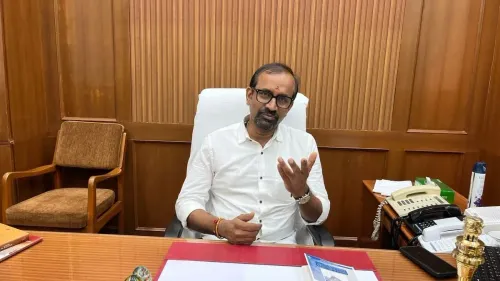
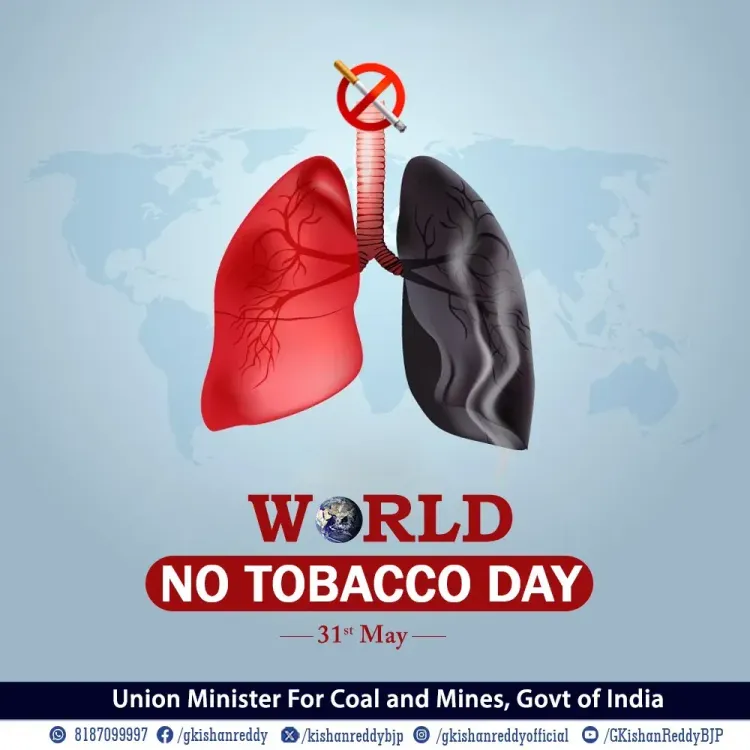
Union Coal and Mines Minister G. Kishan Reddy on Sunday, May 31, 2026, marked World No Tobacco Day by calling on citizens to spread awareness about the harmful effects of tobacco and to collectively work toward a tobacco-free generation in India.
In his post on X, the minister wrote: 'Let us all reaffirm our commitment towards building a healthier and stronger India by spreading awareness about the adverse effects of tobacco consumption. Let us take a collective step towards creating a tobacco-free generation and ensuring a healthier future for our youth.'
Context
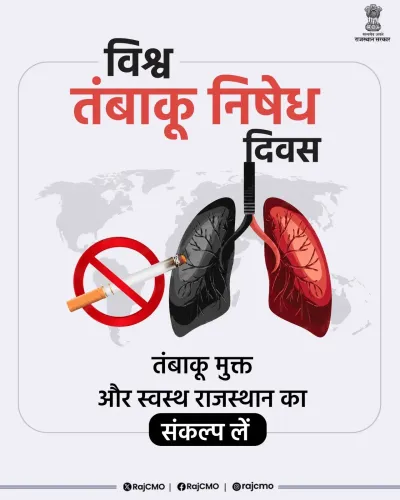
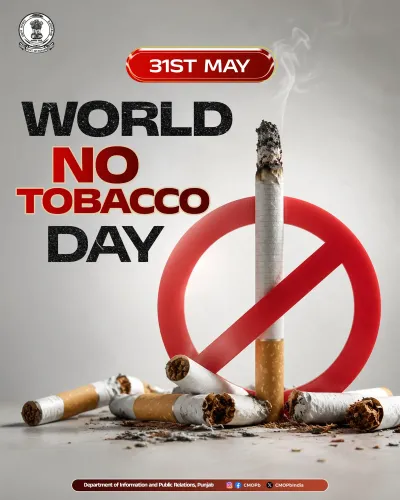
World No Tobacco Day is observed every year on May 31 and was established by the World Health Organization (WHO) to highlight the health, social, and economic risks associated with tobacco use. The day serves as a platform for governments, civil society, and individuals to renew commitments toward reducing tobacco consumption globally. Ministers and public figures across India routinely use the occasion to amplify anti-tobacco messaging.
Policy Backdrop
India has built a substantial legislative and programmatic framework around tobacco control over the past two decades. The Cigarettes and Other Tobacco Products Act (COTPA), enacted in 2003, regulates tobacco advertising, sale near educational institutions, and product packaging. India subsequently ratified the WHO Framework Convention on Tobacco Control (FCTC) in 2005, binding itself to international standards on reducing both demand and supply of tobacco products.
The National Tobacco Control Programme (NTCP), launched in 2007-08, channels central funding to states for enforcement, awareness campaigns, and cessation services. A landmark strengthening came in 2016, when India raised pictorial health warnings on tobacco product packaging to 85 percent coverage — among the highest mandated coverage levels globally. Successive national health surveys have recorded a gradual decline in overall tobacco prevalence, though absolute user numbers remain high given India's population scale.
Stakeholders and Impact
India's youth population is a primary focus of tobacco control advocates, as initiation of tobacco use typically occurs during adolescence. Public messaging by senior political figures — even those whose portfolios do not directly cover health — reinforces cross-government commitment to non-communicable disease prevention. Tobacco users, health workers, educators, and state governments responsible for NTCP implementation are all key stakeholders in translating such awareness into behaviour change.
Cross-ministry participation in health observances has become a consistent feature of India's public health communication strategy, signalling that tobacco control is treated as a whole-of-government priority rather than the exclusive domain of the Health Ministry.
What's Next
Attention in the tobacco control space will focus on the next round of the Global Adult Tobacco Survey, which will provide updated prevalence data for India, and on any revisions to COTPA enforcement rules that the Health Ministry may announce. Advocacy groups are also expected to use the post-World No Tobacco Day period to press for expanded cessation support services and stricter regulation of emerging tobacco and nicotine products. The collective momentum of awareness days like this one feeds into the longer arc of India's commitment under the WHO FCTC to reduce tobacco-related disease burden.
Point of View
Projecting a whole-of-government front on public health. While the post is ceremonial in tone, it lands against the backdrop of India's most ambitious tobacco control decade — from the 85-percent pack warning mandate to sustained NTCP expansion — lending it policy resonance beyond routine social media outreach. The focus on 'youth' and a 'tobacco-free generation' aligns with WHO's 2026 campaign priorities and India's FCTC obligations, signalling that political messaging is being calibrated to international health frameworks. Analysts will watch whether such awareness moments translate into concrete legislative or enforcement action, particularly on emerging nicotine products not yet fully covered under COTPA.
NationPress
20 Sept 2026
Frequently Asked Questions
What is World No Tobacco Day and when is it observed?
World No Tobacco Day is observed every year on May 31 and was established by the WHO to raise awareness about the health and social risks of tobacco use globally.
What did Kishan Reddy say on World No Tobacco Day 2026?
G. Kishan Reddy called on citizens to 'reaffirm commitment towards building a healthier and stronger India' and to take 'a collective step towards creating a tobacco-free generation' for the country's youth.
What is India's main law controlling tobacco products?
India's primary tobacco control law is the Cigarettes and Other Tobacco Products Act (COTPA) , enacted in 2003 , which regulates advertising, sale near schools, and product packaging.
What is the National Tobacco Control Programme in India?
The National Tobacco Control Programme (NTCP) is a central government scheme launched in 2007-08 that funds state governments for tobacco enforcement, awareness campaigns, and cessation services.
How large are pictorial warnings on tobacco packs in India?
Since 2016 , India mandates pictorial health warnings covering 85 percent of tobacco product packaging, placing it among the countries with the highest required warning coverage globally.