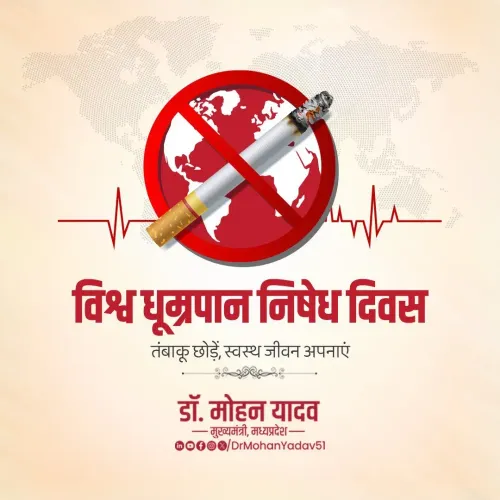
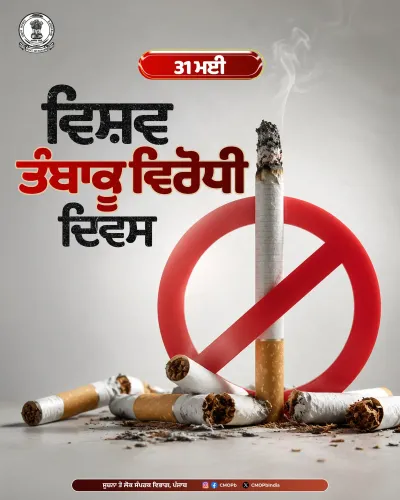
Mandaviya urges youth to reject tobacco, choose fitness
Synopsis
Union Minister Mansukh Mandaviya marked World No Tobacco Day on 31 May 2026 by urging India's youth to reject tobacco and embrace fitness, linking national health to the country's future through his dual mandate over youth affairs, sports, and labour.
Key Takeaways
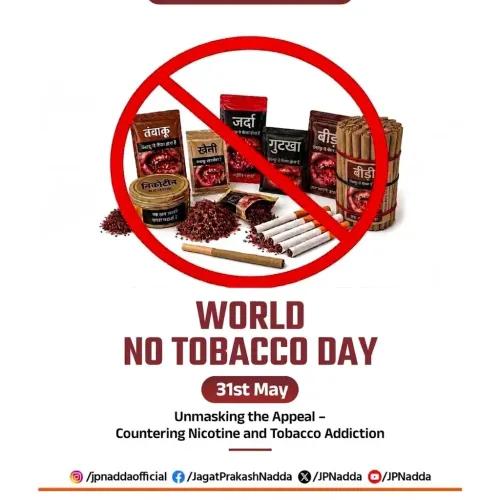
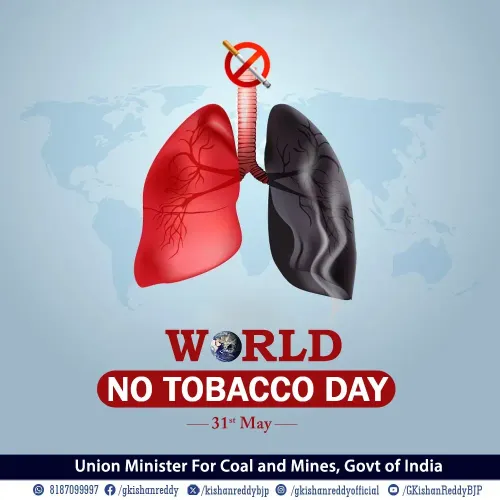
World No Tobacco Day falls on 31 May annually and is coordinated by the WHO to advocate tobacco control globally.
Minister Mansukh Mandaviya holds a dual portfolio covering Labour and Employment and Youth Affairs and Sports , enabling unified health messaging.
India's tobacco-control framework includes COTPA (2003) , ratification of the WHO FCTC (2005) , and the National Tobacco Control Programme (2007) .
The Fit India Movement , launched in August 2019 , promotes regular physical activity among citizens, especially youth.
Mandaviya's appeal frames tobacco rejection as integral to national fitness goals, connecting two major government programmes under one message.
Enforcement updates under COTPA and possible convergence with Khelo India or Fit India guidelines are the key policy developments to watch.
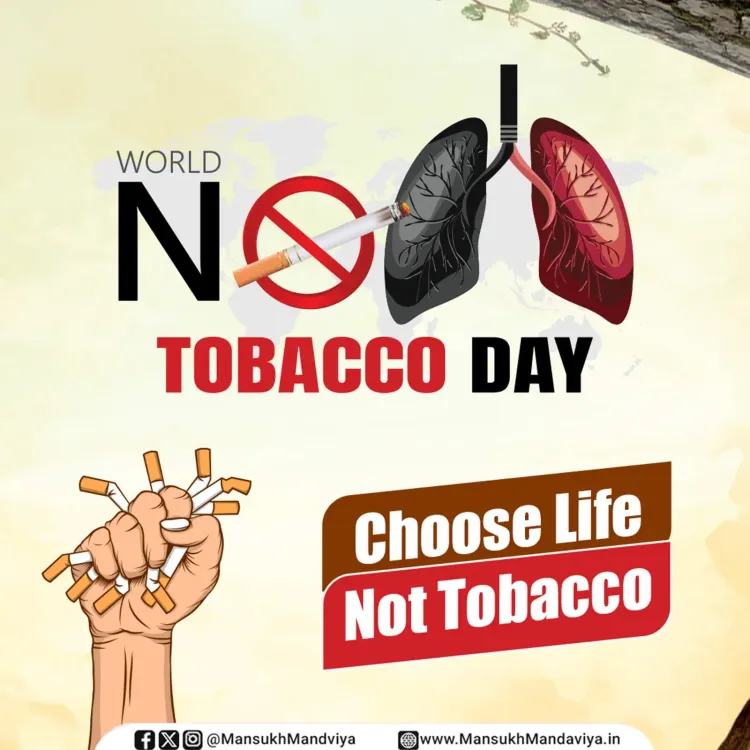
Union Labour and Sports Minister Mansukh Mandaviya used World No Tobacco Day on 31 May 2026 to call on India's youth to abandon tobacco and embrace an active lifestyle, posting a direct appeal on X that linked national fitness to the health of the next generation.
Context
World No Tobacco Day, observed every 31 May under the aegis of the World Health Organization, is the anchor for Mandaviya's message. The minister wrote: 'India's future depends on a healthy, active youth. This World No Tobacco Day, let's reject tobacco and choose fitness.' The appeal is notable because Mandaviya holds a dual portfolio — Ministry of Labour and Employment and Ministry of Youth Affairs and Sports — giving him a direct policy mandate over both workforce wellbeing and youth fitness programmes.
The post arrives as India continues to grapple with one of the world's largest tobacco-consuming populations. Tobacco use remains a leading risk factor for non-communicable diseases, placing a significant burden on the country's healthcare system and working-age population.
Policy Backdrop
India's tobacco-control architecture rests on several pillars. The Cigarettes and Other Tobacco Products Act (COTPA), enacted in 2003, prohibits smoking in public places and tightly regulates advertising and packaging. A year after ratifying the WHO Framework Convention on Tobacco Control in 2005, India committed to evidence-based demand and supply reduction strategies at the international level.
The National Tobacco Control Programme, launched in 2007, built enforcement and awareness capacity at the state and district levels. Complementing these controls, the Fit India Movement — launched in August 2019 — institutionalised physical fitness as a national priority, encouraging citizens, especially young people, to adopt regular exercise and healthier daily habits.
Mandaviya's framing of tobacco rejection as inseparable from fitness goals aligns the health observance directly with the Fit India Movement's stated objectives, reinforcing a unified behavioural message across two major government programmes.
Stakeholders and Impact
The primary audience for this appeal is India's youth demographic, which represents a significant share of the country's tobacco-consuming population and is also the core constituency of the Fit India and Khelo India programmes. Tobacco control agencies and state health departments are the institutional stakeholders responsible for translating such messaging into on-ground enforcement and awareness campaigns.
For employers and the labour sector — also within Mandaviya's portfolio — reducing tobacco use among working-age adults carries direct implications for workforce productivity and occupational health outcomes. The minister's dual charge enables a policy narrative that connects anti-tobacco messaging to economic participation, not just personal health.
What's Next
Observers will watch for concrete follow-through in the form of updated enforcement guidelines under COTPA or new convergence between the National Tobacco Control Programme and the Fit India Movement in the next parliamentary session or annual health-ministry review cycle. Any expansion of tobacco-free zones, stricter packaging norms, or integration of anti-tobacco modules into Khelo India outreach would signal that the minister's World No Tobacco Day message is backed by regulatory action. The broader pattern of successive governments pairing legislative controls with behavioural fitness campaigns suggests this messaging is part of a sustained, long-term public-health strategy rather than a one-day observance.
Point of View
The message draws an implicit line from the Fit India Movement to tobacco control — two programmes that have historically operated in separate administrative silos. The dual charge of Youth Affairs and Sports alongside Labour gives this framing a rare institutional coherence, positioning tobacco rejection not merely as a health choice but as a prerequisite for workforce productivity. Whether the messaging translates into regulatory convergence or remains symbolic observance will be the real measure of its policy weight.
NationPress
25 Sept 2026
Frequently Asked Questions
What is World No Tobacco Day and when is it observed?
World No Tobacco Day is an annual global observance held on 31 May every year, coordinated by the World Health Organization to raise awareness of the health risks of tobacco use and advocate for stronger tobacco-control policies.
What did Mansukh Mandaviya say on World No Tobacco Day 2026?
Mansukh Mandaviya posted on X saying 'India's future depends on a healthy, active youth,' urging people to reject tobacco and choose fitness on World No Tobacco Day, 31 May 2026 .
What is the Fit India Movement?
The Fit India Movement is a nationwide initiative launched by the Government of India in August 2019 to encourage citizens, particularly youth, to incorporate regular physical activity and healthier habits into their daily lives.
What is COTPA and how does it regulate tobacco in India?
COTPA , or the Cigarettes and Other Tobacco Products Act, was enacted in 2003 and prohibits smoking in public places while regulating tobacco advertising, promotion, and packaging across India.
Why does Mansukh Mandaviya speak on both youth fitness and tobacco control?
Mansukh Mandaviya holds a dual portfolio as Union Minister of Labour and Employment and Youth Affairs and Sports , giving him direct policy oversight over both workforce health and national fitness programmes, which allows him to link tobacco rejection to broader youth development goals.