CM Samrat Choudhary Calls for Tobacco-Free, Drug-Free Society
Synopsis
Bihar Chief Minister Samrat Choudhary marked World No Tobacco Day on 31 May 2026 by calling on citizens to pledge against tobacco and all substance abuse, linking the appeal to the national Nasha Mukt Bharat Abhiyaan and urging people to inspire others toward a drug-free life.
Key Takeaways
Bihar Chief Minister Samrat Choudhary issued a public pledge appeal on World No Tobacco Day, 31 May 2026 .
He called for a healthy, aware, empowered and drug-free society , extending the message beyond tobacco to all forms of addiction.
World No Tobacco Day has been observed globally on 31 May every year since 1987 , led by the WHO .
India's Cigarettes and Other Tobacco Products Act (COTPA) , enacted in 2003 , is the primary legislative tool for tobacco regulation.
The Nasha Mukt Bharat Abhiyaan , launched in 2020 , targets multi-substance abuse through community awareness and youth outreach.
Bihar's large youth population makes state-level follow-through on anti-tobacco drives a key indicator of the campaign's real-world impact.
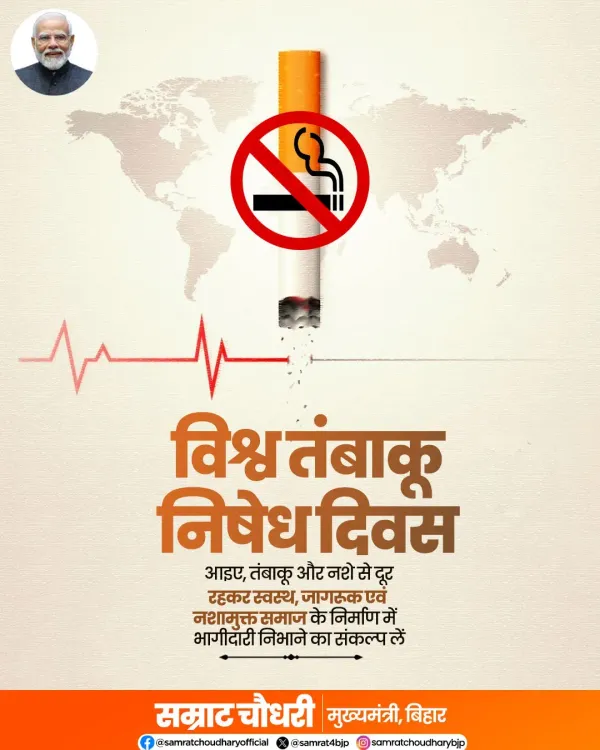
Bihar Chief Minister Samrat Choudhary on Sunday, 31 May 2026, marked World No Tobacco Day with a public appeal urging citizens to pledge against tobacco and all forms of substance abuse, calling for collective action to build a healthy and aware society.
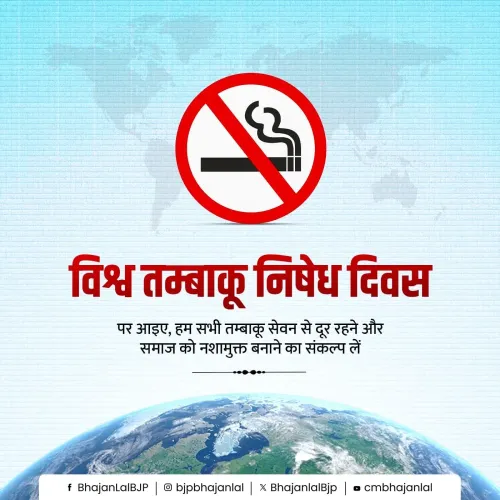
In his post on X, Choudhary wrote: 'विश्व तंबाकू निषेध दिवस पर आइए, तंबाकू एवं सभी प्रकार के नशे से दूर रहकर स्वस्थ, जागरूक, सशक्त एवं नशामुक्त समाज के निर्माण में अपनी सक्रिय भागीदारी निभाने का संकल्प लें।' ['On World No Tobacco Day, let us resolve to stay away from tobacco and all forms of addiction, and actively contribute to building a healthy, aware, empowered and drug-free society.'] He added that 'a healthy life is the foundation of a prosperous future' and called on people to spread awareness around them.
Context
World No Tobacco Day is observed every year on 31 May under the leadership of the World Health Organization (WHO), which established the global observance in 1987. The day is intended to draw attention to the widespread health risks associated with tobacco use and to encourage effective policies to reduce consumption. India remains one of the largest consumers of tobacco in the world, with the substance linked to a significant share of preventable deaths annually.
Senior political leaders across India routinely mark the occasion with public messaging that aligns state-level communication with central preventive health priorities. Choudhary's appeal follows this established pattern, reinforcing both the international observance and national campaigns.
Policy Backdrop
India's legislative framework for tobacco control is anchored in the Cigarettes and Other Tobacco Products Act (COTPA), enacted in 2003, which regulates tobacco advertising, promotion, and sales, including restrictions on sale near educational institutions and mandatory health warnings on packaging.
Complementing COTPA is the Nasha Mukt Bharat Abhiyaan, launched in 2020 by the Ministry of Social Justice and Empowerment. The programme targets substance abuse more broadly — covering tobacco, alcohol, and narcotics — through community awareness, outreach to youth, and engagement with local institutions. Bihar, with a large rural population and significant youth demographic, has been an active participant in the national rollout of this campaign.
Stakeholders and Impact
The appeal is directed most immediately at Bihar's youth and active tobacco users, who form the primary target groups for both COTPA enforcement and the Nasha Mukt Bharat Abhiyaan. Public health workers and community volunteers at the grassroots level are also key stakeholders, as the campaign model relies on peer-to-peer awareness to extend its reach into rural and semi-urban areas.
Tobacco use imposes a heavy economic burden on low-income households in addition to its health costs, making anti-tobacco messaging particularly relevant in states like Bihar where household income levels remain a policy concern. Calls from senior leadership on occasions such as World No Tobacco Day can reinforce local health administration efforts and encourage institutional participation in awareness drives.
What's Next
Attention will now turn to whether Bihar translates the symbolic messaging of World No Tobacco Day into concrete state-level action — including intensified enforcement of COTPA provisions, expanded outreach under the Nasha Mukt Bharat Abhiyaan, and targeted campaigns in schools and colleges across the state. National reviews of the Abhiyaan's progress periodically assess state-wise participation, making sustained follow-through an important measure of impact beyond the annual observance.
Point of View
' Choudhary signals political ownership of the wider anti-substance-abuse agenda, which carries electoral salience in Bihar's large rural and youth voter base. The message also reflects a broader pattern of BJP-governed states reinforcing central preventive health messaging through senior leaders on international health observances. Sustained impact will depend on whether this symbolic commitment translates into measurable enforcement and outreach activity at the district level.
NationPress
19 Sept 2026
Frequently Asked Questions
What did Bihar CM Samrat Choudhary say on World No Tobacco Day 2026?
Bihar Chief Minister Samrat Choudhary called on citizens to pledge against tobacco and all forms of substance abuse on World No Tobacco Day, 31 May 2026, urging people to build a healthy, aware and drug-free society and to inspire others around them.
When is World No Tobacco Day observed and who started it?
World No Tobacco Day is observed every year on 31 May. It was established by the World Health Organization (WHO) in 1987 to highlight the health risks of tobacco use and encourage policies to reduce consumption.
What is the Nasha Mukt Bharat Abhiyaan?
The Nasha Mukt Bharat Abhiyaan is a national campaign launched in 2020 by India's Ministry of Social Justice and Empowerment. It promotes awareness against substance abuse — including tobacco, alcohol, and narcotics — through community outreach and youth engagement.
What is COTPA and how does it regulate tobacco in India?
COTPA, the Cigarettes and Other Tobacco Products Act, was enacted in 2003. It regulates tobacco advertising, promotion, and sales in India, mandating health warnings on packaging and restricting sale near educational institutions.
Why is Bihar a focus area for anti-tobacco and drug-free campaigns?
Bihar has a large rural population and a significant youth demographic, making it a priority state for both COTPA enforcement and the Nasha Mukt Bharat Abhiyaan. Tobacco use also imposes a heavy economic burden on low-income households, adding urgency to awareness drives in the state.