Rajasthan CMO calls for tobacco-free state on No Tobacco Day
Synopsis
On World No Tobacco Day, 31 May 2026, the Chief Minister's Office of Rajasthan called on citizens to resolve to build a tobacco-free state, warning that addiction destroys both health and family wellbeing. The appeal aligns with India's COTPA framework and WHO tobacco control commitments.
Key Takeaways
The Chief Minister's Office of Rajasthan issued a public appeal on World No Tobacco Day, 31 May 2026 , urging citizens to pledge for a tobacco-free state.
The post warned that tobacco addiction 'hollows out health and scatters the happiness and dreams of families.' World No Tobacco Day is a WHO -led annual observance held every 31 May to highlight health and economic harms of tobacco.
India ratified the WHO Framework Convention on Tobacco Control in 2005 and enacted COTPA in 2003 to regulate tobacco products.
The National Tobacco Control Programme (launched 2007-08 ) supports state-level enforcement, awareness, and cessation activities across India.
Health advocates will monitor Rajasthan's follow-through via budget allocations, enforcement orders, and upcoming tobacco prevalence survey data.
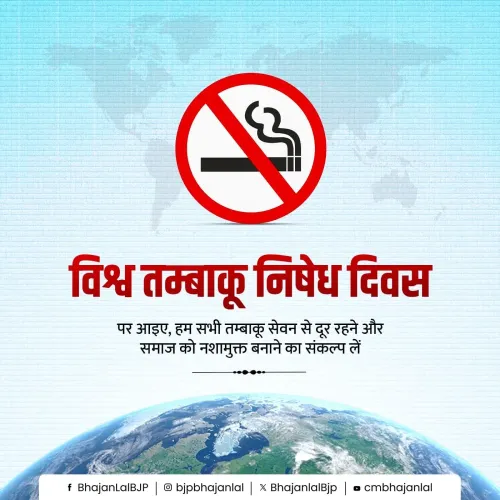
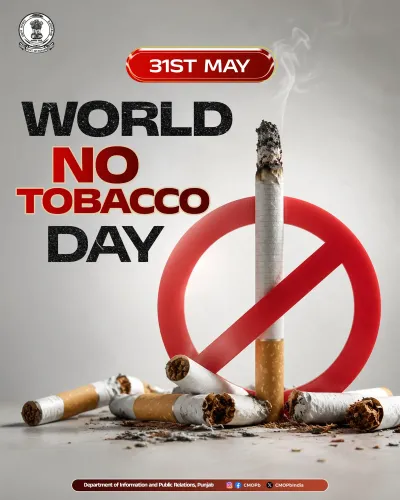
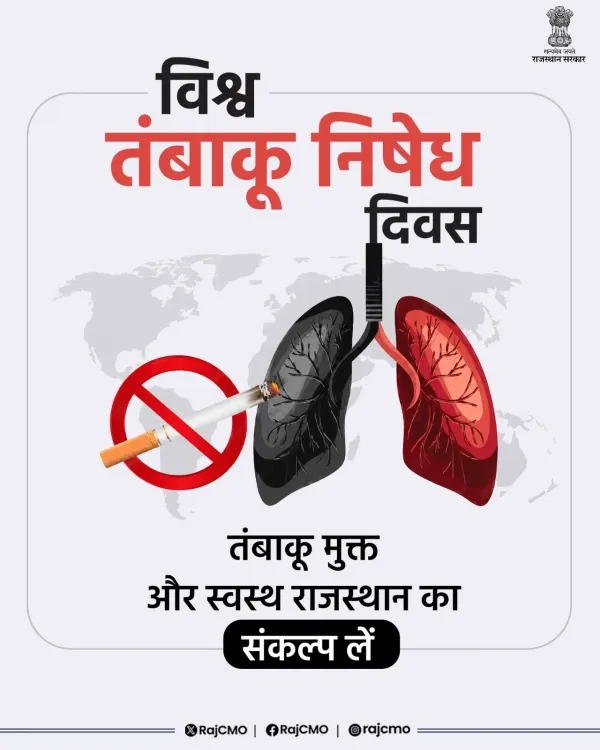
The Chief Minister's Office of Rajasthan on Sunday, 31 May 2026, issued a public appeal on the occasion of World No Tobacco Day, calling on citizens to collectively resolve to build a tobacco-free and prosperous Rajasthan.
The post, shared on the official CMO account, stated in Hindi: 'तंबाकू की लत न केवल स्वास्थ्य को खोखला करती है, बल्कि परिवारों की खुशियाँ और सपने भी बिखेर देती है' — meaning, 'Tobacco addiction not only hollows out one's health, but also scatters the happiness and dreams of families.' The message urged all citizens to pledge together: 'Let us build a tobacco-free Rajasthan, a happy Rajasthan.'
Context
World No Tobacco Day is observed every year on 31 May under the aegis of the World Health Organization (WHO) to highlight the severe health and economic consequences of tobacco use globally. The day serves as a focal point for governments, civil society organisations, and health bodies to reinforce anti-tobacco messaging and drive policy action. In India, the observance has consistently prompted state and central government communications aligned with national public health goals.Policy Backdrop
India ratified the WHO Framework Convention on Tobacco Control (FCTC) in 2005, committing to a comprehensive set of evidence-based measures including advertising restrictions, health warnings, and cessation support. The Cigarettes and Other Tobacco Products Act (COTPA), 2003 — the central law governing tobacco regulation in India — prohibits sale to minors, bans smoking in public places, and mandates pictorial health warnings on packaging. The National Tobacco Control Programme, launched in 2007-08, provides a framework for states to implement awareness campaigns, enforcement drives, and cessation clinics at the district level. Rajasthan, like other Indian states, operates within this national architecture while issuing its own public commitments on occasions such as World No Tobacco Day.Stakeholders and Impact
The appeal from the Rajasthan CMO is directed at a broad cross-section of the state's population — from active tobacco users to families affected by addiction-related health and economic burdens. Tobacco use is a leading risk factor for non-communicable diseases including cancers of the mouth and throat, chronic obstructive pulmonary disease, and cardiovascular conditions. State health departments, district administrations, and school and workplace wellness programmes are the primary institutional actors responsible for translating such public commitments into on-ground action. Awareness campaigns on days like these are typically accompanied by enforcement of tobacco-free zone regulations and outreach in educational institutions.What's Next
The Rajasthan government's statement signals continued alignment with national and global tobacco control frameworks. Observers and public health advocates will watch for follow-through in the form of district-level enforcement orders, enhanced funding for cessation clinics in state budgets, and updated prevalence data from the next round of the Global Adult Tobacco Survey or the National Family Health Survey for Rajasthan. Such announcements on international health days often precede or accompany structured awareness drives in schools and public spaces, and the state's performance on tobacco prevalence reduction will be a key metric in assessing the impact of these commitments.Point of View
It carries political weight as a visible commitment on a high-profile day, potentially presaging enforcement drives or budget announcements. The framing — linking tobacco addiction to family suffering rather than only individual health — reflects a broader communicative shift in India's public health outreach, targeting social and economic motivations alongside medical ones. The real test will lie in measurable state-level outcomes: tobacco-free zone compliance, cessation programme uptake, and movement in prevalence data.
NationPress
16 Oct 2026
Frequently Asked Questions
Why is World No Tobacco Day observed on 31 May?
World No Tobacco Day is observed every year on 31 May as established by the World Health Organization (WHO) to draw global attention to the health and economic harms caused by tobacco use and to advocate for effective tobacco control policies.
What did the Rajasthan CMO say on World No Tobacco Day 2026?
The Chief Minister's Office of Rajasthan called on citizens to collectively resolve to build a tobacco-free and happy Rajasthan, stating that tobacco addiction not only destroys health but also 'scatters the happiness and dreams of families.'
What is India's main law regulating tobacco products?
India's primary law on tobacco regulation is the Cigarettes and Other Tobacco Products Act (COTPA), 2003 , which bans tobacco sales to minors, prohibits smoking in public places, and mandates health warnings on packaging.
What is the National Tobacco Control Programme in India?
The National Tobacco Control Programme was launched in 2007-08 to help Indian states implement tobacco awareness campaigns, enforcement of tobacco-free zones, and cessation support services at the district level.
Has India signed the WHO tobacco control treaty?
Yes. India ratified the WHO Framework Convention on Tobacco Control (FCTC) in 2005 , committing to a set of evidence-based measures to reduce tobacco use prevalence across the country.