Nagaland Solar Mission targets 10,900 rooftop solar units in state push

Synopsis
Nagaland has doubled down on its target of 10,900 rooftop solar installations, with senior officials warning that the goal is ambitious and will require the private sector, vendors, and citizens to pull together — a notable admission in a state where power shortages are chronic and solar adoption remains nascent.
Key Takeaways
The Nagaland Solar Mission (NSM) reaffirmed a target of 10,900 rooftop solar installations at a review meeting on 16 June in Kohima .
Kenye called for greater public participation, noting that many Nagaland residents remain hesitant about adopting solar energy.
Principal Secretary K.D.
Vizo described the target as ambitious and linked the mission to SDG 7 on affordable, sustainable energy access.
Officials said rooftop solar could significantly reduce the state's persistent power shortages and lower electricity costs for consumers.
The initiative aligns with the Government of India's national solar energy programme and calls for collective action from government, vendors, and citizens.
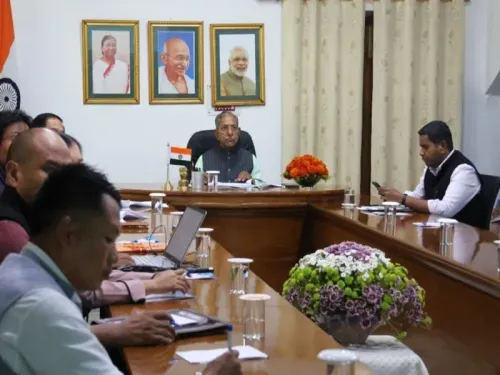
The Nagaland Solar Mission (NSM) on Tuesday, 16 June convened a progress review meeting in Kohima and reaffirmed its target of installing 10,900 rooftop solar units across the state, officials said. The meeting deliberated on measures to accelerate implementation and underscored the need for collective action from government agencies, private vendors, and citizens to drive Nagaland's transition to renewable energy.
Key Developments at the Review Meeting
Nagaland Minister for Power and Parliamentary Affairs K.G. Kenye addressed the gathering, calling for broader public participation in the state's solar energy drive. He acknowledged that solar power remains a relatively new concept for many residents and that shifting away from conventional energy sources would be challenging. Kenye nonetheless expressed satisfaction with the growing number of installations and urged citizens to embrace solar energy as a reliable, sustainable alternative.
Kenye noted that while communities in many other parts of the country are already familiar with solar benefits, a significant share of Nagaland's population remains hesitant. He credited empanelled vendors for their role in raising awareness and encouraging consumer uptake, and stressed that rooftop installations would be made both affordable and accessible under the programme.
What Officials Said
Nagaland Principal Secretary for Power K.D. Vizo, who chaired the meeting, described the 10,900-unit target as ambitious and called on all stakeholders to intensify efforts to meet it. He linked the initiative to Sustainable Development Goal (SDG) 7, which aims to ensure access to affordable, reliable, and modern energy for all.
Vizo emphasised that the Solar Mission is a joint endeavour and that development cannot rest with the government alone. He called on the private sector, vendors, and the public to actively participate, stating that only through collective effort can Nagaland realise its vision of a sustainable, energy-secure future.
Why This Matters for Nagaland
Nagaland has long grappled with persistent power shortages, and officials argue that widespread rooftop solar adoption could meaningfully ease that burden. According to Vizo, the programme would enhance renewable energy generation, reduce electricity expenses for consumers, and contribute to the state's broader development goals.
The initiative aligns with the Government of India's national solar energy programme, and officials noted that the state has considerable untapped potential to harness green energy resources. This comes amid a broader national push to scale up rooftop solar capacity under central schemes, making Nagaland's mission part of a larger federal energy transition effort.
What Comes Next
Officials have urged vendors and government departments to step up outreach and implementation without delay. With the 10,900-unit target now reaffirmed, the focus shifts to execution — accelerating installations, deepening public awareness, and ensuring the programme reaches residents across the state's varied terrain.
Point of View
900-unit goal is notable for a small northeastern state with challenging terrain and low solar familiarity, but the review meeting's own language — 'ambitious', 'hesitant public', 'need to accelerate' — signals that implementation is lagging aspiration. The real test is whether vendor outreach and government coordination can convert awareness into actual installations before the programme window closes. Chronic power shortages give the mission genuine urgency, but urgency alone has not historically been enough in India's rooftop solar rollouts outside urban centres.
NationPress
21 Sept 2026
Frequently Asked Questions
What is the Nagaland Solar Mission's rooftop solar target?
The Nagaland Solar Mission (NSM) has set a target of installing 10,900 rooftop solar units across the state. This target was reaffirmed at a progress review meeting held in Kohima on 16 June.
Why is rooftop solar important for Nagaland?
Nagaland faces persistent power shortages, and officials say widespread rooftop solar adoption could significantly ease this burden while reducing electricity expenses for households. The state also has considerable untapped potential for green energy generation.
What did Power Minister K.G. Kenye say at the meeting?
Minister Kenye called for greater public participation in the solar drive, acknowledged that many residents remain hesitant about switching from conventional energy, and urged citizens to embrace solar power as a reliable and sustainable alternative. He also credited empanelled vendors for their awareness efforts.
How does the Nagaland Solar Mission connect to national goals?
The mission aligns with the Government of India's national solar energy programme and with Sustainable Development Goal (SDG) 7, which targets affordable, reliable, and modern energy access for all. Officials say Nagaland's initiative is part of a broader federal energy transition effort.
Who is responsible for implementing the solar mission?
Principal Secretary K.D. Vizo emphasised that the Solar Mission is a joint endeavour requiring participation from government departments, private sector vendors, and the general public — not the government alone.