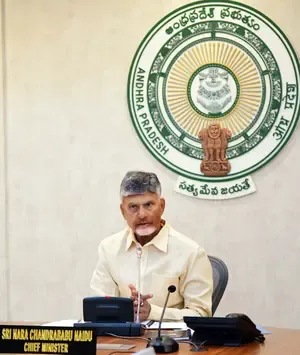
CM Naidu Hails APCNF Winning 2026 Food Planet Prize
Synopsis
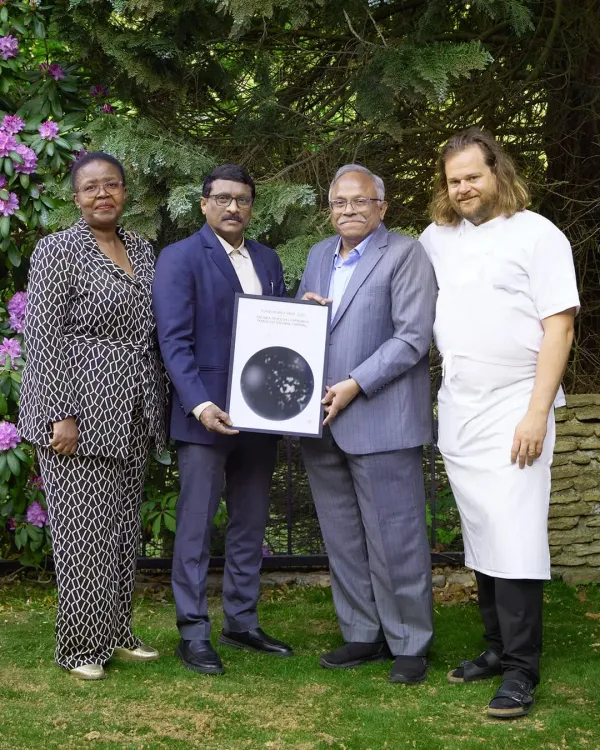
Andhra Pradesh CM N. Chandrababu Naidu announced that the state's Community Managed Natural Farming programme has won the 2026 Food Planet Prize. He called it a first for India, credited 1.8 million farmers and women's self-help groups, and reaffirmed the goal of making Andhra Pradesh a 100% natural farming state by 2047.
Key Takeaways
Chandrababu Naidu announced APCNF has won the 2026 Food Planet Prize.
He described APCNF as a movement of 1.8 million farmers and the world's largest natural farming programme.
Naidu called the award a 'proud first for India'.
The state has reiterated a target of becoming a 100% natural farming state by 2047.
Women's self-help groups, field teams and scientists were credited for the programme's scale.
Andhra Pradesh signalled willingness to share its natural farming model with other states and countries.
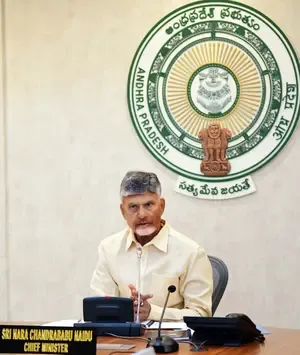
Andhra Pradesh Chief Minister N. Chandrababu Naidu on Wednesday announced that the Andhra Pradesh Community Managed Natural Farming (APCNF) programme has been awarded the 2026 Food Planet Prize, calling it a 'proud first for India'. In a post on X, the chief minister credited the state's farmers, women's self-help groups and field teams for the recognition, which he described as the world's largest environmental award.
Context
Naidu wrote that APCNF had been recognised 'for leading one of the most ambitious transitions to agroecology ever undertaken'. He described the programme as 'a movement of 1.8 million farmers and the world's largest natural farming programme', and thanked the prize jury for the honour.
The chief minister also used the post to reiterate a long-term goal of making Andhra Pradesh a 100% natural farming state by 2047, framing it as a pathway to 'restoring our natural resources, rejuvenating our farmlands, strengthening farmers' well-being, and contributing to a healthier planet'.
Policy backdrop
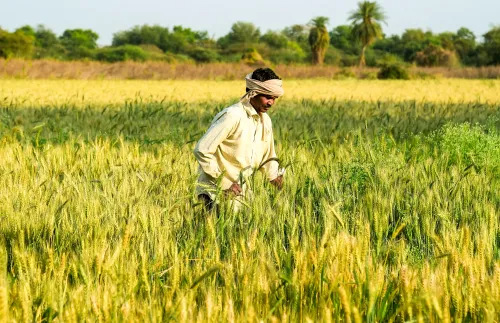
APCNF traces its institutional roots to Rythu Sadhikara Samstha, a farmer-empowerment body set up by the Andhra Pradesh government in 2015 to coordinate agricultural support programmes, including early pilots in chemical-free farming. Over successive years, the initiative scaled from village-level demonstrations to a state-wide effort built around women's self-help groups who train and mentor fellow farmers in agroecological techniques.
The programme emphasises practices such as diverse cropping, soil-microbe revival through bio-inputs, and reduced reliance on synthetic fertilisers and pesticides — a model state officials have positioned as a response to rising input costs, soil degradation and climate stress.
Stakeholders and impact
The immediate beneficiaries are small and marginal farmers across Andhra Pradesh, particularly women cultivators who form the backbone of the community-managed structure. Naidu's post extended 'heartiest congratulations to our farmers, women's self-help groups, field teams, scientists, and everyone associated with this remarkable achievement'.
Beyond the farm gate, the recognition feeds into a broader conversation in Indian agriculture about whether community-led natural farming can be reconciled with productivity, market linkages and procurement systems traditionally built around input-intensive cultivation. Several states have experimented with organic and natural farming clusters, but Andhra Pradesh's effort stands out for its sheer scale and its explicit linkage to long-horizon state development targets.
What's next
Naidu signalled that the state intends to act as a knowledge hub for the practice, writing, 'We are committed to sharing our learnings and supporting the spread of natural farming across India and beyond.' That positioning could open space for inter-state partnerships and possible alignment with central programmes on sustainable and organic agriculture.
The chief minister also struck a forward-looking note: 'We will not stop here.' With the 2047 target now publicly reiterated on a global platform, attention will turn to implementation milestones — expansion of farmer enrolment, yield and income data from natural-farming plots, and the degree to which APCNF's community-managed template is adopted by other Indian states seeking to green their agricultural footprint.
Point of View
Giving the state political and diplomatic capital on climate-resilient agriculture. For Naidu, it reinforces a long-running pitch that technology and community institutions — particularly women's self-help groups — can deliver outcomes at scale. The bigger test lies in reconciling agroecology with yield, income and procurement realities, and in whether other states adopt the community-managed template rather than top-down organic schemes. Expect natural farming to feature more prominently in centre-state agricultural conversations.
NationPress
22 Sept 2026
Frequently Asked Questions
What is APCNF in Andhra Pradesh?
APCNF, or Andhra Pradesh Community Managed Natural Farming, is a state-wide programme that scales agroecological farming practices through women's self-help groups and farmer-to-farmer training. CM N. Chandrababu Naidu has described it as the world's largest natural farming programme, covering 1.8 million farmers.
What is the Food Planet Prize won by APCNF?
The Food Planet Prize is an international award recognising large-scale environmental solutions in food systems. Naidu's post said APCNF received the 2026 prize for leading one of the most ambitious transitions to agroecology ever undertaken.
What is Andhra Pradesh's 2047 natural farming target?
CM Naidu has reiterated a goal of making Andhra Pradesh a 100% natural farming state by 2047. The vision centres on restoring natural resources, rejuvenating farmlands and improving farmers' well-being.
How many farmers are part of APCNF?
According to CM Naidu's post, APCNF is a movement of 1.8 million farmers across Andhra Pradesh. The programme is built around community-managed structures led by women's self-help groups.
Will Andhra Pradesh share its natural farming model with other states?
Yes. Naidu said the state is committed to sharing its learnings and supporting the spread of natural farming across India and beyond, indicating openness to inter-state collaboration on agroecology.