CM Naidu Hails Deputy CM Pawan Kalyan's 'Adavitalli Bata 2.0' Tribal Road Drive
Synopsis
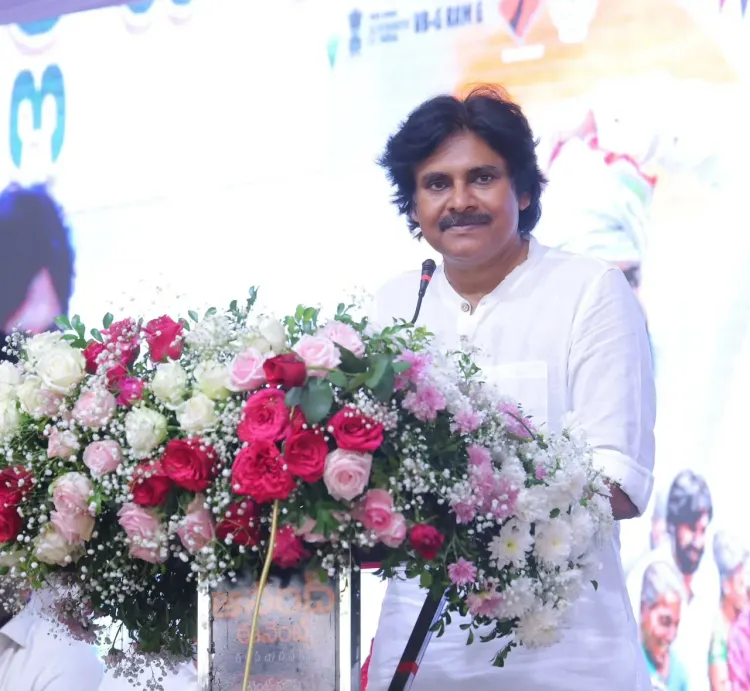
AP Chief Minister N. Chandrababu Naidu has congratulated Deputy CM Pawan Kalyan for launching 'Adavitalli Bata 2.0', a Rs 2,052 crore scheme to build 1,976 km of roads to 1,341 tribal habitations and end the practice of carrying patients on stretchers through forests.
Key Takeaways
Adavitalli Bata 2.0 will construct 1,976 kilometres of roads across 1,341 tribal habitations in Andhra Pradesh.
The programme carries an outlay of Rs 2,052 crore , announced by Deputy CM Pawan Kalyan .
The first phase of 'Adavitalli Bata' was declared successfully completed before this second phase was launched.
CM Chandrababu Naidu publicly praised Pawan Kalyan and described the scheme as a 'mahattar yagnam' — a great, sacred endeavour.
The programme aims to eliminate 'doli mota' — the practice of carrying critically ill tribal residents on stretchers through forests due to lack of roads.
Road access is framed by the government as a health intervention, ensuring ambulances and emergency services can reach isolated tribal villages.
Thousands of tribal hamlets in Andhra Pradesh have long endured a painful reality: when a patient falls critically ill, neighbours carry them on makeshift stretchers — called dolis — across forest terrain because no motorable road exists. Andhra Pradesh Chief Minister N. Chandrababu Naidu on Sunday, October 11, 2026, publicly congratulated Deputy Chief Minister Pawan Kalyan for pushing the 'Adavitalli Bata' (Forest Mother's Path) programme forward — a scheme designed to end that practice permanently.
In a post in Telugu, Naidu praised Kalyan for successfully completing the first phase of the initiative and now launching 'Adavitalli Bata 2.0' — an expansion that will build 1,976 kilometres of new roads connecting 1,341 tribal habitations, at an outlay of Rs 2,052 crore. 'This is not merely road construction,' Naidu wrote, 'it is liberation from the hardships of tribal communities and an assurance of access to emergency medical services.'
What 'Adavitalli Bata' Targets — and Why Doli Carrying Became a Symbol
The phrase 'doli mota' — being carried on a stretcher through the jungle — has become shorthand in Andhra Pradesh's tribal policy debate for the extreme isolation that interior Scheduled Tribe hamlets face. Pregnant women in labour, accident victims, and the critically ill have historically been transported this way when roads did not reach their villages. The 'Adavitalli Bata' programme directly attacks this infrastructure gap, framing road-building as a health and human-dignity intervention as much as a connectivity one.
Deputy CM Pawan Kalyan, who holds the tribal welfare portfolio in the NDA coalition government, has been the political face of the initiative. The first phase — completed before this second-phase launch — laid the groundwork and, by the government's account, was finished successfully. Phase 2 scales that ambition significantly: 1,341 new habitations and nearly 2,000 kilometres of road for over Rs 2,052 crore.
Naidu's Political Signal Behind the Public Praise
CM Naidu's public congratulations to his coalition partner Pawan Kalyan carry weight beyond ceremony. The Telugu Desam Party and Pawan Kalyan's Jana Sena Party govern Andhra Pradesh together under the NDA alliance, and visible solidarity between the two leaders on a flagship tribal welfare scheme reinforces the coalition's shared governance narrative ahead of continued development pushes.
Naidu described the programme as a 'mahattar yagnam' — a great, sacred endeavour — and said he 'wholeheartedly wishes' for its continued success. The choice of language signals this is not a routine departmental milestone; the government is positioning 'Adavitalli Bata 2.0' as a landmark moment in Andhra Pradesh's tribal development story.
What 1,976 Km of New Roads Could Mean on the Ground
At Rs 2,052 crore for 1,976 km, the average per-kilometre cost works out to roughly Rs 1.04 crore — consistent with rural and forest-area road construction in India's tribal belt, where terrain, gradient, and environmental compliance add to costs. Once connected, these hamlets gain not just passable roads but access to school buses, supply chains for agricultural produce, and — critically — ambulances able to reach them within the 'golden hour' window for medical emergencies.
For 1,341 habitations that have waited decades for basic connectivity, the programme's second phase is the difference between integration and continued isolation. If the targets are met, Andhra Pradesh's tribal-area road network will expand materially — and the imagery of families carrying their sick through the forest on a stretcher will, at last, belong to history.
Point of View
The Andhra Pradesh government has given a road-building budget a moral urgency that dry connectivity metrics never achieve. Naidu's conspicuous public praise for coalition partner Pawan Kalyan also serves a political function: it signals TDP-Jana Sena unity on a high-visibility welfare issue, which matters as both parties manage coalition optics heading into Andhra Pradesh's continued governance cycle. At Rs 2,052 crore for 1,976 km, delivery timelines and quality benchmarks will determine whether this becomes a replicable model or an ambitious promise — and tribal rights groups will be watching both the roads and the land-acquisition process in ecologically sensitive forest areas.
NationPress
11 Oct 2026
Frequently Asked Questions
What is Adavitalli Bata 2.0 in Andhra Pradesh?
'Adavitalli Bata 2.0' is a Rs 2,052 crore Andhra Pradesh government programme to build 1,976 kilometres of roads connecting 1,341 tribal habitations that currently lack motorable access. It is the second phase of the original 'Adavitalli Bata' (Forest Mother's Path) initiative led by Deputy CM Pawan Kalyan.
What does 'doli mota' mean and why is it linked to this scheme?
'Doli mota' refers to the practice of carrying critically ill or pregnant patients on makeshift stretchers through forest terrain because no roads exist to allow vehicles to reach isolated tribal hamlets. 'Adavitalli Bata' directly aims to end this practice by providing all-weather road access.
Who is heading the Adavitalli Bata programme?
Andhra Pradesh Deputy Chief Minister Pawan Kalyan, who holds the tribal welfare portfolio in the TDP-Jana Sena NDA coalition government, is the political head of the 'Adavitalli Bata' programme.
How many villages will benefit from Adavitalli Bata 2.0?
Phase 2 of the programme targets 1,341 tribal habitations that will be connected by 1,976 kilometres of new roads at a total cost of Rs 2,052 crore.
What did CM Chandrababu Naidu say about Adavitalli Bata 2.0?
CM Chandrababu Naidu congratulated Deputy CM Pawan Kalyan, calling the programme a 'mahattar yagnam' (great, sacred endeavour) and said it represents liberation from tribal hardships and a guarantee of access to emergency medical services.