NOC process reform: Naidu orders automation, 15-day deadline for civil aviation clearances
Synopsis
Civil Aviation Minister Ram Mohan Naidu has set a 15-day deadline to automate and decentralise the NOC process — a long-standing pain point for builders, developers, and industries near airports. With ULB-level clearances and upfront building height data on the table for cities like Delhi, Mumbai, and Hyderabad, this could be one of the most tangible Ease of Doing Business moves from the aviation ministry in years.
Key Takeaways
Civil Aviation Minister Ram Mohan Naidu directed automation and decentralisation of the NOC process on 2 September .
Officers have been given a 15-day deadline to finalise and implement the reformed modalities.
Reforms target stakeholders including the general public, societies, builders, and industry.
Permissible building height information may be disclosed upfront in Delhi , Mumbai , and Hyderabad .
NOCAS currently covers 20 km for VFR and 56 km for IFR operations; ULB-level NOC issuance is under consideration.
All relevant data to be made publicly available online without compromising aviation safety.
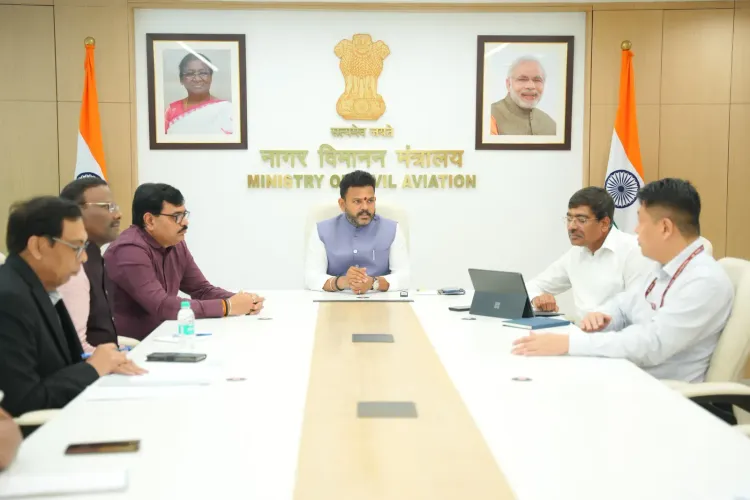
Civil Aviation Minister Ram Mohan Naidu on Wednesday, 2 September directed senior officials to automate, simplify, and decentralise the no objection certificate (NOC) issuance process in the civil aviation sector, setting a firm implementation deadline of 15 days. The directive, issued during a high-level review meeting at the Ministry of Civil Aviation in New Delhi, is aimed at reducing manual intervention and making clearances more transparent and time-bound.
Key Directives from the Minister
Naidu instructed officers from the Ministry of Civil Aviation and the Airports Authority of India (AAI) to examine and finalise the modalities for simplifying, automating, and decentralising the NOC process. The reforms are intended to benefit a broad range of stakeholders — including members of the general public, residential societies, builders, and industry players — while ensuring that aviation safety regulations remain fully intact.
The minister also directed that all relevant data and permissible height information be made transparently available in the public domain, including through official websites, so that applicants can make informed decisions without needing to approach the AAI directly at every stage.
Building Height Transparency in Metro Cities
According to an official statement, Naidu discussed the feasibility of providing permissible building height information to applicants at the initial stage of their application — particularly in major metropolitan cities such as Delhi, Mumbai, and Hyderabad. This approach, if implemented, would allow builders and developers to plan construction projects in accordance with applicable height restrictions from the outset, reducing delays and back-and-forth with regulatory bodies.
NOCAS Coverage and ULB-Level Clearances
The meeting also reviewed the existing geographical coverage of the No Objection Certificate Application System (NOCAS), which currently covers areas within 20 kilometres for Visual Flight Rules (VFR) operations and 56 kilometres for Instrument Flight Rules (IFR) operations. Officials considered the feasibility of enabling NOC issuance at the Urban Local Body (ULB) level wherever practicable, which could significantly reduce the burden on individuals and industries who currently have to approach the AAI directly.
Ease of Doing Business Push
The review meeting was convened specifically to assess measures for promoting Ease of Doing Business in the civil aviation sector, with a particular focus on streamlining the NOC process. This initiative aligns with the broader Centre-level push to reduce regulatory friction across infrastructure-linked sectors. Notably, the civil aviation ministry has been among the more active ministries in pursuing process digitisation in recent months.
The overall objective, as articulated by the minister, is to ensure expeditious and time-bound clearance of proposals without compromising aviation safety standards — a balance that regulators have historically found difficult to strike in high-density urban airspace.
Point of View
Particularly in rapidly expanding urban corridors around airports. The upfront disclosure of permissible building heights is a genuinely useful idea, but its value depends entirely on how current and granular that data will be. Past digitisation drives in government have often stalled at the data-quality stage. The 15-day clock will be the first real test of whether this reform has teeth.
NationPress
18 Oct 2026
Frequently Asked Questions
What is the NOC reform announced by Civil Aviation Minister Ram Mohan Naidu?
Civil Aviation Minister Ram Mohan Naidu has directed the Ministry of Civil Aviation and the Airports Authority of India to automate, simplify, and decentralise the no objection certificate (NOC) issuance process, with a 15-day deadline for implementation. The reforms aim to reduce manual intervention and make clearances transparent and time-bound for the public, builders, societies, and industry.
What is the 15-day deadline for in the NOC reform?
Officers from the Ministry of Civil Aviation and the AAI have been directed to examine and finalise the modalities for simplifying, automating, and decentralising the NOC process within 15 days of the 2 September meeting. This includes working out the steps for implementation, not just planning.
Which cities will benefit from upfront building height disclosure?
The minister discussed making permissible building height information available to applicants at the initial stage of their application, particularly in major metropolitan cities such as Delhi, Mumbai, and Hyderabad. This would help builders and developers plan projects in line with aviation height restrictions from the start.
What is NOCAS and what does it currently cover?
NOCAS, the No Objection Certificate Application System, is the digital platform used for processing aviation NOC applications. It currently covers areas within 20 kilometres for Visual Flight Rules (VFR) operations and 56 kilometres for Instrument Flight Rules (IFR) operations. Its geographical coverage was reviewed at the 2 September meeting.
What is the significance of ULB-level NOC issuance?
Enabling NOC issuance at the Urban Local Body (ULB) level would allow applicants to obtain clearances locally without approaching the Airports Authority of India directly, reducing procedural burden. The ministry is currently assessing the feasibility of this approach wherever it is practicable.