CM Chandrababu Urges FM Sitharaman to Stabilise Shrimp Feed Costs
Synopsis
Chief Minister Chandrababu Naidu has urged Finance Minister Nirmala Sitharaman to stabilise shrimp feed raw material prices after a 20-per-cent-plus rise in production costs between January and April 2026. He also sought Rs 100 crore via NFDB to establish an Andhra Pradesh Prawn Producers Coordination Committee.
Key Takeaways
CM Chandrababu Naidu wrote to Union Finance Minister Nirmala Sitharaman on 17 July 2026 seeking central policy action to stabilise shrimp feed raw material prices.
Shrimp feed production costs in Andhra Pradesh rose by more than 20 per cent between January and April 2026 .
Fish meal prices jumped from Rs 1.55 lakh to Rs 2.40 lakh per tonne ; fish oil from Rs 2.80 lakh to Rs 4.40 lakh per tonne ; soya lecithin from Rs 68,000 to Rs 1.10 lakh per tonne .
The CM requested an institutional framework to promote domestic markets, form FPOs, and protect the aquaculture sector from global price volatility.
A Rs 100 crore corpus fund has been sought through NFDB to establish the Andhra Pradesh Prawn Producers Coordination Committee .
The aquaculture sector supports livelihoods of lakhs of farmers, workers, exporters, hatcheries, and processing units in Andhra Pradesh.
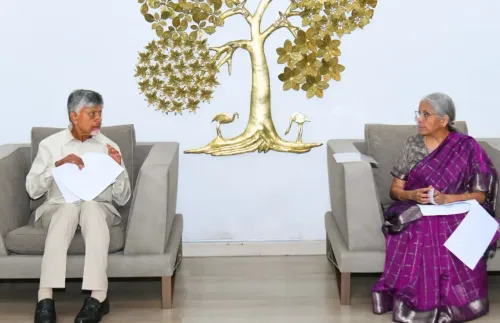
The Chief Minister's Office of Andhra Pradesh announced on Friday, 17 July 2026 that Chief Minister Nara Chandrababu Naidu has formally written to Union Finance Minister Nirmala Sitharaman, urging the Centre to take policy action to stabilise raw material prices used in shrimp feed manufacturing, citing a severe impact on the state's aquaculture sector and marine export earnings.
Context
In his communication to the Finance Minister, CM Naidu highlighted that between January and April 2026, shrimp feed input prices surged sharply, pushing production costs up by more than 20 per cent. He cited specific commodity price movements: fish meal rose from Rs 1.55 lakh per tonne to Rs 2.40 lakh per tonne, fish oil climbed from Rs 2.80 lakh per tonne to Rs 4.40 lakh per tonne, and soya lecithin jumped from Rs 68,000 per tonne to Rs 1.10 lakh per tonne. The Chief Minister stated that these cost escalations are directly hurting aquaculture farmers and undermining the competitiveness of seafood exports.
Policy Backdrop
Andhra Pradesh accounts for a significant share of India's total shrimp production and is a major contributor to the country's marine product exports. The aquaculture sector in the state supports millions of livelihoods spanning farmers, labourers, processing centres, exporters, hatcheries, and feed manufacturers. The Centre's Pradhan Mantri Matsya Sampada Yojana (PMMSY), launched in 2020, was designed to modernise fisheries and strengthen aquaculture value chains, but recurring global volatility in feed ingredient prices has continued to strain the sector's economics.
India's seafood export industry remains exposed to international price fluctuations in critical feed inputs such as fish meal and soy derivatives, a structural vulnerability that state governments have repeatedly flagged to the Centre across successive administrations.
Stakeholders and Impact
CM Naidu urged the Finance Minister to promote the domestic market for shrimp and aquaculture products, facilitate the formation of Farmer Producer Organisations (FPOs), and support market linkages for aqua farmers. He also called for backing domestic branding, processing, and retail price integration, alongside creating a mechanism to insulate the sector from global demand fluctuations. The Chief Minister requested that an institutional framework be designed specifically to address these structural challenges.
Additionally, CM Naidu requested that the National Fisheries Development Board (NFDB) release funds to establish the Andhra Pradesh Prawn Producers Coordination Committee with a corpus fund of Rs 100 crore. This proposed body would serve as a coordinating platform for prawn farmers across the state.
What's Next
The Centre's response to the corpus fund request through the NFDB will be closely watched, as will any fisheries-related provisions in the next Union Budget or revisions to PMMSY guidelines. If the Centre acts on the stabilisation request, it could set a precedent for policy-level intervention in aquaculture input pricing, with implications for other coastal shrimp-producing states as well. The establishment of the Andhra Pradesh Prawn Producers Coordination Committee could also reshape how the state's prawn farming community engages with markets and policy institutions going forward.
Point of View
Framing a sectoral cost crisis as a national export competitiveness issue to maximise pressure on the Centre. By anchoring the request in specific commodity price data and invoking livelihoods of 'lakhs of farmers and workers,' the communication is designed as much for public record as for policy response. The Rs 100 crore corpus fund request through NFDB signals Andhra Pradesh's intent to build an institutional buffer against global feed price volatility rather than seek one-time relief. This fits a broader pattern of coastal states seeking structural central interventions to protect aquaculture — a sector whose export revenues increasingly underpin rural employment in peninsular India.
NationPress
16 Oct 2026
Frequently Asked Questions
Why has CM Chandrababu Naidu written to FM Nirmala Sitharaman about shrimp feed?
CM Naidu wrote to FM Sitharaman because raw material prices used in shrimp feed manufacturing surged sharply between January and April 2026, pushing aquaculture production costs up by more than 20 per cent and hurting both farmers and seafood exporters in Andhra Pradesh.
By how much have shrimp feed input prices increased in 2026?
According to CM Naidu's communication, fish meal prices rose from Rs 1.55 lakh to Rs 2.40 lakh per tonne, fish oil from Rs 2.80 lakh to Rs 4.40 lakh per tonne, and soya lecithin from Rs 68,000 to Rs 1.10 lakh per tonne, resulting in overall production cost increases of over 20 per cent.
What is the Andhra Pradesh Prawn Producers Coordination Committee?
It is a proposed state-level body for coordinating prawn farmers in Andhra Pradesh. CM Naidu has requested the National Fisheries Development Board (NFDB) to release a Rs 100 crore corpus fund to establish this committee.
What is the NFDB and what role does it play here?
The National Fisheries Development Board (NFDB) is an autonomous body under the Ministry of Fisheries, Animal Husbandry and Dairying. CM Naidu has requested it to channel Rs 100 crore in funds to set up the proposed Andhra Pradesh Prawn Producers Coordination Committee.
How does this affect India's seafood exports?
Rising feed input costs increase the cost of shrimp production in Andhra Pradesh, which is a major contributor to India's marine product exports. Higher production costs reduce price competitiveness in global markets, potentially hurting India's overall seafood export earnings.