NC dissidents challenge Omar Abdullah openly after cabinet reshuffle
Synopsis
Nearly 20 National Conference MLAs have broken cover in Jammu & Kashmir, openly challenging Chief Minister Omar Abdullah after a cabinet reshuffle left senior legislators sidelined. The numbers make a government collapse arithmetically improbable, but the revolt is the most visible crack in the Abdullah family's hold on the NC in years — and it is only just beginning.
Key Takeaways
Nearly 20 disgruntled NC MLAs held a closed-door meeting on 31 October 2026 at the residence of MLA Qaiser Jamshed Lone in Srinagar .
The trigger was Omar Abdullah's cabinet reshuffle, which excluded senior MLAs including Mubarak Gul , Abdul Majeed Larmi , and Nazir Ahmad Gurezi .
Dissidents say they are not leaving the NC but want to flag governance concerns to party president Dr Farooq Abdullah .
Under the anti-defection law, the group needs at least 35 of 41 NC MLAs to form a valid breakaway faction — far beyond its current 18 .
Dr Farooq Abdullah's one-line statement reinstating Ali Mohammad Sagar as General Secretary — erasing his own earlier nomination of Gul — is widely read as an assertion of high command authority.
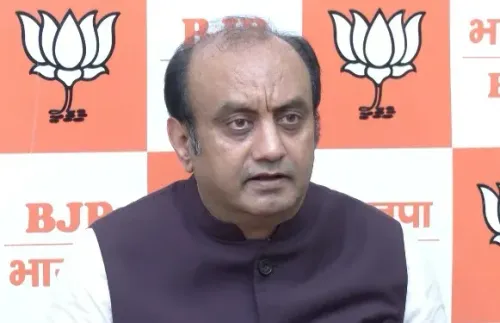
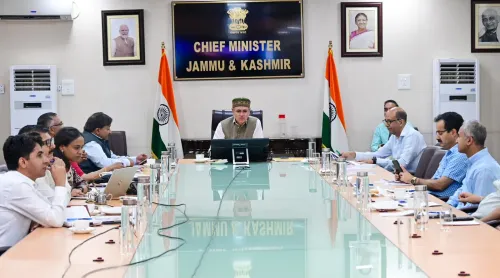
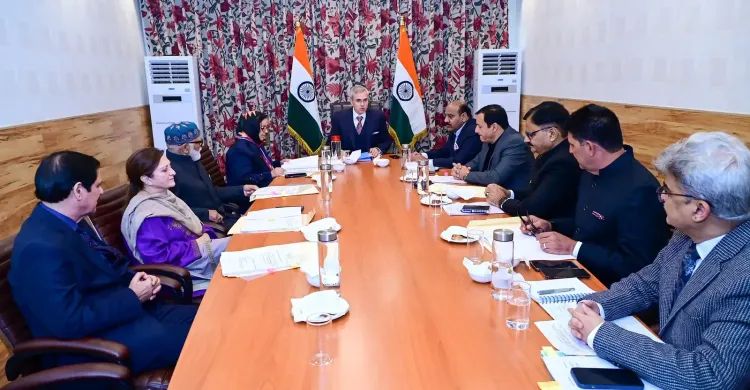
National Conference (NC) Chief Minister Omar Abdullah is facing an open internal revolt in Jammu & Kashmir, after nearly 20 disgruntled party MLAs held a closed-door meeting on Friday evening, 31 October 2026, to voice their grievances over the recent cabinet reshuffle. While the dissidents have stopped short of threatening a split, their emergence in the open marks a significant challenge to the Abdullah family's grip on the party.
What Triggered the Discontent
The flashpoint was Omar Abdullah's recent cabinet expansion, which left several senior NC legislators out in the cold. Prominent among the aggrieved are six-time MLA Mubarak Gul, Abdul Majeed Larmi, and Nazir Ahmad Gurezi, all of whom reportedly believed they had been signalled for ministerial consideration. Instead, Ali Mohammad Sagar, one of the party's senior-most leaders, was inducted, while most outgoing cabinet members were retained. The only exit was Satish Sharma, an independent MLA from the Chhamb constituency in Jammu district, who had backed the NC government.
Gul was the first to speak out. As he walked out of the oath-taking ceremony, he told reporters he had attended 20 ministerial swearing-in ceremonies and had been overlooked every single time.
Damage Control That Did Not Hold
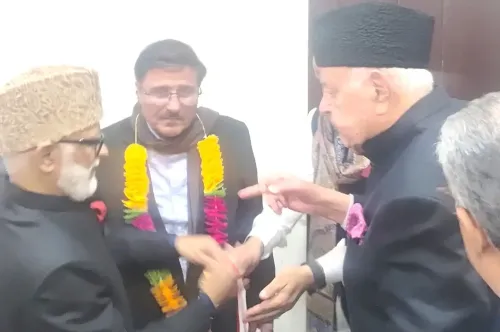
In a bid to pacify Gul, NC President Dr Farooq Abdullah nominated him as the party's new General Secretary at the Nawa-e-Subha headquarters, where senior leaders including Sagar and Chief Minister's advisor Nasir Aslam Wani garlanded and embraced him. The gesture, however, failed to contain the fallout. Supporters of Gul continued protests, publicly urging him to break away from the NC.
The damage control effort was further complicated when Dr Abdullah subsequently issued a terse one-line statement saying Sagar would continue as General Secretary — with no reference to his own nomination of Gul to the same post just two days earlier. The move is widely read as the party high command asserting authority and signalling it will not yield to pressure tactics.
The Friday Meeting of Dissidents
On Friday evening, 18 dissident NC MLAs — including Gul, Larmi, Farooq Ahmad Shah, Hilal Ahmed Parry, Hasnain Masood, and others — assembled at the residence of party MLA Qaiser Jamshed Lone for a meeting that lasted over two hours. According to sources familiar with the proceedings, the group resolved to collectively call on Dr Farooq Abdullah to convey growing public discontent with the functioning of the Omar Abdullah-led government. Critically, the dissidents stated they had no intention of leaving the party — their stated goal was to keep the NC strong and united.
The Anti-Defection Arithmetic
The NC holds 41 seats in Jammu & Kashmir's 90-member Legislative Assembly. Its government is additionally supported by 6 Congress MLAs, 1 CPI-M legislator, and 5 independents. Under the anti-defection law, a breakaway faction requires the backing of at least two-thirds of the party's legislative strength — meaning the dissidents would need at least 35 of the NC's 41 MLAs to form a constitutionally valid separate group. With only 18 currently in the dissident camp, the numbers make an immediate threat to the government arithmetically remote.
Notably, however, the public nature of the challenge is itself consequential. The NC high command can no longer rely on the unquestioned loyalty of nearly half its legislative bloc, a dynamic that complicates both governance and internal party management going forward.
What Comes Next
How Omar Abdullah navigates this internal turbulence — and how much of the firefighting falls to his father, the politically seasoned Dr Farooq Abdullah — will be closely watched in the days ahead. The NC high command faces a delicate balance: conceding enough ground to prevent the discontent from hardening, without appearing to capitulate to pressure. This is not the first time the Abdullah family has had to manage internal NC factionalism, but the open nature of the current challenge sets it apart from previous episodes.
Point of View
But the arithmetic misses the real story: nearly half the NC's legislative bloc has publicly declared it does not trust the leadership's judgement. Cabinet reshuffles in family-run regional parties are always high-stakes patronage exercises, and this one was handled with a bluntness that converted manageable resentment into an organised grievance group. Farooq Abdullah's swift reversal on the Gul appointment — without explanation — signals the high command's preferred tool is still the whip, not dialogue. That approach contains revolts in the short run but rarely extinguishes them.
NationPress
31 Oct 2026
Frequently Asked Questions
Why are NC MLAs revolting against Omar Abdullah?
The dissent was sparked by Omar Abdullah's recent cabinet expansion, which bypassed several senior NC legislators who reportedly believed they were in line for ministerial posts. MLAs including Mubarak Gul, Abdul Majeed Larmi, and Nazir Ahmad Gurezi are among those who felt overlooked, prompting the organised dissent.
How many NC MLAs attended the dissident meeting on 31 October 2026?
18 dissident NC MLAs gathered at the house of party MLA Qaiser Jamshed Lone in Srinagar on the evening of 31 October 2026, holding a meeting of over two hours. They resolved to meet NC President Dr Farooq Abdullah collectively to raise their concerns.
Can the NC dissidents bring down the Omar Abdullah government?
It is arithmetically very unlikely. The NC has 41 MLAs, and under the anti-defection law a breakaway group needs two-thirds of the party's legislative strength — at least 35 members — to avoid disqualification. With only 18 MLAs in the dissident camp, the group is well short of that threshold.
What has the NC high command done in response to the revolt?
NC President Dr Farooq Abdullah initially tried to pacify senior MLA Mubarak Gul by appointing him General Secretary. When that failed to contain the unrest, Dr Abdullah issued a terse statement saying Ali Mohammad Sagar would continue as General Secretary — effectively rescinding Gul's nomination without explanation. The move is widely interpreted as a firm assertion of high command authority.
Do the NC dissidents want to split the party?
No — at least not at this stage. Sources familiar with the 31 October meeting said the group explicitly decided they were not parting ways with the National Conference. Their stated objective is to raise concerns about the government's functioning directly with party president Dr Farooq Abdullah.