CM Yogi Champions Jan Dhan: 'Zero Cut Money' in Transfers
Synopsis
Chief Minister Yogi Adityanath champions Jan Dhan accounts as the backbone of leakage-free welfare delivery in Uttar Pradesh, asserting that every rupee sent by the government reaches beneficiaries in full with no intermediary deductions.
Key Takeaways
CM Yogi Adityanath credited the Pradhan Mantri Jan Dhan Yojana with ensuring zero leakage in government welfare transfers.
He stated that a 'single click' can route money to the accounts of crores of beneficiaries simultaneously.
The Chief Minister gave the example of a ₹100 transfer to a young beneficiary reaching their account in full — with 'no cut money'.
Jan Dhan was launched in August 2014 as a zero-balance account scheme to enable Direct Benefit Transfers for unbanked households.
The statement reinforces Uttar Pradesh's alignment with the national DBT infrastructure as a tool for transparent welfare delivery.
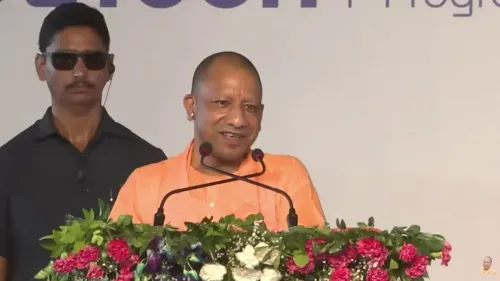
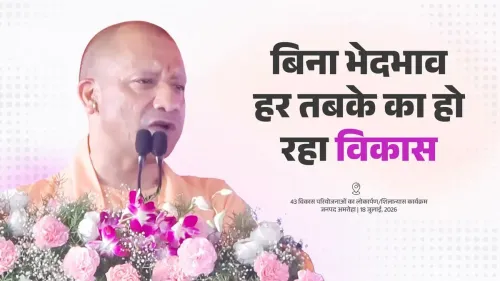
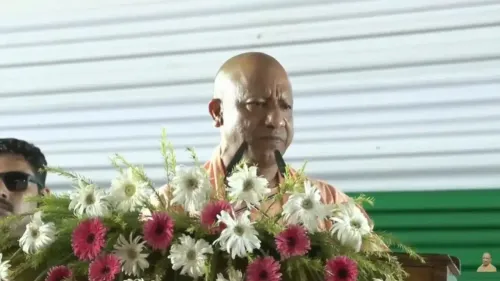
Every rupee sent, every rupee received — that is the promise Chief Minister Yogi Adityanath is putting at the centre of Uttar Pradesh's welfare delivery argument. Addressing the impact of the Pradhan Mantri Jan Dhan Yojana, the Chief Minister's Office of Uttar Pradesh shared his assertion on Saturday, 31 October 2026: the era of money vanishing between government and beneficiary is over.
CM Yogi's statement, posted by the Chief Minister's Office, makes the case in plain arithmetic: 'यदि हमने किसी युवा के लिए ₹100 भेजे हैं, तो पूरे ₹100 उसके अकाउंट में पहुंचते हैं' ('If we have sent ₹100 for a young person, the full ₹100 reaches their account'). The key guarantee, he says: 'इसमें कोई कट मनी नहीं होती है' — there is no cut money.
What Jan Dhan cracked open
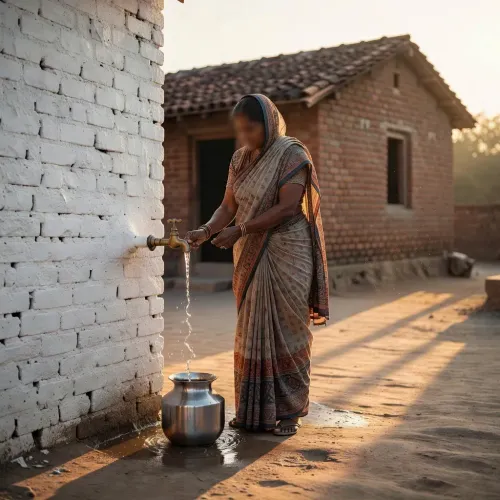
The Pradhan Mantri Jan Dhan Yojana, launched by the central government in August 2014, was designed to solve one of India's oldest governance headaches: the leaky pipeline between a scheme announcement and an actual rupee in a poor household's hand. By opening zero-balance bank accounts for previously unbanked families, it created the last-mile infrastructure for Direct Benefit Transfers (DBT) — routing subsidies, pensions, and welfare payments straight to individuals without intermediaries taking a slice.
CM Yogi's framing underlines the 'one-click' scale of the system: 'एक क्लिक करते ही करोड़ों लोगों के अकाउंट में पैसा पहुंच जाता है' — 'with a single click, money reaches the accounts of crores of people.' It is a governance claim as much as a financial one: speed and leakage-free delivery as the defining features of modern welfare.
The 'cut money' problem and why it mattered
The phrase cut money — informal deductions taken by local intermediaries, middlemen, or contractors from benefits meant for the poor — has long been a pressure point in Indian politics. DBT via Jan Dhan was specifically architected to bypass that chain entirely. Uttar Pradesh, as India's most populous state, has both the most to gain from plugging those leaks and the most visible proof-of-scale when the system works.
The Chief Minister's statement aligns with the broader central and state push to showcase DBT infrastructure as a credibility asset — particularly when addressing youth welfare, where timely, full-value transfers carry political as well as economic weight.
The real test of this architecture will come in the details of upcoming state budget reviews and scheme expansion announcements — how many beneficiaries, which programmes, and whether transfer volumes are growing. That data will determine whether the one-click promise holds at full UP scale.
Point of View
Accountable governance at the state level. The 'cut money' invocation is deliberate: it directly attacks the legacy of intermediary-driven welfare corruption that plagued previous regimes. For Uttar Pradesh, India's largest electoral prize, repeating this message ahead of budget cycles and scheme reviews is a way of anchoring Yogi's administrative identity to technological accountability. The broader signal is that DBT is no longer just a policy tool — it has become a campaign argument.
NationPress
31 Oct 2026
Frequently Asked Questions
What is the Pradhan Mantri Jan Dhan Yojana?
The Pradhan Mantri Jan Dhan Yojana is a central government financial inclusion scheme launched in August 2014 that opened zero-balance bank accounts for unbanked Indian households, enabling Direct Benefit Transfers of subsidies, pensions, and welfare payments directly to beneficiaries.
What did CM Yogi Adityanath say about Jan Dhan accounts?
CM Yogi stated that Jan Dhan accounts ensure welfare money reaches beneficiaries in full — giving the example that a ₹100 transfer to a young person arrives as the complete ₹100 with no cut money or intermediary deductions.
What is 'cut money' in the context of Indian welfare schemes?
'Cut money' refers to informal deductions taken by local middlemen or intermediaries from government welfare payments before they reach the intended beneficiary. DBT via Jan Dhan accounts was designed to eliminate this practice by transferring funds directly.
How does Direct Benefit Transfer work through Jan Dhan accounts?
Direct Benefit Transfer routes government payments — subsidies, stipends, pensions — straight into a beneficiary's Jan Dhan bank account digitally, bypassing intermediaries and enabling near-instant, full-value delivery to crores of people simultaneously.
Why is Yogi Adityanath emphasising Jan Dhan in Uttar Pradesh?
As Chief Minister of India's most populous state, Yogi Adityanath highlights Jan Dhan-DBT to demonstrate transparent, leakage-free welfare delivery — positioning digital financial infrastructure as a key pillar of governance accountability in Uttar Pradesh.